Owner’s manual



What is the average lifespan of a Samsung dryer?
A Samsung dryer like model DV36J4000EW typically lasts 10 to 15 years. Consistent airflow (clean lint screen and venting), correct load sizes, and avoiding overheating are the biggest factors that push lifespan toward the high end; see the DV36J4000EW owner's manual for care and safety guidance.
What most affects dryer lifespan
- Vent restriction (lint buildup, crushed duct, long duct runs) increases heat and wear.
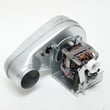
- Overloading strains the drive system (belt, motor, drum rollers).
- Overheating events can damage heating and safety components.
- Moisture and lint accumulation inside the cabinet accelerates failures.
- Power quality and loose connections can stress controls and wiring.
Maintenance checklist we recommend
- Clean the lint screen every load.
- Check that the dryer is vented to the outside and the duct is 4 inches in diameter (typical requirement for U.S. installations).
- Inspect and clean the exhaust duct and outside hood regularly.
- Keep loads within the cycle’s guidance; small loads are typically about 3 to 5 items (around 1/4 full).
- If drying times increase, address airflow first before replacing parts.
Common wear parts and what they usually mean
| Symptom | Likely area | Typical result if ignored |
|---|---|---|
| Thumping or squealing | Drum support system | Faster belt and motor wear |
| Long dry times, hot cabinet | Venting or heat control | Overheating, shutdowns |
| No heat | Heating circuit | Clothes stay damp |
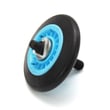
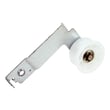
If you’re hearing a steady rumble or squeal, the Samsung dryer drum support roller DC97-16782A is a common wear item on many Samsung dryers and is worth checking during a cabinet inspection.
Why it matters
A dryer that runs hot or takes too long to dry often fails earlier because high heat stresses the heating element, thermostats, and wiring. Keeping airflow strong is the simplest way to protect the motor, drum belt, and heater.
Last updated: February 2026
How to tell if a Samsung dryer heating element is bad?
If your Samsung DV36J4000EW dryer runs but doesn’t heat or takes much longer to dry, the heating element is a top suspect. We confirm a bad element by unplugging the dryer, visually checking the coil for breaks, then testing the element with a multimeter for proper continuity and no short to the metal housing.
Quick checks before testing parts
- Clean the lint screen and make sure airflow is strong at the exhaust outlet.
- Verify you’re using a heated cycle (not Air Fluff or no-heat settings).
- Avoid overloading; 1 wash load equals 1 dryer load.
- If drying is uneven, sort heavy items from lightweight items.
- Note any information codes; “Vent is clogged and restricted” points to airflow first.
How to test the heating element (multimeter)
Follow the safety and access steps in the DV36J4000EW owner’s manual.
- Disconnect power (unplug; for electric dryers, confirm power is off at the breaker).
- Access the heater terminals (typically behind a panel).
- Continuity test (element coil):
- Set meter to ohms (Ω) or continuity.
- Touch one probe to each heater terminal.
- Good: continuity (beep or a low, steady resistance reading).
- Bad: no continuity (open circuit).
- Ground fault test (short to housing):
- Probe from a heater terminal to the metal heater housing.
- Good: no continuity.
- Bad: continuity to metal (shorted element).
What symptoms usually mean
| Symptom | Most likely cause | What to check next |
|---|---|---|
| Runs, no heat | Open or shorted heater | Heating element test, thermostats, thermal fuse |
| Heats then stops | Overheating from poor airflow | Venting, lint buildup, high-limit thermostat |
| Long dry times | Restricted venting | Duct, blower wheel, lint screen housing |
Parts that commonly fail with “no heat”
If the element tests bad, replace the heater. If it tests good, check the safety devices that can cut heat.
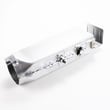
- Samsung dryer heating element DC47-00019A
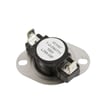
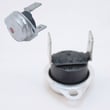
- Dryer high-limit thermostat (opens if overheating)
- Dryer thermal cut-off fuse (opens if severe overheating)
- Dryer thermistor (temperature sensing)
Why it matters
A failed heating element stops proper drying, but airflow problems can also overheat the heater circuit and trip safety parts. Fixing vent restriction helps prevent repeat failures and improves drying time and energy use.
Last updated: February 2026
Is it worth replacing a heating element in a Samsung dryer?
Yes; for a Samsung DV36J4000EW dryer, replacing the heating element is usually worth it when the dryer tumbles normally but does not heat, because the part cost is typically far less than replacing the entire dryer. We recommend confirming the real failure first, since a blown thermal cut-off or thermostat can mimic a bad element (see the DV36J4000EW owner’s manual).
When replacement makes sense
Replacing the heater is a strong choice when the rest of the dryer is in good shape and the problem is isolated to the heat circuit.
- The drum turns and airflow feels strong, but clothes stay cold or damp
- The dryer heats briefly, then stops heating mid-cycle
- You have no burning smell and no obvious wiring damage at the terminal block
- The unit is not showing repeated overheating symptoms (often caused by vent restriction)
- You can test components with a multimeter (unplug power first)
Parts that commonly get confused with a “bad element”
On DV36J4000EW, several safety and sensing parts can stop heat even when the element itself is fine.
| Symptom | More likely cause | Example part for this model |
|---|---|---|
| No heat at all, dryer runs | Thermal cut-off open | Dryer thermal cut-off fuse, 320-degree f DC47-00015A |
| Heats then shuts off quickly | High-limit thermostat opening | Dryer high-limit thermostat DC47-00018A |
| Erratic temps, over-drying or under-drying | Temperature sensor issue | Dryer thermistor DC32-00007A |
| No heat and visible coil break | Heating element failed | Samsung dryer heating element DC47-00019A |
What to check before you buy parts
A correct diagnosis prevents repeat failures and protects the new heater.
- Clean the lint screen and housing
- Inspect and clear the exhaust duct; the manual calls for rigid metal or stiff-walled metal ducting
- Confirm proper load size and avoid overloading (the manual notes 1 wash load = 1 dryer load)
- Check for loose or heat-damaged connections at the heater terminals
- Test the element, thermal cut-off, and high-limit thermostat for continuity
Why it matters
A restricted vent is the #1 reason heating parts fail early; overheating can repeatedly open the thermal cut-off and shorten heating element life. Fixing airflow first helps the repair last and improves dry times.
Last updated: February 2026