Owner’s manual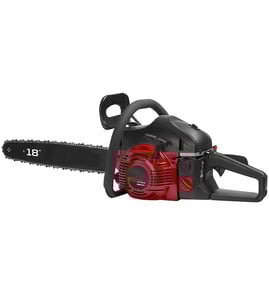






Do you use 40 1 or 50 1 gas in a chainsaw?
For the Craftsman gas chainsaw model 358350460, we use a 40:1 gas-to-oil mix: 3.2 oz of 2-cycle air-cooled engine oil per 1 gallon of unleaded gasoline. This ratio provides the lubrication the engine is designed for; using 50:1 can reduce lubrication and increase wear.
Correct fuel mix for model 358350460
Use these rules every time you mix fuel (and follow the 358350460 owner's manual):
- Mix unleaded gasoline with 2-cycle air-cooled engine oil
- Use 40:1 (not 50:1) for this model
- Measure oil accurately; do not “eyeball” it
- Mix fuel outdoors in an approved fuel container
- Shake the container briefly after adding oil so it blends evenly
- Do not use automotive oil or marine (boat) oil
Quick mix chart (40:1)
| Gasoline amount | Oil needed (40:1) |
|---|---|
| 1 gallon | 3.2 oz |
| 1/2 gallon | 1.6 oz |
| 1 quart | 0.8 oz |
Why it matters
Two-stroke engines rely on the oil in the fuel for crankshaft, piston, and cylinder lubrication. The 358350460 is tuned around a 40:1 mix; the right ratio helps prevent premature wear, overheating, and hard starting.
Related tip: bar and chain oil is separate
Fuel mix oil is not the same as bar oil. Keep the bar oil tank filled; the saw is designed to use about one tank of bar oil per tank of fuel. If the chain looks dry, smokes, or the bar discolors, stop cutting and check lubrication.
Last updated: February 2026
How to adjust a Craftsman chainsaw?
On the Craftsman 358350460 gas chainsaw, the most common “adjustment” is chain tension. Adjust it so the chain sits fully in the bar groove, rotates freely by hand, and has no sag under the guide bar; then tighten the chain brake nuts to lock the setting (10 to 15 ft-lbs).
How to adjust chain tension (model 358350460)
- Engage the chain brake and let the saw cool.
- Loosen the chain brake nuts until they are finger-tight against the chain brake cover.
- Turn the adjusting screw clockwise until the chain solidly contacts the bottom of the guide bar rail.
- Roll the chain around the guide bar to confirm all links sit in the bar groove.
- Lift the bar tip and remove sag by turning the adjusting screw until sag is gone.
- While lifting the bar tip, tighten the chain brake nuts (torque to 10 to 15 ft-lbs).
- Recheck that the chain rotates freely; if it will not rotate, back off the adjusting screw slightly and retighten.
Quick checks before you run the saw
- Chain rotates freely with a gloved hand (engine off).
- No chain sag below the guide bar.
- Bar tip is supported while tightening (prevents a “loose after tightening” condition).
- Chain brake is disengaged before cutting.
- Chain stops moving when you release the throttle trigger (idle speed is correct).
Common symptoms and what the adjustment usually means
| Symptom | Most likely cause | What to do next |
|---|---|---|
| Chain will not rotate by hand | Chain too tight | Loosen adjusting screw slightly, retighten nuts |
| Chain sags under bar | Chain too loose | Tighten adjusting screw until sag is gone |
| Chain moves at idle | Idle speed too high | Follow carburetor adjustment steps in the 358350460 owner's manual |
| Chain stops in the cut | Tension too tight or bar rails pinched | Recheck tension; inspect bar rails |
Why it matters
Correct chain tension protects the guide bar and sprocket, improves cutting performance, and reduces the chance of the chain coming off the bar. The manual also notes chains stretch during use, especially during the first few uses, so checking tension at every refuel prevents problems.
Last updated: February 2026
What are the L and H adjustments on a chainsaw?
On the Craftsman 358350460 gas chainsaw, the carburetor L and H screws are fuel-mixture adjustments: L (low speed mixture) affects idle and acceleration, and H (high speed mixture) affects power at full throttle while cutting. Turning either screw clockwise leans the mixture; counterclockwise richens it (in small increments).
What L, H, and T do on this model
Your carburetor has three adjustment screws labeled H, L, and T, located just above the primer bulb (see the 358350460 owner's manual).
- L (low speed mixture): fine-tunes fuel at idle and when you squeeze the trigger; fixes hesitation or bogging.
- H (high speed mixture): fine-tunes fuel at high RPM under load; fixes weak cutting power or dying in the cut.
- T (idle speed): sets idle RPM; the chain must not move at idle.
Safe, model-correct adjustment basics
The manual warns the chain will move during most of this procedure; wear protective equipment and follow all safety precautions.
- Check basics first: old fuel, dirty air filter, dirty fuel filter, or flooding can mimic a carb problem.
- Warm the engine about 3 minutes before final tuning.
- Make changes in 1/16-turn increments.
- Re-check idle after each L adjustment; chain must not move at idle.
- Do not run at full throttle for long periods while adjusting H.
Quick reference table
| Screw | What you adjust | If it’s off | What to do |
|---|---|---|---|
| L | Idle-to-throttle transition | Hesitates, bogs, smokes on acceleration | Turn L clockwise in small steps until acceleration is clean |
| H | Full-throttle cutting power | Dies in cut, lacks power, or hesitates in cut | Tune H in small steps based on cutting performance |
| T | Idle speed | Chain moves (too fast) or stalls (too slow) | Turn T clockwise to raise idle; counterclockwise to lower |
Why it matters
Correct L and H settings protect the engine and give reliable starting, smooth acceleration, and strong cutting power. A too-lean setting can overheat the engine; a too-rich setting can cause smoking, poor throttle response, and plug fouling.
Last updated: February 2026
What is the Craftsman 358350460 42 cc 2 cycle gas 18 chainsaw?
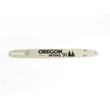
The Craftsman 358350460 is a 2-cycle gasoline chainsaw designed for occasional use; the manual for this model identifies it as a 36cc (2.2 cu. in.) saw that typically uses a 16-inch bar. For safe setup, fueling, and operation details, follow the Craftsman 358350460 owner's manual.
Key specs and what they mean
Here are the model-specific details we use for parts matching and basic operation:
- Brand/model: Craftsman 358350460
- Engine type: 2-cycle gasoline
- Displacement: 36cc (2.2 cu. in.)
- Typical bar length: 16 in.
- Fuel mix: 40:1 (3.2 oz 2-cycle oil per 1 gallon unleaded gas)
42cc and 18-inch vs. this model number
If you are seeing “42cc” and “18-inch,” that description commonly applies to a different Craftsman chainsaw family. For model 358350460, use the manual and the model tag on the saw to confirm the exact bar length and engine size before ordering a bar, chain, or carburetor parts.
| Item | What the 358350460 manual indicates | Why it matters |
|---|---|---|
| Engine size | 36cc (2.2 cu. in.) | Affects carburetor tuning and fuel system parts |
| Bar length | 16 in. | Determines correct chain pitch/gauge/drive links |
| Fuel mix | 40:1 | Prevents hard starting and engine damage |
Why it matters for parts and troubleshooting
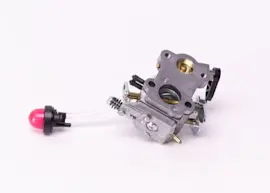
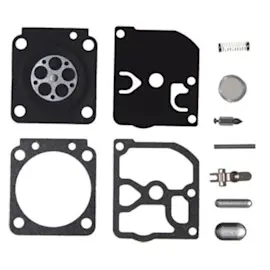
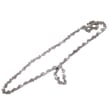
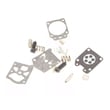
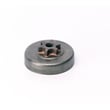
Chainsaw parts are highly model-specific. Matching the correct model number (358350460) helps ensure the right fit for common repairs like fuel delivery issues (fuel line, primer bulb, carburetor kits) and cutting performance issues (bar, chain, clutch).
Last updated: February 2026
Where is the fuel filter in a Craftsman chainsaw?
On the Craftsman gas chainsaw model 358350460, the fuel filter sits inside the fuel tank, attached to the end of the fuel line. You access it by removing the fuel cap and pulling the filter and line up and out of the tank (the manual notes it can rattle in an empty tank). Use the 358350460 owner's manual for the exact procedure.
Quick way to locate it
- Remove the fuel cap.
- Look into the fuel tank opening.
- The filter is on the end of the pickup fuel line.
- Use a clean bent wire hook or long needle-nose pliers to gently pull the line up.
- The filter comes out with the line; it is not mounted to the tank wall.
Replacement steps (what we follow in the manual)
Before servicing, let the saw cool and disconnect the spark plug boot.
- Run the saw until it runs out of fuel (drains the tank).
- Remove the fuel cap and the connected retainer.
- Pull the filter out of the tank.
- Remove the old filter from the fuel line and press the new one onto the line.
- Reinstall the filter into the tank and reinstall the cap/retainer.
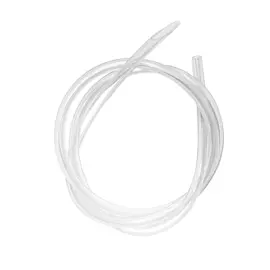
If the fuel line is stiff, cracked, or won’t stay on the filter nipple, replace the line at the same time using the ayp lawn & garden equipment fuel line, large 530069216.
What you should see (normal vs. problem)
| What you notice | What it usually means | What to do |
|---|---|---|
| Filter “rattles” in an empty tank | Normal for this design | No action needed |
| Filter looks dark or clogged | Restricted fuel flow | Replace the filter |
| Fuel line is brittle or split | Air leak, hard starting | Replace the fuel line |
| Primer bulb won’t fill | Fuel delivery issue | Check filter, line, and tank vent |
Why it matters
A clean in-tank fuel filter protects the carburetor and keeps fuel flow steady. When it plugs up, the saw may start and then die, surge at idle, or lose power under load.
Last updated: February 2026