 Installation guide
 Owner’s manual
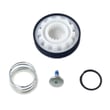


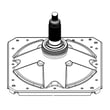
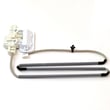
Are Whirlpool washer parts interchangeable?
Some Whirlpool washer parts are interchangeable, but only when the part is specified for your exact washer model. For the Whirlpool WTW7000DW4, we recommend matching parts by model number and the exact part ID to ensure proper fit, safe operation, and correct cycle performance.
What “interchangeable” really means for Whirlpool washers
Parts can look similar across Whirlpool families (including Cabrio-style top load designs), but small differences in connectors, mounting points, or software compatibility can prevent a correct repair.
Common examples:
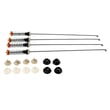
- Mechanical parts (springs, dampers, hoses) are sometimes shared across models.
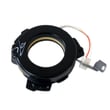
- Electrical parts (lid locks, control boards, wire harnesses) must match the correct design revision.
- Drive system parts (clutch, drive assembly, stator, rotor) must match the platform and calibration.
How we recommend you confirm compatibility (WTW7000DW4)
Use this checklist before ordering:
- Confirm the full model number is WTW7000DW4 (from the lid or cabinet label).
- Compare the exact part ID listed for your model, not just the part name.
- If your washer symptom is “won’t start,” “won’t spin,” or “lid won’t lock,” prioritize model-correct electrical parts.
- Follow the disassembly and safety steps in the WTW7000DW4 owner's manual.
- Use the WTW7000DW4 installation guide for hose routing, leveling, and drain standpipe setup that can affect performance.
Examples of parts that must match the model
| Part type | Why interchangeability is limited | Example for WTW7000DW4 |
|---|---|---|
| Lid lock | Connector style and lock logic vary | Washer lid lock assembly W10810403 |
| Main control | Software and sensing strategy vary | Machine and motor control unit assembly (match by model) |
| Drain pump | Mounting and harness routing can differ | Washer drain pump (match by model) |
Why it matters
Using the wrong “looks-the-same” part can cause repeat failures, leaks, out-of-balance spinning, or error conditions. Whirlpool also recommends using factory specified replacement parts for proper fit and performance.
Last updated: February 2026
Is 4.5 cu ft a large washer?
A 4.5 cu. ft. washer is typically considered medium capacity, right at the upper end of medium. For a Whirlpool WTW7000DW4 top-load washer, that size handles everyday family loads well; “large capacity” usually starts above about 4.5 cu. ft.
What 4.5 cu. ft. means in real use
Most households find 4.5 cu. ft. is plenty for routine laundry, but the load still needs room to tumble and circulate water for good cleaning (especially in low-water washplate designs).
- Handles regular mixed loads (shirts, jeans, towels) comfortably
- Works well for family laundry without overstuffing
- Bulky items (comforters, heavy blankets) may fit, but wash performance depends on how freely items move
- Overloading can cause poor cleaning, out-of-balance spinning, and extra wear on suspension parts
- This washer uses a low-water wash system; it is normal for some items to sit above the water line
Capacity guide (quick comparison)
| Capacity (cu. ft.) | Common label | Best for |
|---|---|---|
| 3.5 to 4.0 | Small to medium | Singles, couples, light weekly loads |
| 4.0 to 4.5 | Medium | Most families, everyday loads |
| 4.6 to 5.0 | Large | Bigger households, frequent bulky loads |
| 5.0+ | Extra-large | Large families, frequent bedding loads |
How to load the WTW7000DW4 for best results
Our best practice for this Whirlpool washer is to load items in loose heaps evenly around the washplate, not packed down.
- Distribute items evenly around the washplate (avoid one heavy side)
- Do not press clothes down; leave space for movement
- Mix large and small items to reduce imbalance
- If the washer struggles to spin, reduce the load size and retry
- Use only HE detergent as directed in the WTW7000DW4 owner’s manual
Why it matters
Capacity labels are helpful, but how you load matters just as much. Proper loading improves cleaning, reduces vibration, and helps protect components like the suspension and drive system.
Last updated: February 2026
What is the life expectancy of a Whirlpool Cabrio washer?
A Whirlpool Cabrio top-load washer like model WTW7000DW4 typically lasts about 11 years with average household use and normal maintenance. Heavy weekly loads, frequent overloading, and skipped cleaning cycles can shorten that lifespan; good care and correct loading can extend it.
Typical lifespan and what changes it
Most Cabrio-style HE top-load washers land in this range:
| Usage pattern | Typical outcome | What it looks like |
|---|---|---|
| Light (few loads/week) | Longer life | Fewer wear-related repairs |
| Average (around 8 loads/week) | About 11 years | Occasional part replacement |
| Heavy (large family, daily use) | Shorter life | More frequent drain, suspension, or drive issues |
Maintenance that helps you reach the full lifespan
We recommend these habits for WTW7000DW4:
- Run the washer’s cleaning cycle regularly to keep performance consistent (see WTW7000DW4 owner's manual).
- Do not add extra water; this HE low-water design cleans best when the load can contact the washplate.
- Load loosely and evenly; avoid packing items down.
- Use the right cycle using the “What to Wash / How to Wash” selections for better fabric care and less strain.
- Check pockets and reduce grit; coins and debris accelerate pump and tub wear.
Parts that commonly affect longevity
When a Cabrio washer starts to struggle near mid-life, these are frequent wear points:
- Drain problems or slow draining: consider the washer drain pump W10876600
- Excessive vibration or banging: suspension components often wear (rods/dampers)
- Won’t start or stops mid-cycle: lid lock issues are common
- Poor agitation or spin performance: clutch or drive components may be involved
Why it matters
Knowing the expected lifespan helps you decide whether to maintain, repair, or plan a replacement. On HE top-load models, correct loading and routine cleaning are the biggest controllable factors that protect the drive system, suspension, and wash performance.
Last updated: February 2026
What problems are common with the WTW7000DW4?
On the Whirlpool WTW7000DW4 washer, the most common problems we see are no-agitate or poor wash action, out-of-balance shaking, drain or spin failures, filling too slowly (LF/F8E1), long drain (F9E1), lid-related stops (F8E6), leaks, and occasional no-start symptoms. Use the WTW7000DW4 owner's manual for the exact error-code steps.
Common symptoms and what they usually point to
- Won’t drain / long drain (F9E1, drn, dr): drain hose installation issue, clogged hose, or a failing pump such as the washer drain pump W10876600.
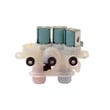
- Fills too slowly (LF/F8E1): water supply not fully on, inlet screens restricted, or a valve issue such as the washer water valve W11220230.
- Shaking, banging, “Ofb” off-balance pause: load not distributed evenly, or worn suspension components.
- Won’t start / stops mid-cycle: lid left open too long (F8E6), lid lock not engaging, or control-related faults.
- Spins slowly / won’t spin: load balance issues, drive system wear, or clutch-related problems.
- Leaking: loose fill hoses, drain hose fitment, or internal hose/tub seal issues.
Quick checks we recommend first (fast, no parts)
- Confirm the lid is fully closed; clear F8E6 by closing the lid and pressing Power.
- Redistribute the load if “Ofb” appears; then press and hold Start/Pause to resume.
- Verify the drain hose setup: do not seal the standpipe opening, and avoid pushing the hose too far into the standpipe.
- If you get LF/F8E1, confirm both water supply valves are fully open.
- If you get F9E1, check for a kinked or clogged drain hose and confirm the drain height is within typical installation limits.
Error codes and the most likely next step
| Display code/message | What it usually means | Best next action |
|---|---|---|
| LF or F8E1 | Too long to fill | Check supply valves, inlet screens, then valve |
| F9E1 / drn / dr | Too long to drain | Check drain hose routing, clogs, then pump |
| Ofb | Off balance | Redistribute load and restart |
| F8E6 | Lid opened | Close lid, press Power to clear |
| F1E1 ACU | Control fault | Follow service guidance in the manual |
Why it matters
Drain, fill, and off-balance problems often come from installation details (hose depth, standpipe setup, water supply) and can trigger repeated error codes. Fixing those basics first prevents unnecessary part replacement and repeat cycle interruptions.
Last updated: February 2026





