Are radial arm saws worth anything?
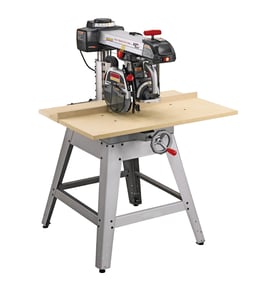
Yes. A Craftsman radial arm saw like model 11329460 is usually worth something on the used market, but value depends most on condition, completeness (guards, fence, table), and local demand. In many areas, common Craftsman units sell for modest prices, while premium vintage brands in excellent shape bring more.
- Runs smoothly: motor starts cleanly, no burning smell, no excessive sparking at brushes
- Arm and carriage condition: minimal play, bearings roll smoothly, locks hold tight
- Safety and completeness: blade guard, anti-kickback parts, yoke and bevel locks present
- Table and fence: not hacked up beyond use; fence is straight and secure
- Included extras: dado set, blades, stand, original accessories, or a clean shop-made table
| Condition | What buyers usually see | Typical range |
|---|---|---|
| Poor / incomplete | missing guard, rough table, needs work | $0 to $75 |
| Working / average | cuts, but needs tune-up and a new table | $75 to $200 |
| Clean / tuned | tight locks, smooth travel, complete | $200 to $400 |
- Unplug the saw and inspect the cord, switch, and strain relief for cracks or repairs.
- Check that the carriage rolls smoothly and the arm locks without slipping.
- Verify the blade returns and the head does not creep out of alignment.
- Look for missing guards or hardware; missing safety parts lowers value fast.
- Plan on replacing the table/fence if it is deeply kerfed; that is common and expected.
Radial arm saws can be excellent for repeatable crosscuts and dados, but they take space and must be set up and used correctly. Buyers pay more for a saw that is complete, tight, and ready to tune, because it is safer and more accurate.
For basic electrical checks that can help you confirm “working condition,” use our guide: how to use a multimeter to test electrical parts video.
Last updated: February 2026
What are the common problems with radial arm saws?
Common radial arm saw problems on a Craftsman 11329460 (10-inch Accra-Arm radial saw) include inaccurate cuts from misalignment, rough or noisy operation from worn bearings, weak power from motor or electrical issues, and unsafe blade behavior from poor setup or damaged guards. These issues usually trace back to alignment, wear, or power delivery.
- Cuts are not square or repeatable: arm/yoke not aligned, fence not straight, table not flat, blade not true
- Blade binds, stalls, or burns wood: dull blade, incorrect blade type, feed rate too fast, carriage not rolling smoothly
- Excessive vibration or noise: bent blade, loose arbor hardware, worn motor bearings, loose mounting bolts
- Carriage is hard to slide: dirty or damaged track/rollers, lack of lubrication, sawdust buildup
- Motor will not start or trips power: bad switch, damaged cord, loose connections, failing motor, blown fuse in the circuit
- Unsafe “self-feeding” or climbing: wrong blade hook angle for radial arm use, improper setup, pulling too aggressively
- Unplug the saw before any adjustment; wait for the blade to fully stop.
- Confirm the blade is sharp and appropriate for radial arm saw crosscuts.
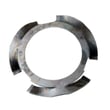
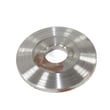
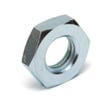
- Check that the arbor nut and flange are tight and the blade is seated flat.
- Inspect the cord and switch for heat damage, cracks, or loose terminals.
- Clean sawdust from the arm track and carriage rollers; verify smooth travel.
| Symptom | What to check first | Typical fix |
|---|---|---|
| Out-of-square cuts | Arm/yoke alignment, fence/table | Realign, rebuild table/fence |
| Vibration | Blade condition, arbor tightness | Replace blade, tighten hardware |
| Won’t start | Cord, switch, connections | Repair wiring, replace switch |
| Hard to slide | Track/rollers cleanliness | Clean, adjust rollers |
Radial arm saws can pull material and the carriage toward the operator if setup is off. Keeping alignment tight, the carriage smooth, and the electrical system sound improves cut quality and reduces the chance of kickback or entanglement.
For safe electrical testing during diagnosis, use our guide: how to use a multimeter to test electrical parts video.
Last updated: February 2026
What is the best brand of radial arm saw?
There is no single “best” brand for every shop, but the best radial arm saw is the one that is accurate, safe, and supported with parts for your exact model. For a Craftsman 11329460 10" accra-arm radial saw, we focus on keeping your saw cutting true by matching the right replacement parts to your model.
- Arm and carriage rigidity: less flex means straighter crosscuts and better repeatability.
- Fence and table condition: a flat table and straight fence matter as much as the motor.
- Smooth travel: carriage bearings/rollers should glide without play.
- Reliable controls: switch, cord, and any overload protection should be solid.
- Parts availability: being able to replace wear items keeps an older saw usable.
| Priority | What it means in practice | Best choice for you if… |
|---|---|---|
| Accuracy | Holds alignment; minimal slop | You do finish carpentry or cabinetry |
| Capacity | Wider crosscut and deeper cut | You cut larger stock often |
| Serviceability | Easy to tune and maintain | You want to keep a vintage saw running |
| Footprint | Needs more wall/bench space | Your shop space is limited |
- Start with your model number and match parts to it (Craftsman 11329460 in this case).
- Inspect the wear points first: table surface, fence, carriage play, and arm lock.
- Confirm electrical health: cord condition, switch operation, and motor start behavior.
- Plan a tune-up after any repair: align the arm, set the fence square, and verify blade tracking.
Radial arm saws can be extremely capable, but they depend on alignment and stable mechanics. Choosing a brand with a good design is helpful; keeping your specific saw tight, square, and properly maintained is what delivers safe, accurate cuts over time.
For help identifying the correct parts list for your saw, use how to find your appliance model number (and what it means for parts).
Last updated: February 2026
When did Craftsman stop making radial arm saws?
Craftsman radial arm saws like model 11329460 were largely discontinued in the early 1990s; most were no longer sold new through Sears by about 1992, with some smaller (8-inch) versions continuing into the mid-1990s. The market shifted heavily toward miter saws as safety expectations and guarding standards increased.
For older Craftsman power tools, there are two common timelines:
- Manufacturing window: many Craftsman radial arm saws were produced for decades (often by outside manufacturers) and then phased out.
- Retail availability: remaining inventory can be sold after production slows or ends.
- Model-by-model variation: different blade sizes and series ended at different times.
- Parts support: parts availability can continue long after new saw sales stop.
We use the model number and the data plate to narrow down the era and the correct parts list.
- Confirm the model is exactly 11329460 (not a close variant).
- Check the data plate for any serial number or date code.
- Look for a motor nameplate date or code (often more readable than the saw tag).
- Compare your saw’s features (guard style, yoke, table design) to the parts diagrams.
| What to check | Where it’s usually found | Why it helps |
|---|---|---|
| Model number | Data plate on the arm/base | Confirms the correct parts breakdown |
| Serial/date code | Data plate or motor tag | Helps estimate build timeframe |
| Guard style | Blade guard assembly | Indicates generation/era |
Knowing the approximate discontinuation period helps set expectations for replacement parts, guarding components, and compatibility when you are repairing a 10-inch Accra-Arm radial saw. It also helps you search the correct diagrams and avoid ordering look-alike parts.
For broader model-number help across tools and appliances, use how to find your appliance model number (and what it means for parts).
Last updated: February 2026