Owner’s manual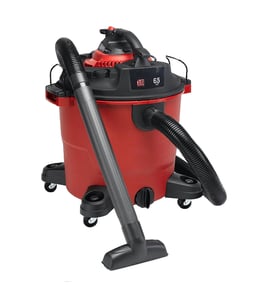


Can you vacuum up drywall dust with a Shop-Vac?
Drywall sanding dust is extremely fine; with the Craftsman 113178200 16-gallon wet/dry vacuum, we do not recommend vacuuming large amounts of drywall dust unless you have the correct fine-dust filtration and you clean the filter often. Fine dust can pass through or quickly clog a standard filter, reducing airflow and stressing the motor.
What the Craftsman 113178200 manual says that matters
The 113178200 is designed to be used with the filter in place at all times, and it warns not to operate with a torn filter. For best performance, the filter should be cleaned often and kept dry for dry pickup. See the 113178200 owner's manual.
Best practices if you must pick up drywall dust
- Use the cleanest, best-sealing filter you can for fine dust; stop if you see dust exhausting from the vac.
- Keep the filter dry for dry pickup; a damp filter clogs faster with powdery dust.
- Empty the drum frequently; a full drum and a loaded filter both reduce airflow.
- Clean the filter often (tap/shake it out); replace it if it is torn, ripped, or badly worn.
- Vacuum slowly and avoid stirring up clouds; drywall dust loads filters very quickly.
- Consider using a pre-separator (bucket cyclone style) to keep most dust out of the drum and off the filter.
Quick decision guide
| Situation | Recommendation | Why it matters |
|---|---|---|
| Small touch-ups (a little dust) | OK with careful filter maintenance | Minimizes clogging and overheating risk |
| Whole-room sanding cleanup | Not recommended without fine-dust filtration and pre-separation | Standard filtration can clog fast and stress the motor |
| You see dust blowing out the exhaust | Stop and service filtration | Indicates dust bypass or filter overload |
Why it matters
Drywall dust can choke airflow, and wet/dry vac motors rely on airflow for cooling. When airflow drops (clogged filter, full drum, leaks), the motor runs hotter and performance falls off quickly.
Last updated: January 2026
How do you remove the filter from a CRAFTSMAN wet dry vac?
On the Craftsman 113178200 16-gallon wet/dry vacuum, we remove the filter by unplugging the vac, taking off the lid (motor cover), then removing the wing nut and bottom plate; the filter lifts off the wire guide. See the steps in the 113178200 owner’s manual.
Step-by-step: removing the filter (model 113178200)
- Unplug the power cord before touching the filter or motor cover.
- Release the flexible locking tabs and lift the lid assembly off the drum.
- Locate the filter under the lid.
- Remove the wing nut and the bottom plate from the threaded wire guide.
- Lift the filter off the wire guide.
- Inspect the filter for rips or heavy wear; replace it if torn.
What you will see under the lid
| Item | What it does | What to do when removing |
|---|---|---|
| Wing nut | Holds the filter assembly tight | Turn counterclockwise, remove by hand |
| Bottom plate | Supports the filter base | Slide off after the wing nut |
| Wire guide (threaded) | Centers and secures the filter | Filter lifts off this guide |
Cleaning tips before reinstalling
Keeping the filter clean helps suction and helps protect the motor.
- For dry debris: shake or tap the filter to knock off dust.
- For wet pickup residue: rinse water through the filter if tapping does not clean it.
- Let the filter dry completely before dry vacuuming or storage.
- Never run the vac with a torn filter.
Why it matters
This Craftsman wet/dry vac is designed to run with the filter installed; a missing, wet-clogged, or torn filter can reduce airflow and allow debris to reach the motor.
Last updated: January 2026
What is the list of vacuum cleaner parts?
For the Craftsman 113178200 16-gallon wet/dry vacuum, the parts list centers on the motor and lid assembly, dust drum (tank), hose and nozzle, filter system, and mobility hardware (casters). For the model-specific exploded views and key numbers, use the 113178200 owner’s manual.
Model-specific parts list (Craftsman 113178200)
These are the main assemblies called out in the repair parts section for this wet/dry vac:
- Motor assembly (includes items like armature, field assembly, brush assemblies, bearing bracket)
- Lid assembly (includes float assembly and lid gasket)
- Switch and wiring items (switch, switch bracket, cord assembly, connectors, cable tie)
- Filter assembly (filter, filter plate, wing nut)
- Hose assembly and rectangular nozzle
- Drum assembly (dust drum or tank) and drain hardware (stopper/plug)
- Mobility and handle parts (caster feet, casters, wheel assembly, handle, clamps)
Common accessory parts (often purchased separately)
This model supports multiple cleaning accessories; the manual lists examples such as:
- Crevice tool
- Round brush (dusting)
- Extension handles
- Extension hose and connector kit
- Squeegee nozzle (wet pickup)
Quick “parts list” by function
| Function | Typical parts you will see | Where it lives |
|---|---|---|
| Suction and airflow | Motor assembly, float assembly | Lid/motor cover |
| Filtration | Filter assembly, gasket | Under lid |
| Pickup and reach | Hose assembly, nozzles, extension handles | External accessories |
| Storage and capacity | Drum assembly, drain plug/stopper | Tank |
| Movement | Casters, wheels, caster feet | Base |
Why it matters
Using the correct assembly name (for example, filter assembly vs. lid assembly) helps you match the right diagram callout and avoid ordering the wrong hardware size, gasket, or electrical part.
Last updated: January 2026
Where to find model number on CRAFTSMAN Wet Dry Vac?
On the Craftsman wet/dry vacuum model 113178200, the model and serial number are located on the motor cover. We recommend recording both numbers exactly as shown so you can match the correct repair parts and accessories later. See the 113178200 owner’s manual for the label location note.
Where to look on the vacuum
Check these common spots on model 113178200:
- The motor cover (top powerhead area); this is the primary location for this model
- Near the on-off switch area on the motor cover
- On a serial/model label that may be printed or stamped
- Under the lid assembly lip (look around the rim while the lid is removed)
Tips for reading the label correctly
Model and serial labels can be hard to read if dusty or worn.
- Unplug the vac before handling the motor cover
- Wipe the label gently with a damp cloth; avoid soaking it
- Use a flashlight and take a photo, then zoom in
- Write down the model as 113178200 (all digits, no spaces)
- Record the serial number too; it can help identify production variations
What to record (quick checklist)
| Item | Example format | Why we need it |
|---|---|---|
| Model number | 113178200 | Ensures diagrams and parts match your vac |
| Serial number | Letters/numbers | Helps confirm exact version when ordering |
| Product type | 16-gallon wet/dry vacuum | Confirms you are in the right category |
Why it matters
Using the correct model number prevents ordering the wrong filter, hose, switch, or motor-related parts. On older Craftsman wet/dry vacuums, small design changes can occur across similar-looking units, so the model and serial label is the fastest way to confirm fit.
Last updated: January 2026
Why do shop vacuums lose suction?
Shop vacuums usually lose suction because airflow is restricted or air is leaking. On the Craftsman 113178200 16-gallon wet/dry vacuum, the most common causes are a dirty or wet-clogged filter, a blockage in the hose/nozzle, or a lid or hose connection that is not sealing correctly (see the 113178200 owner’s manual).
Most common causes (and what to check first)
- Clogged filter: Dust buildup reduces airflow; a wet filter can clog quickly when you switch to dry pickup.
- Hose or nozzle blockage: Debris can lodge in the rectangular nozzle, hose, or the vacuum inlet.
- Drum is full (wet pickup): This model can stop picking up water automatically when full; motor sound changes pitch.
- Lid not sealed: Locking tabs not fully snapped down can leak air.
- Gasket issue: A wrinkled, pulled, or torn lid gasket can leak and reduce suction.
Filter care for the Craftsman 113178200
The manual calls out frequent filter cleaning to maintain peak performance.
| Situation | What to do | Why it matters |
|---|---|---|
| Dry pickup (sawdust, dust) | Shake or tap the filter clean | Restores airflow quickly |
| Wet pickup | Rinse if needed, then dry fully | Prevents clogging and mildew odor |
| Switching wet to dry | Use a dry filter for dry debris | Wet filter + dry dust clogs fast |
Quick suction test checklist
- Unplug the vacuum; remove the hose and check for a clog end-to-end.
- Confirm the filter is installed correctly and not torn.
- Reseat the lid; press both handles down so the locking tabs snap in place.
- Inspect the lid gasket for damage or areas that are pulled away.
- If suction is still weak, check the drum for overfill (especially after wet pickup).
Why it matters
Low suction is almost always an airflow problem. Fixing the restriction or sealing leak helps the motor run cooler, improves pickup performance, and reduces the chance of dust getting past the filter into the motor.
Last updated: January 2026