 Installation guide
 Owner’s manual


How do I tell what model Kenmore dishwasher I have?
For Kenmore dishwashers, we find the model number on the model and serial number label located inside the door area. On model 66516472300, it’s typically on the inner door frame or along the tub opening; open the door and look around the rim where the door seals.
Where to look first (fastest checks)
- Open the door and inspect the left and right inner door frame
- Check the top edge of the door and the tub opening lip
- Look on the tub wall just inside the door (near the front)
- Wipe the label with a damp cloth; detergent film can hide the numbers
- Write down both the model and serial number for parts and service
What the label looks like
Most Kenmore undercounter dishwashers use a printed sticker or metal plate that lists:
- Model number (example: 66516472300)
- Serial number
- Electrical ratings (volts/amps)
You can also confirm the label location by checking the parts and features section in the 66516472300 owner's manual.
Why the exact model number matters
Kenmore model numbers can be very similar, but parts like the door seal, pump, racks, and drain hose can vary by revision. Using the exact model number helps us match the correct diagrams and compatible replacement parts.
| If you see this | Use it for |
|---|---|
| Model number | Ordering parts, looking up diagrams, troubleshooting steps |
| Serial number | Determining production details, service history, warranty-related info |
If the label is missing or unreadable
- Check for a second label on the side of the inner door
- Look for paperwork from the original installation and compare it to the 66516472300 installation guide
- If the dishwasher was repainted or the label is damaged, use the control panel style and tub features to narrow the match, then confirm with the closest model number
Last updated: February 2026
Is it worth repairing a Kenmore dishwasher?
Yes, repairing a Kenmore dishwasher like model 66516472300 is usually worth it when the problem is a wear item (leak, drain issue, rack problem) and the repair cost stays well below the price of a comparable replacement. It becomes less worthwhile when multiple major components fail at once.
Quick way we decide: repair vs. replace
- Repair when the dishwasher is cleaning well overall and you have a single clear failure (leak, won’t drain, noisy pump, door not sealing).
- Repair when the fix is a common part replacement such as a hose, gasket, or rack component.
- Replace when you have repeated leaks, persistent electrical problems, or several expensive parts needed at the same time.
- Replace when the tub or inner door panel is damaged beyond sealing (leaks that are not from gaskets or hoses).
- Repair when you can DIY safely and follow the steps in the 66516472300 owner’s manual.
Typical cost-to-value guide
| Repair type | Common symptoms | Usually worth it? |
|---|---|---|
| Drain/leak fix | Water under unit, won’t drain | Often yes |
| Door sealing fix | Leaks at door corners | Often yes |
| Pump/motor repair | Loud grinding, poor wash | Depends on total cost |
| Multiple major failures | Several symptoms at once | Often no |
Model-specific notes that affect value
Your Kenmore 66516472300 documentation highlights that major appliances may need preventive maintenance or repair over time, and it also outlines warranty coverage that can make certain repairs more cost-effective early in ownership. Use the 66516472300 installation guide to confirm the unit is installed correctly because poor installation can mimic “bad part” symptoms.
Parts that commonly make a repair worthwhile
These are examples of repairable, high-impact issues on dishwashers like this:
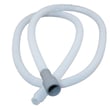
- Drain problems: consider the dishwasher drain hose 8269144A if the hose is split, kinked, or leaking.
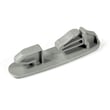
- Door leaks: inspect the door seal area; a worn seal can point to the gasket W11196317.
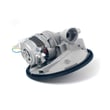
- Poor wash or unusual noise: a failing circulation system can involve the dishwasher pump and motor assembly W10782773.
Why it matters
A targeted repair restores cleaning performance and prevents cabinet or floor damage from leaks. Replacing the right part (instead of guessing) also reduces repeat service calls and helps the dishwasher run as designed.
Last updated: February 2026
Can you still get parts for a Kenmore dishwasher?
Yes. We still support Kenmore dishwasher parts, and for Kenmore model 66516472300 you can match parts by the exact model number to get the right fit for common repairs like leaks, draining problems, and rack or basket replacements. Use the diagrams and part lists in the 66516472300 owner's manual to confirm what your dishwasher uses.
How to make sure you order the correct part
Model numbers matter because Kenmore dishwashers were built by different manufacturers over the years, and similar-looking parts can mount differently.
- Match the full model number: 66516472300
- Compare the part name and part ID (not just a photo)
- Check where the part installs (door, tub, sump, rack)
- If your dishwasher has symptoms (leak, no drain, poor wash), diagnose first, then order
- Use the exploded-view diagrams in the 66516472300 installation guide to confirm placement and routing (especially hoses)
Common parts customers replace on this model
These are examples of parts available for 66516472300 that cover frequent issues:
| Symptom | Part that often applies | Example from available parts |
|---|---|---|
| Water on floor near door | Door seal or vent sealing | Gasket W11196317, dishwasher vent gasket WP8269259 |
| Dishwasher will not drain well | Drain hose routing or restriction | Dishwasher drain hose 8269144A |
| Poor cleaning, grinding noise | Wash system components | Dishwasher chopper assembly W10083957V |
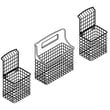
| Broken or missing basket | Basket replacement | Silverware basket W10807920 |
Why it matters
Ordering by model number prevents returns and repeat repairs. It also helps you choose the right repair path, for example replacing a leaking door gasket versus correcting a drain hose loop that causes backflow.
Last updated: February 2026
Why is water standing in the bottom of my Kenmore dishwasher?
A small amount of water in the bottom of the tub on your Kenmore 66516472300 dishwasher can be normal, but standing water that never drains usually points to a drain restriction, a drain hose issue, or a problem in the pump area. Use the checks in the 66516472300 installation guide to confirm the unit is filling and operating correctly.
What’s normal vs. what’s not
During installation checks, it’s expected to see water in the bottom of the tub shortly after a cycle starts.
| What you see | Most likely meaning | What to do next |
|---|---|---|
| A thin layer of water after a cycle | Normal residual water | Monitor; run a rinse cycle |
| Water covering the sump area and not changing | Drain path restricted | Clean filter area; check hose routing |
| Water rising higher than normal | Drain backing up or not pumping | Stop cycle; check disposal/air gap and hose |
Step-by-step checks we recommend
- Reset the drain path: Cancel/drain the cycle (if your control panel has that option) and listen for the drain pump.
- Clean the sump and filter area: Remove debris (labels, glass, bones, toothpicks) that can block flow.
- Inspect the drain hose routing: Look for kinks, crushing, or a low loop that lets water flow back.
- Check the sink/disposal connection: A clogged disposer inlet or blocked air gap can prevent draining.
- Listen for symptoms:
- Humming but no draining often means an obstruction at the impeller area.
- No sound can indicate an electrical/control issue.
Parts that commonly relate to standing water
If you find a split, soft spot, or restriction in the drain line, replacement is often the fastest fix.
- Dishwasher drain hose 8269144A (cracked, kinked, or internally restricted hose)
- Dishwasher pump and motor assembly W10782773 (circulation and pumping issues tied to the motor area)
- Dishwasher chopper assembly W10083957V (food-chopping area that can clog and restrict water movement)
Why it matters
Standing water can cause odors, redeposit food soil on dishes, and strain the pump. Restoring proper drain flow protects the wash system and improves cleaning results.
Last updated: February 2026







