


How long does a roper washer last?
A Roper top-load washer like model RTW4100SQ1 typically lasts 10 years with normal household use. Keeping the washer level, avoiding overloads, and fixing small problems early (like draining or spinning issues) helps you reach that lifespan.
Typical lifespan and what affects it
Most washers in this class reach about a decade; heavy use, hard water, and frequent overloading shorten life.
Big factors that extend washer life:
- Keep loads balanced and avoid stuffing the basket
- Use the right amount of HE detergent (too much can cause residue and odors)
- Run periodic cleaning cycles and wipe the lid and tub ring area
- Make sure the washer sits level and does not “walk” during spin
- Address new noises, burning smells, or slow draining right away
Signs your RTW4100SQ1 is nearing end of life
These symptoms usually point to worn drive or drain components:
- Won’t spin or agitates weakly
- Loud grinding, squealing, or banging during spin
- Water left in the tub after the cycle
- Repeated leaks from the tub or pump area
- Excessive vibration even with small, balanced loads
Common repairs that can keep it running
Many “end of life” symptoms are actually fixable with the right part.
| Symptom | Common cause | Example part for RTW4100SQ1 |
|---|---|---|
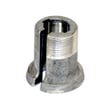
| Won’t spin or agitates intermittently | Worn motor coupling | Washer motor coupling 285753A |
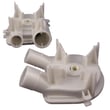
| Won’t drain | Clogged or failing drain pump | Washer drain pump WP3363394 |
| Stops when lid is opened or won’t run/spin with lid closed | Failed lid switch | Washer lid switch assembly WP8318084 |
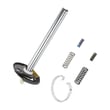
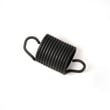
| Shakes or bangs during spin | Worn suspension components | Washer suspension spring WP63907 |
Why it matters
A washer that is out of level or struggling to drain puts extra strain on the drive system, clutch, and suspension. Fixing those issues early often prevents bigger failures and helps your Roper RTW4100SQ1 reach its full 10-year lifespan.
Last updated: February 2026
Who makes the Roper washer?
Roper washers (including model RTW4100SQ1) are made for the Roper brand by Whirlpool. Roper is positioned as a value-focused brand, and many Roper top-load washers share common Whirlpool-built direct-drive style components.
How to tell on your specific washer
We recommend confirming by checking the identification tag on your RTW4100SQ1 (usually under the lid or on the cabinet rim). Look for:
- The full model number RTW4100SQ1
- A serial number
- A manufacturer code or prefix (often used for parts matching)
- Electrical ratings (volts/amps)
Why this matters for parts and repairs
Knowing the Whirlpool manufacturing lineage helps because it points you to the right style of drivetrain and common failure points for this washer design.
Common Whirlpool-built top-load repair items you can shop by symptom include:
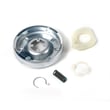
- Coupler issues (won’t agitate or spin): washer motor coupling 285753A
- No drain or weak drain: washer drain pump WP3363394
- Won’t spin with lid closed (safety circuit): washer lid switch assembly WP8318084
- Spin problems or burning smell: clutch 285785
Quick symptom-to-part guide
| Symptom | What it often points to | Example part on this model |
|---|---|---|
| Motor runs, tub doesn’t move | Broken motor coupling | 285753A |
| Water won’t pump out | Clogged or failed drain pump | WP3363394 |
| Stops when lid opens, won’t run/spin | Lid switch not closing | WP8318084 |
| Poor spin, clothes still wet | Clutch or drive components | 285785 |
Helpful next step
If you are diagnosing a problem (not just brand origin), we use the same troubleshooting flow shown in troubleshooting a top load washer that wont drain or spin video to narrow down whether the issue is drain, spin, or drive related.
Last updated: February 2026
What are the common problems with Roper washing machines?
Common problems on Roper top-load washers like model RTW4100SQ1 are no spin, no agitation, and no drain; these usually trace back to a lid switch issue, a worn drive coupling, a failing clutch, or a clogged or weak drain pump. Leaks and excessive vibration are also frequent and often relate to hoses, tub seals, or suspension parts.
Most common symptoms and what they usually point to
- Won’t spin or stops mid-cycle: lid switch not sensing a closed lid, clutch wear, drive coupling wear
- Won’t agitate but motor runs: worn drive coupling or drive block
- Won’t drain or drains slowly: drain pump obstruction or failing pump
- Loud grinding/banging: drive block wear, basket drive wear, clutch or brake components wearing
- Leaking water: tub gasket or center post seal issues, loose clamps, or hose problems
- Shakes or walks during spin: unbalanced load, leveling issue, worn suspension spring or pads
Quick checks we recommend before replacing parts
- Redistribute the load (bulky items can throw the basket off balance).
- Confirm the washer is level and all feet are firmly on the floor.
- Check the lid closes firmly; if the washer won’t spin with the lid shut, the lid switch circuit is a prime suspect.
- Inspect the drain path: look for kinks in the drain hose and listen for the pump running during drain.
- Listen for the motor: a motor that runs but doesn’t move the basket often points to a coupling or clutch problem.
Parts that commonly fix these issues on RTW4100SQ1
| Symptom | Common part to check | What it does |
|---|---|---|
| No spin/no start of spin | Washer lid switch assembly WP8318084 | Confirms lid is closed so the washer can run/spin |
| No agitation or no spin with motor running | Washer motor coupling 285753A | Links motor power to the drive system |
| Weak spin, burning smell, slow basket ramp-up | Clutch 285785 | Helps the basket engage and reach spin speed |
| No drain/slow drain | Washer drain pump WP3363394 | Pumps water out of the tub |
| Excessive vibration | Washer suspension spring WP63907 | Stabilizes the tub during spin |
Why it matters
When a washer can’t drain or spin correctly, clothes stay wet and the drive system works harder than it should. Catching a worn coupling, lid switch, or pump early often prevents bigger, more expensive failures later.
For step-by-step troubleshooting, we recommend troubleshooting a top load washer that wont drain or spin video.
Last updated: February 2026
How to check for a clogged drain pump on a whirlpool washer?
On a Roper RTW4100SQ1 top-load washer (Whirlpool-built direct-drive style), we check for a clogged drain pump by confirming the washer is trying to drain, then inspecting the drain hose and pump inlet for debris; a jammed impeller or blocked inlet commonly causes slow or no draining.
Quick safety steps first
- Unplug the washer.
- Turn off both water supply valves.
- Have towels and a shallow pan ready; water will spill when hoses are removed.
- If the tub is full, bail out water first to reduce the mess.
How we check for a clog (step-by-step)
- Confirm the symptom: During drain/spin, listen for the motor running but water not leaving the tub.
- Check the drain hose:
- Make sure it is not kinked, crushed, or shoved too far down the standpipe.
- Look for a clog at the hose end (lint, coins, socks).
- Inspect the pump inlet (most common clog point):
- Remove the cabinet/front access as needed.
- Place a pan under the pump, then loosen the hose clamp and pull the tub-to-pump hose.
- Clear debris from the hose and the pump inlet.
- Check the impeller:
- With power off, try turning the pump impeller by hand.
- If it is hard to turn or stuck, the pump is jammed or failing.
- If it turns but the washer still will not drain, the pump may be worn internally or the hose path is blocked.
What to replace if the pump is bad
If the pump leaks, the impeller is damaged, or it will not move water after clearing clogs, replacement is the fix. For RTW4100SQ1, the correct replacement is the washer drain pump WP3363394.
| Finding | What it usually means | Next step |
|---|---|---|
| Hose kinked or standpipe issue | Drain path restriction | Correct routing/height, remove kink |
| Debris in tub-to-pump hose | Clog at pump inlet | Clear debris, reassemble |
| Impeller stuck or wobbly | Pump failure or jam | Replace drain pump |
| Pump leaks | Seal/housing failure | Replace drain pump |
Why it matters
A restricted drain pump can prevent spinning, leave clothes soaking wet, and strain the drive system. Clearing the clog early helps avoid secondary issues like beltless drive wear and repeated out-of-balance stops.
For more troubleshooting steps that match this symptom, use our troubleshooting a top load washer that wont drain or spin video.
Last updated: February 2026





