Owner’s manual
 Error Codes


How old is my KitchenAid refrigerator by serial number?
You can determine the age of your KitchenAid KSRS25RSMK01 by finding the model and serial tag, then using the serial number to identify the manufacturing date code and convert it to a month and year. Start with the label location shown in the KSRS25RSMK01 owner's manual.
Find the serial number on KSRS25RSMK01
The model and serial number label is located on the inside wall of the refrigerator (fresh food) compartment.
- Open the fresh food door
- Look on the inside side wall (often near the crisper area)
- Write down the full serial number exactly as printed
- Take a clear photo so characters are not misread (0 vs O, 1 vs I)
Decode the date code (what to look for)
KitchenAid serial-number date coding varies by production run and manufacturing plant. The reliable method is to use the date-code key for your exact serial format, then translate it into a calendar date.
- Identify whether your serial is primarily letters plus numbers, or mostly numeric
- Look for a letter that represents the month, and numbers that represent the year (common on many Whirlpool-family products)
- Use the date-code chart or decoding guidance provided for your unit’s serial format
Common serial patterns you may see
| What you see on the tag | What it usually represents | Result you want |
|---|---|---|
| A month code (often a letter) | Manufacturing month | Month built |
| A year code (often 1 to 2 digits) | Manufacturing year | Year built |
| Additional letters/numbers | Plant and sequence info | Not needed for age |
Why it matters
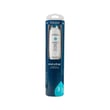
Knowing the build date helps us match the correct production version when ordering parts for KSRS25RSMK01, especially water system and ice maker items like the refrigerator water filter EDR3RXD1 or control components.
Last updated: February 2026
What is the life expectancy of a side-by-side refrigerator?
A side-by-side refrigerator like the KitchenAid KSRS25RSMK01 typically lasts 15 to 20 years. Real-world lifespan depends most on sealed-system health (compressor, evaporator), airflow, and how well the doors seal and the condenser area stays clean; see the KSRS25RSMK01 owner's manual for care guidance.
What affects lifespan the most
- Condenser cleanliness and ventilation: dust buildup and tight clearances make the compressor run hotter and longer.
- Door seal condition: air leaks force longer run times and can lead to frost and temperature swings.
- Ice maker and water system use: mineral buildup and valve wear can create leaks or low ice production.
- Defrost system performance: a weak heater or thermostat can cause heavy frost and poor cooling.
- Power quality: frequent outages or surges can stress the electronic control.
Typical lifespan expectations (quick guide)
| Refrigerator type | Typical life expectancy | Notes |
|---|---|---|
| Side-by-side | 15 to 20 years | More features (ice and water) can mean more service over time |
| Top freezer | 15 to 20 years | Often simpler design |
| French door | 15 to 20 years | More doors and features can increase maintenance needs |
Maintenance that helps you reach 15 to 20 years
- Keep airflow clear around the cabinet; many units need about 1/2 inch at the sides and top, and more behind for the water line.
- Clean the condenser area regularly (unplug first).
- Replace the water filter on schedule; for this model, use the refrigerator water filter EDR3RXD1.
- Confirm doors close firmly; warm the gasket with mild heat and reshape if it is warped.
- If cooling gets weak or noisy, address it early (fan noise, frost buildup, warm freezer).
Why it matters
A refrigerator that runs longer to hold temperature uses more electricity and wears out key components faster. Simple upkeep (airflow, seals, filter changes) reduces run time and helps protect the compressor and evaporator.
Last updated: February 2026
What is the most common problem with a KitchenAid refrigerator?
On the KitchenAid KSRS25RSMK01 side-by-side refrigerator, the most common problems we see are cooling and ice maker or water dispenser issues, usually tied to airflow (evaporator fan/defrost system) or the water supply path (filter, valve, tubing). Use the troubleshooting section in the KSRS25RSMK01 owner's manual to match symptoms to the right checks.
Most common symptoms (and what they usually point to)
- Warm refrigerator or freezer: restricted airflow, evaporator fan issue, or defrost problem
- No ice or slow ice production: water supply restriction, ice maker fault, or freezer temperature too warm
- No water from dispenser: clogged filter, air in the line, or inlet valve problem
- Frost buildup on freezer back wall: defrost heater or defrost thermostat issue
- Noisy operation: evaporator fan blade/motor, or normal ice maker cycling sounds
Quick checks we recommend first
- Confirm controls are set correctly and vents are not blocked by food packages.
- If water or ice is weak, replace the filter and purge the dispenser.
- If frost is heavy, inspect the defrost system components.
- If noise is from the freezer, listen for fan contact with ice buildup.
Common part-related causes for KSRS25RSMK01
| Symptom | Common cause | Example part for this model |
|---|---|---|
| Weak water flow | Clogged filter | Refrigerator water filter EDR3RXD1 |
| No water/ice fill | Inlet valve not opening | Refrigerator water inlet valve WPW10159839 |
| Frost buildup | Defrost control issue | Refrigerator defrost bi-metal thermostat WPW10225581 |
| Frost buildup | Heater not heating | Refrigerator heater WP2323198 |
| Warm temps, noise | Evaporator fan not moving air | Refrigerator evaporator fan motor WP2315549 |
Why it matters
Cooling, ice, and water problems often share the same root causes: airflow through the evaporator and steady water pressure through the filter and valve. Fixing the correct system first prevents repeat failures and protects food temperatures.
Last updated: February 2026