Owner’s manual
 Error Codes


How to fix 26 e error code on Samsung refrigerator?
On the Samsung RF267AEPN refrigerator, a 26E error is commonly tied to an ice maker issue (ice buildup or a stalled ice maker). We fix it by safely thawing the ice maker area, restoring power, and then checking ice production and airflow so the error does not return.
Quick fix steps (safe thaw and reset)
- Unplug the refrigerator; wait at least 5 minutes before plugging it back in.
- Leave the doors open and let any ice in the ice maker area melt naturally (place towels to catch drips).
- After thawing, plug the unit back in and allow several hours for temperatures to stabilize.
- Confirm the freezer is set cold enough for ice production (typically 0°F) and the refrigerator section is around 37°F.
- If the error returns quickly, inspect the ice maker compartment for recurring frost or airflow blockage.
What to check if 26E comes back
If thawing clears the code but it returns, we focus on the most common causes: ice maker mechanism problems, temperature sensing, and airflow.
| What you notice | Likely cause | What we do next |
|---|---|---|
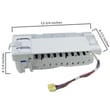
| Ice maker stops, clumps of ice, or loud clicking | Ice maker is binding or failing | Consider replacing the Samsung refrigerator ice maker DA97-07365G |
| Temps seem off or fluctuate | Sensor or control feedback issue | Check for loose connections; consider a temperature sensor diagnosis |
| Frost keeps building near the ice maker | Air leak or poor door seal | Inspect gaskets and door closure; correct gaps and alignment |
Safety and handling notes
- Unplug the refrigerator before servicing or removing covers.
- Wait at least 5 minutes after unplugging before restoring power.
- Never put fingers or objects into the ice chute or dispenser opening.
Why it matters
A repeating 26E error usually means the ice maker area is freezing up or the ice maker drive is struggling. Clearing the ice restores normal operation, but fixing the underlying cause prevents repeat errors, warm freezer temps, and ice production failures.
For model-specific component locations and access steps, follow the RF267AEPN owner's manual.
Last updated: February 2026
What are the disadvantages of a bottom freezer?
A bottom-freezer design (like the Samsung RF267AEPN) puts frozen food down low, so you bend more often and may lift heavy items up from the drawer. The deep drawer layout can also hide items, and kids can reach the freezer more easily.
Common drawbacks you will notice day to day
- More bending and squatting to reach frozen foods, especially items at the bottom of the drawer.
- Heavier lifting when you pull out and unload the freezer drawer (large bags, roasts, turkeys).
- Food can get buried in a deep drawer, so older items are easier to forget.
- Drawer clearance needed: you need enough space in front of the refrigerator to fully extend the freezer drawer.
- More door-open time while searching can increase frost and temperature swings.
How this shows up on the RF267AEPN specifically
Your RF267AEPN freezer uses a pull-out drawer style, and the manual highlights features like an auto pull-out upper drawer and a door alarm that beeps if a door is left ajar. Using those features helps reduce the most common bottom-freezer annoyances (digging around and leaving doors open). See the RF267AEPN owner's manual.
Quick comparison: bottom freezer vs top freezer
| Feature | Bottom freezer | Top freezer |
|---|---|---|
| Fresh food access | Easier (at eye level) | Harder (lower shelves) |
| Frozen food access | Harder (bending, drawer digging) | Easier (standing access) |
| Organization | Good with bins, can still bury items | Easier to see items on shelves |
| Space needed to open | Needs front clearance for drawer | Less front clearance |
Why it matters
Choosing a freezer layout affects comfort, organization, and how long doors stay open. Longer door-open time can lead to condensation and temperature instability; using the door alarm and keeping the drawer closed tightly helps the refrigerator run more consistently.
Last updated: February 2026
What is the average lifespan of a Samsung refrigerator?
Most Samsung refrigerators last 10 to 15 years. For your Samsung RF267AEPN bottom-mount refrigerator, you reach the top of that range by keeping airflow clear, maintaining strong door seals, and preventing ice maker and water system problems; follow the care steps in the RF267AEPN owner's manual.
Typical lifespan ranges
| Years | What it usually means | Best focus |
|---|---|---|
| 0 to 7 | Early issues are often airflow, fan, or ice maker related | Keep vents clear; fix icing fast |
| 8 to 15 | Normal service life | Maintain seals; prevent overheating |
| 16 to 20 | Above-average longevity | Stay current on maintenance |
What shortens lifespan fastest
- Tight installation with poor cabinet airflow
- Doors not sealing well, causing long run times and frost
- Ice maker or water line issues (freezing, leaks, low flow)
- Ignoring temperature swings or unusual noises
Maintenance that adds years on RF267AEPN
- Keep the condenser area clean and unobstructed so the compressor runs cooler.
- Maintain proper clearances so internal cooling airflow works correctly.
- If you use the dispenser or ice maker, keep water pressure in the 20 to 125 psi range.
- Fix condensation or frost early; a worn gasket is a common cause.
- Address “no ice” symptoms promptly; a failing ice maker can lead to repeated icing and airflow problems.
Parts that commonly restore normal operation
| Symptom | Part to check |
|---|---|
| Condensation, frost, warm spots near door | Samsung refrigerator door gasket DA63-06542A |
| No ice, small cubes, jams | Samsung refrigerator ice maker DA97-07365G |
Why it matters
Long run times from air leaks, restricted airflow, or icing put extra strain on the compressor and fans. Reducing run time is the most reliable way to extend refrigerator life.
Last updated: February 2026
What is the most common problem with Samsung refrigerators?
The most common issue we see with Samsung refrigerators like model RF267AEPN is a cooling problem caused by airflow restrictions, often tied to frost or ice buildup around the evaporator area. Ice maker performance problems are also very common, especially when water pressure or temperatures are not in the right range (see the RF267AEPN owner's manual).
Most common symptoms customers notice
- Fresh food section gets warm while the freezer still seems cold
- Temperature swings or food freezing in the refrigerator section
- Loud fan noise, buzzing, or clicking as airflow gets blocked
- Ice maker stops producing ice, makes small cubes, or clumps
- Water dispenser flow slows down
Quick checks that solve many “cooling” complaints
We recommend these steps first because they address the most frequent causes: airflow, door sealing, and water supply.
- Confirm the doors close fully; this model has an auto-close feature that helps with slightly open doors
- Avoid overpacking; blocked vents reduce circulation between compartments
- Set temperatures back to normal targets (about 37°F refrigerator, 0°F freezer)
- If you smell burning plastic or see smoke, unplug the refrigerator immediately (safety guidance in the manual)
- For ice maker and dispenser issues, verify household water pressure is 20 to 125 psi
Water pressure and ice maker performance (model-relevant)
The RF267AEPN needs 20 to 125 psi to run the ice maker properly; low pressure commonly causes slow fill, hollow cubes, or no ice.
| Check | What “good” looks like | What it points to if not good |
|---|---|---|
| Water pressure | 20 to 125 psi | Supply issue, kinked line, clogged filter |
| Dispenser flow | Steady stream | Low pressure or restriction |
| Door closure | Fully sealed, no gaps | Warm temps, frost buildup |
When a part is the likely fix
If basic checks do not restore normal operation, these parts are commonly involved in the same symptom patterns:
- Ice production failures: Samsung refrigerator ice maker DA97-07365G
- Warm temps from poor heat removal: condenser fan (often runs near the compressor)
- Frost-related cooling issues: defrost components (heater circuit, sensors) and airflow path
- Water under the refrigerator: drain system restrictions (drain tube and drain path)
Why it matters
Cooling and ice maker problems usually get worse over time; warm temperatures can spoil food, and restricted airflow can make the compressor run longer and less efficiently.
Last updated: February 2026