Owner’s manual
 Error Codes


What is the average lifespan of a Kenmore Elite refrigerator?
Most Kenmore Elite refrigerators, including model 79578713800, typically last 10 to 15 years with normal household use and basic maintenance. Keeping airflow clear and staying on top of routine cleaning helps the sealed refrigeration system (compressor and tubing) run longer; see the 79578713800 owner's manual.
Typical lifespan and what affects it
A refrigerator’s life is usually determined by how hard the compressor has to work and how well the cabinet stays sealed.
- Clean condenser coils regularly so the unit can shed heat efficiently.
- Keep door gaskets clean and sealing tightly to prevent warm-air leaks.
- Avoid overpacking vents; blocked airflow forces longer run times.
- Minimize frequent door openings, especially in hot rooms.
- Replace consumables (like water filters) on schedule to reduce strain on the water system.
What “normal” operation looks like
The use and care guide notes that at normal room temperatures, the compressor motor may run about 40% to 80% of the time, and it can run more in warmer conditions or with frequent door openings. That kind of run time is normal, but consistently heavy run time can shorten overall lifespan.
| Condition | What you may notice | What to do |
|---|---|---|
| Hot kitchen or garage | Longer compressor run time | Improve ventilation, keep coils clean |
| Door opened often | Temps recover slowly | Organize food, open door less |
| Dirty coils | Warm cabinet sides, longer cycles | Clean condenser coils |
| Weak door seal | Frost, sweating, temp swings | Inspect and clean gaskets |
Why it matters
A refrigerator that runs longer and hotter than necessary wears the compressor and sealed system faster. Simple maintenance (especially coil cleaning and good door sealing) is the most practical way to reach the 10 to 15 year average.
Last updated: January 2026
What size is Kenmore refrigerator model 79578713800?
For Kenmore Elite model 79578713800, the exact exterior dimensions (width, depth, height) vary by the specific 795.78xx variant and are listed in the product specifications section of the 79578713800 owner's manual. This model family is a bottom-freezer style refrigerator, commonly in the low-to-mid 20 cu. ft. capacity range.
How to find the exact dimensions for your 79578713800
We recommend using the model-specific spec page in the manual because “795.78” covers multiple closely related versions.
- Check the specifications section for W x D x H
- Confirm whether depth is listed with handles or without handles
- Look for notes about door swing clearance and required air gaps
- If you are measuring for a tight opening, include hinge height and rear clearance
- If moving the unit, follow the door and handle removal guidance in the manual to reduce width
Typical size ranges (helpful for planning)
Most Kenmore bottom-mount refrigerators in this style are approximately:
| Measurement | Typical range |
|---|---|
| Width | 30 to 36 inches |
| Height | 67 to 71 inches |
| Depth | 30 to 35 inches |
| Capacity | 20 to 25 cu. ft. |
Why it matters
Accurate dimensions help prevent delivery and installation problems, especially with tight doorways, cabinetry cutouts, and leveling. Even a 1 inch difference in depth (handles, hinges, or door clearance) can stop the doors from opening fully.
Last updated: January 2026
What are the common problems with Kenmore Elite refrigerators?
Common problems on the Kenmore Elite 79578713800 bottom-mount refrigerator include weak or no cooling (often from dirty condenser coils or airflow issues), frost buildup from doors not sealing, and noise or vibration from leveling problems. Our 79578713800 owner's manual troubleshooting section also covers lights not working, doors not closing, and ice and water concerns.
Most common symptoms and what usually causes them
- Not cooling well: dirty condenser coils, blocked vents, or the unit being in a defrost cycle
- Frost or ice crystals on food: door not closing fully, frequent door openings
- Water puddles or moisture: drain issues or normal defrost water in the drain pan (evaporates over time)
- Noisy operation: normal operating sounds, or vibration from an uneven floor or leveling legs
- Lights not working: loose or burned-out bulb, or power supply issue
Quick checks we recommend before replacing parts
- Confirm doors close and seal: clear food packages and push bins and drawers fully into position.
- Clean the condenser coils: coil cleaning improves heat transfer and reduces compressor run time.
- Level the refrigerator: wobble and rattling often improve after leveling.
- Check power basics: outlet power, tripped breaker, and control settings.
When a part is commonly involved
| Symptom | Commonly involved area | Example part for this model |
|---|---|---|
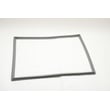
| Frost, warm temps, moisture | Door seal and door alignment | Refrigerator door gasket MDS64172919 |
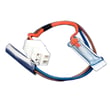
| Poor cooling, warm fresh food section | Airflow and defrost system | Lg refrigerator defrost heater 5300JK1005D |
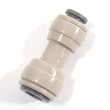
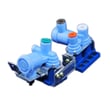
| Water dispenser or ice maker issues | Water supply and valve | Lg refrigerator water inlet valve 5221JB2006K |
Why it matters
Catching airflow, sealing, and leveling problems early helps the sealed refrigeration system run less, keeps temperatures stable, and prevents secondary issues like frost buildup, odors, and slow ice production.
Last updated: January 2026
What does DH mean on Kenmore Elite refrigerator?
On Kenmore Elite model 79578713800, DH (often shown as Er dH) points to a defrost heating problem: the refrigerator is not sensing the expected temperature rise during the defrost cycle, so frost can build up and airflow can drop. Use the 79578713800 owner’s manual troubleshooting section to confirm the exact display and checks.
What you’ll usually notice
- Freezer temperature slowly rises, or fresh food section warms up
- Frost or ice buildup on the freezer back wall
- Evaporator fan noise changes (airflow restricted by ice)
- Water leaking or puddles from defrost drain icing over
- The unit runs longer than normal
Quick checks we recommend (safe, no tools)
- Power reset: unplug for 5 minutes, then restore power.
- Check airflow: do not block vents; the manual notes proper air circulation is required for correct temperatures.
- Inspect door seal: a leaking gasket lets moist air in and increases frost.
- Look for heavy frost: if the freezer back panel is packed with ice, the defrost system is the likely cause.
What typically causes a DH/Er dH condition
| Likely cause | What it affects | Typical next step |
|---|---|---|
| Defrost heater issue | Heater does not melt frost | Test heater circuit (often requires panel removal) |
| Defrost sensor/thermistor issue | Control does not “see” warming | Check sensor placement and resistance |
| Control board/relay issue | Heater not energized | Verify voltage to heater during defrost |
| Airflow restriction from ice | Cooling performance drops | Defrost and correct root cause |
Parts that can be involved
If diagnosis points to the heater circuit, this model uses a defrost heater assembly such as the lg refrigerator defrost heater 5300JK1005D.
Why it matters
A DH/Er dH condition usually means frost is not being cleared. That frost blocks airflow between the freezer and refrigerator sections, which can cause warm temperatures, poor ice production, and water leaks.
Last updated: January 2026