


Are Whirlpool washer parts interchangeable?
Some Whirlpool washer parts are interchangeable, but only when the replacement is an exact match for your specific model, including Whirlpool direct-drive washer LSR5232LQ0. We recommend matching by model number and the exact part ID because similar-looking parts can fit but still cause poor performance or leaks.
Parts interchangeability depends on design details like mounting points, electrical connectors, and shaft sizes. For direct-drive Whirlpool washers, many components share a platform, but revisions and sub-model differences still matter.
Common examples where exact matching matters:
- Drain and fill parts: hose routing, port angles, and flow rates
- Drive system parts: couplers, clutches, and drive blocks must match the transmission and motor setup
- Switches and timers: wiring terminals and cam timing can differ
- Tub and basket parts: spline sizes and sealing surfaces vary
Use these checks to confirm you are buying the right replacement for your Whirlpool washer:
- Confirm the model number is LSR5232LQ0 (from the washer’s model tag)
- Match the part ID exactly, not just the part name
- Compare photos for connector style, mounting holes, and inlet/outlet orientation
- If the old part has a number stamped on it, compare it to the listing
- Replace related wear items when you already have the cabinet open (common on direct-drive designs)
These are parts listed for Whirlpool LSR5232LQ0; using the exact match helps avoid fit and performance issues.
| Washer symptom | Part that often relates | Example part for this model |
|---|---|---|
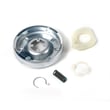
| Won’t spin or agitates poorly | Motor-to-gearcase drive connection | Washer motor coupling 285753A |
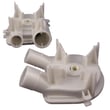
| Won’t drain or drains slowly | Pump or internal restriction | Washer drain pump WP3363394 |
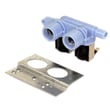
| Won’t fill or fills incorrectly | Water valve or flow restriction | Washer inlet valve 285805 |
| Loud during spin, weak spin | Clutch wear | Clutch 285785 |
Using a “close” part instead of the correct LSR5232LQ0 match can lead to repeat failures, leaks, noise, or electrical issues. Exact part matching protects wash performance and helps the repair last.
Last updated: February 2026
How do I fix a low flow error on my washing machine?
A low-flow (slow fill) problem on your Whirlpool LSR5232LQ0 direct-drive washer is almost always caused by restricted water supply to the inlet valve. We fix it by confirming strong house water pressure, fully opening both shutoff valves, then cleaning the inlet valve screens where the hoses connect.
- Make sure both hot and cold shutoff valves are fully open.
- Straighten any kinked fill hoses behind the washer.
- Verify the hoses are connected to the correct hot and cold ports.
- Check that the washer lid closes fully (some cycles will not advance if the lid switch is not made).
- Run a fill and listen: a loud hum with little water usually points to a restriction at the valve screens.
- Unplug the washer.
- Turn off both water supply valves.
- Remove the hot and cold hoses from the washer.
- Inspect and rinse the small filter screens in the washer’s inlet ports; use a soft brush and rinse with water. For mineral buildup, soak the screens briefly in white vinegar, then rinse.
- Reinstall hoses, turn water back on, and check for leaks.
If the screens are clean and flow is still weak, the inlet valve can be sticking or internally restricted; replacement is the next step using the exact washer inlet valve 285805.
| What you observe | Most likely cause | What we do next |
|---|---|---|
| Slow fill on both hot and cold | Supply restriction or low house pressure | Test flow at the wall valves into a bucket; replace old hoses if needed |
| Slow fill on only hot or only cold | One clogged screen or failing valve solenoid | Re-clean that side; replace inlet valve |
| Fills, then stops early | Water-level system issue | Inspect the pressure hose for pinches or leaks; consider hose-wl WP353244 |
| Won’t fill and won’t advance | Lid switch not closing | Test lid switch operation; replace if intermittent |
Low water flow can cause poor cleaning, long cycle times, and incomplete rinsing. Fixing the restriction early also helps protect the inlet valve and reduces strain on the washer’s fill system.
Last updated: February 2026
How to calibrate Whirlpool washer suspension rods?
On the Whirlpool LSR5232LQ0 direct-drive washer, the suspension springs are passive parts, so there is no true “calibration” step like you see on newer electronic washers. If the tub is bouncing or sitting off-center, the fix is to level the washer and inspect or replace worn suspension components such as the washer suspension spring WP63907.
- Unplug the washer.
- Confirm the cabinet is solid on the floor; adjust the front leveling legs until it does not rock.
- Recheck that the washer is not overloaded or washing a single heavy item (common cause of off-balance).
- Open the lid and push the basket down; it should rebound smoothly, not “pogo” or slam.
- Look for a spring that is stretched, unhooked, or rubbing the cabinet.
Because LSR5232LQ0 uses mechanical suspension springs (not suspension rods with sensors), “calibration” usually means restoring correct tub support and balance:
| Symptom | Most likely cause | What to check next |
|---|---|---|
| Excessive shaking in spin | Weak or stretched suspension spring | Inspect/replace washer suspension spring WP63907 |
| Tub hits cabinet | Leveling issue or spring off its mount | Level washer; verify spring hooks are seated |
| Loud bang at spin start | Load distribution or worn drive components | Redistribute load; inspect clutch and drive block |
| Won’t spin up smoothly | Drive system wear | Check clutch 285785 and washer drive block WP389140 |
- With the washer empty, rotate the basket by hand to confirm it spins freely.
- Press down on the basket at the front, back, and sides; rebound should feel even.
- Run a small load and verify the tub stays centered through drain and spin.
A properly supported tub reduces vibration, protects the gearcase and drive system, and helps the washer reach full spin speed so clothes come out drier.
Last updated: February 2026
How to read Whirlpool model numbers?
Whirlpool model numbers identify the product type, series, and feature set; for your Whirlpool direct-drive washer model LSR5232LQ0, the full model number is what we use to match the correct diagrams and replacement parts so you get the right fit the first time.
Whirlpool model numbers are typically a mix of letters and numbers; each section points to something specific.
- Leading letters: product platform or style (for example, many top-load washers start with letters like LSR)
- Middle numbers: series and design family (helps narrow down compatible parts)
- Trailing letters/numbers: feature variations and engineering changes
- Final digit (often 0, 1, 2, etc.): revision level; even a one-digit change can affect part compatibility
On most Whirlpool top-load washers like LSR5232LQ0, the model tag is commonly found in one of these spots:
- Under the lid, around the tub opening
- On the rear panel of the cabinet
- Along the lid hinge area
- Inside the control console area (less common)
Small model-number differences can change which motor, pump, or switch your washer uses. When you shop parts, we match by the full model number so you avoid returns.
| What you enter | What can happen | Best practice |
|---|---|---|
| Partial model (example: LSR5232) | Wrong part version may show | Use the full model: LSR5232LQ0 |
| Wrong last digit/letter | Parts may not fit or wire up correctly | Match every character |
| Model vs. serial confusion | Serial does not select parts | Use model for parts; serial for date/plant info |
If you are troubleshooting and ordering parts, the model number ensures we pull the correct options for your washer, such as the washer motor coupling 285753A or the washer inlet valve 285805.
Using the full Whirlpool model number prevents mismatched parts, saves time during repair, and helps you diagnose correctly (especially on direct-drive washers where several symptoms overlap).
Last updated: February 2026
What does F32 mean on a Whirlpool washer?
On a Whirlpool washer, F32 typically points to a long-drain condition (the washer is taking too long to pump water out). On the Whirlpool LSR5232LQ0 direct-drive washer, the most common causes are a restriction in the drain path or a failing drain pump.
- Unplug the washer before inspecting underneath.
- Make sure the drain hose is not kinked, crushed, or shoved too far down the standpipe.
- Check the standpipe or laundry tub for a slow household drain (a partial clog can mimic a washer problem).
- If the tub is full, bail out water first so you can safely access the pump area.
- Look for coins, socks, or debris at the pump inlet and in the hoses.
If the drain path is clear but the washer still drains slowly, the pump is the first part we suspect on this model.
- Replace the pump if it is noisy, leaking, or the impeller is damaged: washer drain pump WP3363394
- If the pump is good, inspect the internal drain hose for splits, soft spots, or internal blockage: washer inner drain hose WPW10358149
| Symptom | Most common cause | What to do |
|---|---|---|
| Hums but drains slowly | Partial blockage or weak pump | Clear hoses; consider pump replacement |
| Loud grinding during drain | Debris in pump or broken impeller | Inspect pump; replace if damaged |
| Water on floor during drain | Pump or hose leak | Check clamps/hoses; replace leaking part |
| Drains fine sometimes | Intermittent obstruction | Check for small items in hoses/pump |
A long-drain condition can stop the cycle before spin, leaving clothes soaking wet and putting extra strain on the drive system. Restoring normal drain flow helps the washer complete the drain and spin portions reliably.
Last updated: February 2026
What is the most common problem with Whirlpool washers?
The most common Whirlpool washer problem is a no-spin or no-drain condition. On the Whirlpool LSR5232LQ0 direct-drive washer, this usually traces to a worn drive coupling, a failing drain pump, or a lid switch issue that prevents the washer from advancing into spin.
- Washer won’t spin: drive system not transferring power (often the motor coupling)
- Washer won’t drain: pump problem or a blockage in the drain path
- Loud grinding/rattling in spin: worn drive block or clutch wear
- Stops mid-cycle: lid switch not consistently closing, or timer contacts wearing
- Shakes or bangs: suspension springs stretched or load consistently unbalanced
- Confirm the lid is closing firmly and the washer starts and stops reliably when you open and close the lid.
- Listen during drain: if you hear the motor running but water stays in the tub, the pump or hose is the likely issue.
- Check for simple drain restrictions: kinked drain hose, clogged standpipe, or a small item stuck at the pump inlet.
- Watch agitation: if it fills and the motor runs but agitation is weak or absent, the coupling is a top suspect.
| Problem you see | Most likely cause | Part to consider for LSR5232LQ0 |
|---|---|---|
| Won’t spin and/or won’t agitate | Motor coupling worn/broken | Washer motor coupling 285753A |
| Won’t drain (or drains very slowly) | Drain pump jammed or leaking | Washer drain pump WP3363394 |
| Spins but makes noise, poor spin performance | Clutch slipping | Clutch 285785 |
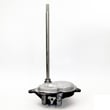
| Basket loose on drive, loud clunking | Drive block worn | Washer drive block WP389140 |
| Intermittent operation or cycle won’t advance | Timer contacts wearing | Washer timer WP3954563 |
A no-spin or no-drain issue is more than an inconvenience; it can leave clothes soaking wet, strain the drive motor, and turn a small wear item (like a coupling or pump) into a bigger repair if the washer keeps running while slipping or blocked.
Last updated: February 2026





