Owner’s manual
 Error Codes


What's better, top mount or bottom mount fridge?
A bottom-mount refrigerator is usually better for everyday convenience because fresh food sits at eye level and the freezer is in a pull-out drawer. A top-mount refrigerator is usually better if you want a simpler layout and lower upfront cost. Your LG LFXS29626W is a bottom-mount (French door) design; see the owner's manual for model-specific features and specs.
Quick comparison
| Feature | Top mount (freezer on top) | Bottom mount (freezer on bottom) |
|---|---|---|
| Fresh food access | You bend more often | More eye-level access |
| Freezer access | Easy reach | Drawer style, easier to organize |
| Organization | Typically simpler | Typically more bins, baskets, zones |
| Energy use (typical) | Often slightly lower | Often slightly higher |
| Best for | Budget, simplicity | Convenience, meal prep, families |
What we see on the LG LFXS29626W bottom-mount design
This model is a French door refrigerator with a bottom freezer. The manual lists key installation specs such as 115 VAC at 60 Hz, water pressure range of 20 to 120 psi, and overall dimensions of 35 3/4 in. wide, 36 1/4 in. deep, and 70 1/4 in. high (about 49 in. deep with the door open).
How to choose what is “better” for your kitchen
- Choose bottom mount if you use the refrigerator section most and want less bending.
- Choose top mount if you want a basic, reliable layout and usually a lower purchase price.
- If you have tight clearances, compare door swing and depth with doors open.
- If you use ice and water often, confirm you have potable water supply and correct pressure.
- If door alignment matters (uneven floors), pick a model with leveling legs and door alignment adjustments.
Why it matters
Layout affects daily comfort, food visibility (which reduces waste), and how well the refrigerator fits your space. For bottom-mount units like the LFXS29626W, correct leveling and door alignment also helps doors seal and close smoothly.
Last updated: February 2026
What is the most common problem with LG refrigerators?
For LG refrigerators like model LFXS29626W, the most common service issue we see is a cooling failure, often tied to the sealed cooling system (especially the compressor). Other frequent problems include weak ice production, dispenser water flow issues, and warm spots caused by airflow or dirty condenser coils; see the LFXS29626W owner's manual for model-specific features and care guidance.
Most common symptoms customers notice
- Refrigerator section warming up while the freezer seems “okay”
- Clicking, buzzing, or repeated start attempts from the back of the unit
- Ice maker stops making ice or makes hollow or small cubes
- Water dispenser flow slows down
- Frost buildup or uneven temperatures from blocked airflow
Quick checks that solve many “not cooling” complaints
Before replacing parts, we recommend these basics because they commonly restore normal temperatures:
- Confirm the control panel is set correctly and doors are closing fully
- Make sure vents inside the fresh food section are not blocked by food packages
- Clean dust from the condenser area (restricted airflow can raise temps)
- Unplug the refrigerator for 5 minutes, then plug it back in (the manual notes waiting before reconnecting power)
- If you smell burning plastic or see smoke, unplug the refrigerator immediately (safety guidance is in the manual)
Parts that commonly relate to these problems (for LFXS29626W)
If troubleshooting points to a failed component, these model-matched parts are common fixes:
| Problem area | What fails | Example part for this model |
|---|---|---|
| Not cooling | Sealed system/compressor | Refrigerator compressor TCA38091801 |
| Poor heat removal | Dirty or damaged condenser coil | Refrigerator condenser coil ACG73645004 |
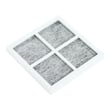
| Slow water flow | Clogged water filter | LG kenmore refrigerator water filter ADQ36006101 |
| No ice or dispenser issues | Water supply control | LG refrigerator water inlet valve AJU72992603 |
Why it matters
Cooling problems can quickly lead to food spoilage and extra strain on the sealed system. Catching airflow restrictions, dirty coils, or water supply issues early can prevent bigger repairs and keep temperatures stable.
Last updated: February 2026
What are the disadvantages of a bottom freezer refrigerator?
Bottom-freezer refrigerators like the LG LFXS29626W put fresh food at eye level, but the tradeoffs are a lower freezer drawer that requires bending, heavier lifting for frozen items, and a freezer layout that can be harder to keep organized. They can also be more sensitive to door-opening habits and moisture management.
Common disadvantages to expect
- More bending and lifting: You reach down into a deep drawer for frozen foods, which is tougher for frequent freezer use.
- Harder freezer organization: Stacked baskets and deep bins can hide items, so food is easier to lose.
- Heavier drawer loads: A fully loaded freezer drawer can feel heavy and awkward to pull out.
- Moisture and condensation concerns: Frequent door openings in humid conditions can increase condensation and frost risk.
- More attention to door sealing: If doors or drawers do not close tightly, temperatures can drift and efficiency drops.
What matters most in day-to-day use (and how to reduce the downsides)
We see the biggest complaints come from freezer access and organization. These habits help:
- Keep “daily use” frozen items in the upper basket so you open the drawer for less time.
- Avoid overpacking; tight packing restricts airflow and makes items harder to find.
- Open doors and drawers less often and for shorter periods, especially in humid weather.
- Make sure doors close fully every time; a poor seal can raise temps and increase running time.
- Wipe condensation when you see it and keep food covered to reduce moisture buildup.
Bottom freezer vs. top freezer: quick comparison
| Feature | Bottom freezer | Top freezer |
|---|---|---|
| Fresh food access | Easier (eye level) | Requires bending |
| Freezer access | Requires bending | Easier (eye level) |
| Freezer organization | Deep drawer, can hide items | Shelves, often easier to see |
| Typical user complaint | Heavy drawer, lost items | Fresh food less convenient |
Why it matters
A bottom freezer design can feel more convenient for fresh-food cooking, but it rewards good habits: keeping doors closed, managing humidity, and organizing the freezer drawer. Those steps help maintain stable temperatures and reduce condensation and frost.
For model-specific use and care tips (including door use, condensation guidance, and safety notes), follow the LFXS29626W owner's manual.
Last updated: February 2026
Why is my LG refrigerator leaking from the bottom?
If your LG LFXS29626W is leaking from the bottom, the most common causes are a clogged defrost drain (water overflows into the base), a water supply or dispenser leak (filter, tubing, or inlet valve), or ice maker overflow or melting that drips down and out.
Quick checks we recommend first
- Look for a sheet of ice or standing water under the crisper drawers (often points to a defrost drain issue).
- Check the water filter seating and housing area for drips; replace the filter if it is overdue.
- Inspect the water line behind the refrigerator for kinks, cracks, or a loose connection.
- Look under the unit for a wet drain pan (some moisture is normal; constant overflow is not).
- If the leak happens only when dispensing water or making ice, focus on the dispenser and ice maker water circuit.
Most likely causes and what to do
1) Clogged defrost drain
When the defrost drain clogs, defrost water cannot flow to the drain pan and can spill into the refrigerator floor and then leak out.
What to do
- Unplug the refrigerator.
- Remove food and drawers as needed to find water or ice buildup.
- Melt ice with warm air (hair dryer on low) and flush the drain with hot water using a turkey baster.
- Clean the drain pan area if it overflowed.
2) Water filter, tubing, or inlet valve leak
A slow drip can run down internal panels and show up as a bottom leak.
Parts that commonly fix this on LFXS29626W
| Leak area | What you may notice | Related part on this model |
|---|---|---|
| Filter area | Drips near filter housing, after filter change | LG kenmore refrigerator water filter ADQ36006101 |
| Rear water line | Wet floor behind unit | Refrigerator plastic tube MJU62070602 |
| Valve area | Drips at back lower section, weak fill | LG refrigerator water inlet valve AJU72992603 |
Why it matters
Bottom leaks can damage flooring and also lead to ice buildup that blocks airflow, which can cause warm temperatures and poor ice production. Keeping the ice bin managed also helps prevent melting and dispenser leaks when the ice maker is turned off (see the owner's manual for ice bin handling and safety guidance).
Helpful DIY guidance
- How to replace the water filter in an LG refrigerator
- How to diagnose a faulty refrigerator water inlet valve
- Common refrigerator ice maker problems and solutions
Last updated: February 2026
Can I replace fridge parts myself?
Yes, for LG model LFXS29626W, we can replace many common refrigerator parts ourselves (filters, door gaskets, shelves, some ice maker components) using basic hand tools and careful safety steps. For sealed-system and high-voltage repairs, we use a qualified technician because those repairs require specialized equipment and training.
What you can safely DIY on LFXS29626W
These repairs are typically straightforward when you unplug the refrigerator first and follow the steps in the owner's manual.
- Replace the water filter: LG kenmore refrigerator water filter ADQ36006101
- Install a filter bypass for troubleshooting: refrigerator water filter bypass ABN73019101
- Replace a leaking or no-fill valve: LG refrigerator water inlet valve AJU72992603
- Fix dispenser button issues: LG refrigerator dispenser switch 6600JB3001C
- Address warm air leaks: refrigerator gasket assembly ADX72930460 or refrigerator gasket assembly ADX72930461
Repairs we do not DIY (and why)
The manual emphasizes unplugging before cleaning or repairing, and it also warns against disassembling or repairing the refrigerator yourself in ways that create safety risks.
| Repair type | Examples on this model | Why it is not DIY-friendly |
|---|---|---|
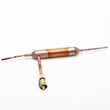
| Sealed-system refrigeration | Refrigerator compressor TCA38091801, refrigerator evaporator ADL73600903, refrigerator filter dryer ADH73150208 | Refrigerant handling, brazing, evacuation, and leak testing require specialized tools and training |
| Complex electrical diagnosis | Control board and wiring faults | Shock risk and misdiagnosis can cause repeat failures |
Safety steps we follow before any repair
The safest DIY repairs start with power and handling basics.
- Unplug by gripping the plug (never pull the cord)
- Unplug before cleaning or repairing; wait at least 5 minutes before plugging back in
- Keep fingers clear of pinch points around doors and hinges
- Avoid extension cords; use a properly grounded outlet
- If you smell burning plastic or see smoke, unplug immediately and stop the repair
Why it matters
DIY-friendly fixes (like a water filter, door gasket, or inlet valve) can restore ice and water performance, reduce leaks, and improve temperature stability. Knowing when a repair crosses into sealed-system work helps prevent injury and protects the refrigerator from costly damage.
For step-by-step filter help, use how to replace the water filter in an LG refrigerator.
Last updated: February 2026