Owner’s manual
 Error Codes


How long should a Whirlpool top-load washer last?
A Whirlpool top-load washer like model WTW7120HW0 typically lasts about 10 to 14 years with average household use. Lifespan varies most with load size, detergent choice (HE), installation/leveling, and whether wear items like inlet hoses are replaced on schedule.
What affects lifespan the most
We see these factors make the biggest difference in how long a top-load washer runs reliably:
- Overloading (stresses the drive system, suspension, and tub)
- Using non-HE detergent or too much detergent (can cause residue, odors, and performance issues)
- Poor leveling or weak flooring (increases vibration and wear)
- Hard water and infrequent cleaning (buildup can shorten component life)
- Not replacing inlet hoses periodically (leaks and hose failures can create bigger problems)
For model-specific care steps and cleaning guidance, follow the maintenance section in the WTW7120HW0 installation & care manual.
Maintenance habits that help WTW7120HW0 reach the high end of the range
These are practical, low-effort habits that tend to extend washer life:
- Run the Clean Washer cycle about monthly (or every ~30 cycles)
- Leave the lid open between loads so the tub can dry
- Use warm or hot washes sometimes, not only cold
- Measure detergent carefully and use HE detergent only
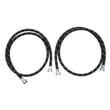
- Replace water inlet hoses about every 5 years and inspect for bulges or cracks
Quick “repair vs replace” guide
| If your WTW7120HW0 is… | Usually makes sense to… |
|---|---|
| Under ~7 years old with one clear failure | Repair first |
| 10+ years old with multiple recurring issues | Compare repair cost to replacement |
| Loud vibration, walking, or banging | Check leveling and load balance before assuming a major failure |
Why it matters
A washer’s “life” is often limited by preventable wear (vibration, residue buildup, hose leaks). Consistent care helps protect major components like the drive system, tub, and water inlet valve.
Last updated: January 2026
What is a common problem for a Whirlpool washer?
A common problem we see on Whirlpool washers like model WTW7120HW0 is a “won’t drain or won’t spin” complaint, often caused by a blocked drain path, an unbalanced load, or a lid-lock issue that prevents the washer from entering high-speed spin. For model-specific care and checks, use the WTW7120HW0 installation & care manual.
Most common issues (and what to check first)
- Won’t drain / water left in tub: check the drain hose for kinks, clogs, or an improper standpipe setup.
- Won’t spin / stops mid-cycle: redistribute the load; bulky items can trigger out-of-balance protection.
- Won’t start or pauses: confirm the lid is closing fully and latching.
- Leaks: inspect inlet hose connections and look for drips at the faucets and fill valves.
- Excess vibration or “walking”: verify the washer is level and all feet are firmly on the floor.
Model-specific notes for WTW7120HW0
The WTW7120HW0 manual emphasizes installation factors that directly affect common “drain/spin/noise” complaints:
- Use a grounded 3-prong outlet and avoid extension cords.
- Keep the drain hose insertion to about 4.5 in. into the standpipe to help prevent siphoning.
- Leveling matters; an unlevel washer can cause vibration, noise, and spin interruptions.
Parts that commonly relate to these symptoms
If basic checks do not resolve the issue, these model-compatible parts are often involved:
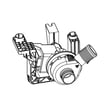
- Pump asm, dr W11396717 (draining problems, humming with no drain, slow drain)
- Lid lock-sol W11700916 (won’t start, won’t spin, lid won’t lock)
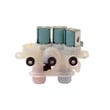
- Washer water inlet valve W11220230 (no fill, slow fill, or leaking into tub)
Quick symptom-to-likely-cause table
| Symptom | Most likely cause | First action |
|---|---|---|
| Won’t drain | Clog/kinked hose, pump issue | Check hose routing and obstructions |
| Won’t spin | Unbalanced load, lid lock issue | Rebalance load; confirm lid latches |
| No/slow fill | Water supply off, inlet valve issue | Turn on faucets; check screens |
| Loud banging | Not level, load distribution | Level washer; redistribute items |
Why it matters
Catching the “simple” causes first (leveling, hose routing, load balance, lid closure) prevents repeat cycle failures and reduces strain on the drive and drain system, which can help avoid unnecessary part replacement.
Last updated: January 2026
Is a 4.5 cu ft washer large?
Yes; 4.5 cu ft is generally considered a large-capacity washer. For your Whirlpool WTW7120HW0, our model-specific manual text provided here does not state the tub capacity in cubic feet, so we cannot confirm whether this exact model is 4.5 cu ft based on the available documentation.
How “large capacity” is typically defined
Capacity labels vary by brand and model line, but these ranges are commonly used:
- 3.0 to 4.4 cu ft: standard capacity
- 4.5 to 4.9 cu ft: large capacity
- 5.0+ cu ft: extra-large capacity
Quick capacity guide (general)
| Capacity range | Common label | Typical fit |
|---|---|---|
| 3.0 to 4.4 cu ft | Standard | Smaller households, lighter weekly laundry |
| 4.5 to 4.9 cu ft | Large | Family-size mixed loads, more towels/jeans |
| 5.0+ cu ft | Extra-large | Frequent bulky items, larger households |
What “large” means for real loads
A 4.5 cu ft washer usually handles bigger mixed loads and many bulky items, but performance still depends on loading technique.
- Load loosely; do not pack items down
- Bulky items should move freely for proper wash action
- Balance the load (mix small and large items)
- Use HE detergent; too much can cause residue and odors
Why it matters
Washer capacity affects cleaning, rinsing, and vibration. Overfilling can prevent proper circulation and can increase out-of-balance spinning, even in a large-capacity top-load washer.
Model-specific care tip for WTW7120HW0
The WTW7120HW0 manual recommends routine maintenance such as leaving the lid open between uses and running the Clean Washer cycle about monthly (or every 30 cycles). See the WTW7120HW0 installation & care instruction manual for the exact steps and safety guidance.
Last updated: January 2026