Installation guide
 Owner’s manual
 Error Codes


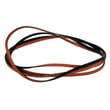
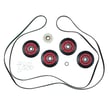
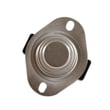
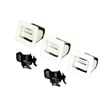
Is it worth replacing the heating element in a dryer?
Yes; for Kenmore dryer model 11066922501, replacing a failed heating element is usually worth it because the part cost is typically far less than a new dryer and it often restores normal drying performance. We also recommend checking the high-heat safety parts at the same time to prevent repeat failures.
When replacement is the right call
Replacing the heating element is a strong choice when:
- The dryer tumbles normally but does not heat
- The drum, belt, and motor sound normal (no squealing or grinding)
- The cabinet and drum are in good condition (no major rust or damage)
- You have stable power and proper airflow through the vent
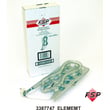
A common replacement for this model is the dryer heating element WP3387747.
What to check along with the heating element
A new element can fail early if airflow is restricted or a safety device is weak. While you have the dryer open, we typically check:
- Thermal cut-off and high-limit protection (often replaced as a set)
- Operating thermostat function
- Lint buildup in the blower housing and exhaust duct
- Power supply at the terminal block (electric dryers need full voltage)
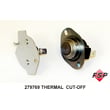
Parts that often come up in “no heat” repairs include the cut-off kit 279769 and the dryer operating thermostat WP3387134.
Quick cost vs. benefit comparison
| Option | Typical cost | Typical outcome |
|---|---|---|
| Replace heating element | Lower | Restores heat; best value if dryer is otherwise solid |
| Replace dryer | Higher | New features and warranty; higher upfront cost |
| Diagnose airflow and safety parts first | Low | Prevents repeat failures and overheating issues |
Why it matters
A dryer that is not heating is often a straightforward repair, but restricted venting can overheat the heater housing and trip safety devices. Fixing airflow and replacing the right heat components together helps the dryer dry faster and run safer.
For model-specific disassembly notes and safety steps, follow the 11066922501 owner's manual.
Last updated: January 2026
Does a dryer thermal fuse reset itself?
No. On Kenmore dryer model 11066922501, the thermal fuse (or thermal cut-off) is a one-time safety device; when it opens from overheating, it does not reset and the correct fix is replacing the failed safety part and correcting the overheating cause.
What to do when the thermal fuse blows
- Unplug the dryer before any checks.
- Fix airflow first: clean the lint screen, lint housing, blower area, and the entire vent run to the outside.
- Check that the outside vent hood opens freely and is not blocked.
- Inspect for crushed, kinked, or excessively long venting.
- After airflow is corrected, replace the failed safety part (many Kenmore designs use a kit such as a cut-off kit 279769 so the matched components are renewed together).
Quick troubleshooting checklist (common root causes)
- Lint buildup in the blower housing or internal ducting
- Vent pipe restriction (lint, bird nest, stuck damper)
- Long vent run with too many elbows
- Dryer overloaded or installed in a hot, tight space
- Failed cycling thermostat causing overheating (example replacement: dryer operating thermostat WP3387134)
Thermal fuse vs. thermostat: what is the difference?
| Part type | Can it reset? | What it does | Typical symptom when it fails |
|---|---|---|---|
| Thermal fuse / thermal cut-off | No | Cuts power (or heat) if unsafe temperature occurs | Dryer will not run or will not heat |
| Operating thermostat | Yes (cycles) | Regulates normal drum temperature | Overheating, poor drying, temperature swings |
| High-limit thermostat | Yes (usually auto-reset) | Backup limit if temperature gets too high | Dryer stops heating, may cycle off |
Why it matters
Replacing a blown thermal fuse without fixing the airflow problem usually leads to another failure quickly. Restoring proper venting protects the heater, motor, and wiring, and helps the dryer dry faster with less energy.
For model-specific access and safety notes, follow the steps in the 11066922501 owner’s manual.
Last updated: January 2026
What are signs of a bad dryer heating element?
A bad heating element in your Kenmore dryer model 11066922501 usually shows up as a dryer that tumbles normally but does not heat, so clothes stay damp or take much longer to dry. You may also notice overheating symptoms like a hot cabinet smell or repeated thermal shutoffs.
Common symptoms you can spot
- Dryer runs and drum turns, but there is little to no heat
- Dry times suddenly get much longer than normal
- Heat is inconsistent (warm at first, then cool)
- Burning smell or a “hot metal” odor during a cycle
- Dryer shuts off early, or you need to restart it after it cools
- Breaker trips or the dryer stops heating after a short time
Quick checks before replacing parts
These checks help you avoid replacing a heater when the real issue is airflow or a safety device.
- Clean the lint screen and confirm strong airflow at the outside vent hood
- Inspect the vent hose for kinks, crushing, or heavy lint buildup
- Try a timed dry cycle; auto cycles can end early if the load is small or sensors are dirty
- If the drum turns but the dryer will not start reliably, check the door switch and latch
- Follow the diagnostic and access steps in the 11066922501 owner’s manual
What else can mimic a “bad element”
| Symptom | More likely cause | Example part to consider |
|---|---|---|
| No heat, good airflow | Heating element open | Dryer heating element WP3387747 |
| No heat, weak airflow | Clogged vent or blower issue | Dryer blower wheel WP697772 |
| Heats then stops | Thermal cut-off or thermostat opening | Dryer operating thermostat WP3387134 |
Why it matters
A failed heating element (or an airflow restriction that overheats the heater housing) can cause very long dry times and repeated high-limit shutoffs. Fixing the root cause restores normal drying performance and helps protect other components.
Last updated: January 2026
How to tell if a dryer start switch is bad?
A bad start switch on your Kenmore dryer model 11066922501 usually shows up as a dryer that has power but will not start when you press Start. The most reliable check is a multimeter continuity test: the switch should read open when not pressed and closed (continuity) when pressed.
Quick symptoms to look for
- Dryer has power (lights or timer works) but pressing Start does nothing
- You have to press unusually hard or wiggle the button to get any response
- Start button feels loose, stuck, or does not “click” normally
- Dryer starts intermittently, then stops responding again
- No motor sound or drum movement even though the door is closed
How to test the start switch (continuity test)
- Unplug the dryer (or switch off the breaker).
- Access the console area where the start switch is mounted; follow the access steps in the 11066922501 owner’s manual.
- Label and remove the wires from the start switch terminals.
- Set your multimeter to continuity (or the lowest ohms setting).
- Test the switch:
- Not pressed: meter should show open (no continuity).
- Pressed: meter should show closed (continuity, near 0 ohms).
Interpreting your meter readings
| Switch position | Expected reading | What it means if different |
|---|---|---|
| Not pressed | Open (no continuity) | If it shows continuity, the switch may be shorted |
| Pressed | Closed (continuity) | If it stays open, the switch is bad |
If the switch tests good, check these next
A “no start” problem is often caused by another safety or drive component.
- Door switch operation (door must fully close)
- Timer or electronic control sending power to the motor circuit
- Thermal cut-off or fuse condition (overheating or vent restriction can trigger it)
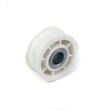
- Belt and idler system (a seized pulley can prevent normal operation)
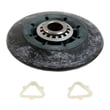
If you are already opening the cabinet for a no-start or squeal issue, a kit like the dryer repair kit 4392067 is commonly used to refresh wear items.
Why it matters
The start switch is a simple on-demand contact; when it fails, the motor circuit never gets the “start” signal. Testing it first prevents replacing higher-cost parts like a timer or motor unnecessarily.
Last updated: January 2026