Owner’s manual
 Error Codes


What is the average lifespan of a Samsung dryer?
A Samsung dryer typically lasts 10 to 15 years. For your Samsung DV456EWHDSU, consistent airflow maintenance (lint screen and venting), avoiding overloads, and catching heat issues early are the biggest factors that keep it closer to the 15-year end of that range.
What affects dryer lifespan the most
- Airflow and lint control: clean the lint screen every load and keep the vent path clear
- Load size: repeated overloading strains the drum belt, rollers, and motor
- Heat stress: restricted airflow overheats thermostats and the heating circuit
- Run time: long cycles and back-to-back loads increase wear
- Installation quality: crushed or extra-long venting shortens component life
Quick maintenance routine (high impact)
Use these habits to extend the life of DV456EWHDSU and reduce common failures:
- Clean the lint screen before or after every cycle
- Check outside vent hood for strong airflow while running
- Vacuum lint around the door opening and lint screen housing monthly
- Inspect venting for kinks, sagging, or heavy lint buildup every 6 to 12 months
- Stop using the dryer if you smell burning or notice repeated overheating
Common wear items and what they usually mean
| Symptom | Most common cause | Typical fix |
|---|---|---|
| Thumping or squealing | Worn drum support rollers | Replace roller(s) and inspect belt |
| Drum not turning | Broken or stretched belt | Replace belt |
| No heat or overheating | Failed thermostat, thermal cut-off, or airflow restriction | Correct airflow; replace failed safety part |
| Long dry times | Vent restriction or blower issue | Clean venting; inspect blower wheel |
Why it matters
Most “early failures” are really airflow and heat-stress problems. Keeping the venting clear protects expensive components like the heating system and drive motor, and it helps clothes dry faster with less wear on the dryer.
For model-specific care and cleaning guidance, follow the DV456EWHDSU owner's manual.
Last updated: February 2026
What is the most common Samsung dryer error?
On Samsung dryers like model DV456EWHDSU, the most common error is typically a door-related error (the dryer senses the door is open or not latched). After door errors, the next most common issues are airflow restriction and temperature-sensing problems caused by lint buildup.
What to check first (fast fixes)
- Open and firmly re-close the door; make sure the latch clicks.
- Clear lint from the lint screen and the lint screen housing.
- Check the door strike and latch area for lint, detergent residue, or a sock caught in the opening.
- Run a timed dry cycle and confirm strong airflow at the outside vent.
- If the dryer runs but stops or shows sensor-related codes, inspect the exhaust duct for kinks or crushing.
Common Samsung error themes and what they usually mean
| Error theme | What the dryer is detecting | Most common cause | What to do next |
|---|---|---|---|
| Door / latch | Door not closed or switch not made | Door not fully shut, lint at latch | Re-seat door; clean latch area; test door switch |
| Airflow / overheating | Heat not moving out of the drum | Clogged venting, blocked lint path | Clean venting; verify blower airflow |
| Temperature sensor | Temperature reading out of range | Lint restriction, sensor drift | Clean airflow path; test sensor circuit |
Parts that commonly relate to error codes on DV456EWHDSU
If cleaning and airflow checks do not resolve recurring errors, these model-compatible parts are often involved in door, heat, and sensor faults:
- Dryer door switch DC64-00828B (door detection)
- Dryer thermistor DC32-00007A (temperature sensing)
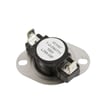
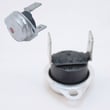
- Dryer thermal cut-off thermostat DC47-00016A (overheat protection)
- Dryer high-limit thermostat DC47-00018A (overheat protection)
Why it matters
Door and airflow related errors are common because the dryer relies on a closed-door signal and steady exhaust airflow to heat safely. Fixing lint restrictions also improves dry times and helps prevent repeat shutdowns.
Helpful references
- Samsung dryer error codes for code meanings and the most common fixes.
- For model-specific operation and diagnostics, use the DV456EWHDSU manual.
Last updated: February 2026
How to tell if Samsung dryer thermal fuse is bad?
On our Samsung dryer model DV456EWHDSU, a bad thermal fuse typically shows up as a dryer that will not start, or a dryer that runs but will not heat. The sure way to confirm is a continuity test with a multimeter; a good fuse reads closed (continuity), and a blown fuse reads open (no continuity). See the DV456EWHDSU user manual for safety steps and access guidance.
Quick symptoms checklist
- Dryer will not start (no motor run)
- Dryer runs but no heat (some models and failure types)
- Cycle stops early or acts “dead” after overheating
- Burning smell or very hot cabinet (often points to airflow restriction)
- Repeated fuse failures after replacement (root cause not corrected)
How to test the thermal fuse (basic method)
- Unplug the dryer (electric shock hazard).
- Access the fuse area (commonly on the blower housing or heater housing).
- Pull at least one wire off the fuse terminal.
- Set meter to continuity or ohms.
- Touch probes to the fuse terminals.
What the meter should show
| Meter result | What it means | What to do next |
|---|---|---|
| Continuity (beep or near 0 ohms) | Fuse is good | Check airflow, thermostats, heater circuit |
| No continuity (OL/infinite) | Fuse is blown | Replace fuse and fix overheating cause |
Fix the overheating cause first (so it does not blow again)
A thermal fuse usually opens because the dryer overheated. Before or along with replacing the fuse, we recommend:
- Clean the lint screen and confirm the screen housing is not packed with lint
- Inspect and clean the vent duct to the outside; remove kinks and crushed flex duct
- Check the blower wheel for damage or looseness (airflow loss)
- Verify the high-limit thermostat is operating correctly
- Confirm the heater is not shorted to the housing
If you are also chasing heat problems, our Samsung dryer error codes guide can help you narrow down related heating and airflow faults.
Related parts customers often replace for heat and overheat issues
| Part | What it affects |
|---|---|
| Dryer thermal cut-off fuse, 320-degree f DC47-00015A | Opens on overheat; can stop heat or operation |
| Dryer high-limit thermostat DC47-00018A | Limits heater temperature; can trip if airflow is poor |
| Dryer thermistor DC32-00007A | Helps control temperature; bad readings can cause heat issues |
Why it matters
A blown thermal fuse is a safety device doing its job. Replacing it without correcting restricted airflow (lint buildup, blocked venting, weak blower) often leads to repeat failures and longer dry times.
Last updated: February 2026
How to find part number for Samsung dryer?
To find the correct part number for your Samsung dryer, we match parts to the model number first. For model DV456EWHDSU, the model and serial tag is typically on the front frame behind the dryer door; if it’s missing or unreadable, a second tag is often on the back panel. Use the model number to look up the exact replacement part.
Where to look for the model and serial tag
Check these common locations on Samsung dryers like DV456EWHDSU:
- Front frame behind the door opening (most common)
- Back of the dryer cabinet (secondary tag)
- Inside the door area near the lint screen housing (less common)
- On the rear panel near the power cord entry (less common)
For diagrams and model identification details, use the DV456EWHDSU manual.
How to get the right part number once you have the model
After you confirm the model number, use it to select the part by name and function (belt, heating, thermostat, switch). For this model, common examples include:
- Dryer thermistor DC32-00007A for temperature sensing
- Samsung dryer heating element DC47-00019A for no-heat or weak-heat symptoms
- Samsung dryer drum belt 6602-001655 for a drum that will not tumble
Quick symptom-to-part starting points
| Symptom | Common part to check | What it affects |
|---|---|---|
| Runs but no heat | Heating element, thermal cut-off | Heating circuit |
| Long dry times | Venting, thermistor, high-limit thermostat | Airflow and temperature control |
| Loud thumping/squeal | Drum support roller, belt | Drum support and drive |
| Will not start | Door switch, control board | Start and safety interlocks |
Why it matters
Samsung uses multiple revisions within a series, so the same-looking dryer can take different parts. Using the exact DV456EWHDSU model number helps us ensure the part number you order fits your drum, heater housing, and wiring harness correctly.
Last updated: February 2026
How to reset a Samsung Moisture sensor dryer?
To reset the moisture-sensing system on your Samsung dryer model DV456EWHDSU, we recommend a simple power reset: unplug the dryer (or switch off the breaker) for 5 to 10 minutes, then restore power and run a timed cycle to confirm operation. If drying is still inconsistent, cleaning the sensor bars and checking airflow fixes the root cause more often than repeated resets.
Reset steps (safe, quick)
- Turn the dryer OFF.
- Unplug the power cord (or turn the breaker OFF).
- Wait 5 to 10 minutes.
- Restore power.
- Run Timed Dry for 10 to 15 minutes with a small load to verify heat and drum operation.
For control and cycle details specific to DV456EWHDSU, follow the DV456EWHDSU owner's manual.
Clean the moisture sensor (most common “reset” that actually works)
Moisture sensors are typically two metal bars inside the drum near the lint filter housing. Residue from dryer sheets and fabric softener can insulate the bars so the control thinks clothes are dry too soon.
- Locate the sensor bars inside the drum.
- Wipe them with rubbing alcohol on a soft cloth.
- Lightly scrub stubborn film with a non-scratch pad.
- Avoid spraying cleaner directly into the drum vents.
Airflow checks that affect moisture sensing
Restricted airflow can cause long dry times, overheating, or early shutoff because temperatures and humidity do not behave normally.
- Clean the lint screen before every load.
- Confirm the vent hose is not crushed or kinked.
- Check the exterior vent hood opens fully.
- Keep vent runs short and minimize elbows.
Quick symptom guide
| What you notice | Most likely cause | Best first step |
|---|---|---|
| Stops early, clothes still damp | Dirty sensor bars | Clean sensor bars with alcohol |
| Takes too long to dry | Vent restriction | Inspect and clean venting |
| No heat on any cycle | Heating circuit issue | Test heating components |
When a reset is not enough (parts to consider)
If the dryer tumbles but heat or temperature feedback is unstable, these model-compatible parts are common suspects:
- Dryer thermistor DC32-00007A (temperature sensing)
- Dryer heating element DC47-00019A (electric heat source)
- Dryer thermal cut-off thermostat DC47-00016A (opens if overheating occurs)
Why it matters
Moisture-sensing cycles depend on accurate sensor contact and stable airflow. A power reset clears a temporary control glitch, but cleaning the sensor bars and restoring proper venting prevents repeat shutoffs, long dry times, and overheating.
Last updated: February 2026
How to tell if a Samsung dryer heating element is bad?
On our Samsung dryer model DV456EWHDSU, a bad heating element typically shows up as a dryer that runs but produces little or no heat. The most reliable check is a visual inspection for a broken coil plus a multimeter test for continuity and a ground fault; either failure points to a bad element.
Quick checks before testing parts
- Confirm the cycle is a heated cycle (not Air Fluff or No Heat).
- Clean the lint screen and make sure airflow is strong at the outside vent.
- Check the house breaker: many electric dryers can tumble on one leg of power but not heat.
- Let the dryer cool for 10 to 15 minutes; an overheat condition can trip safety thermostats.
- Review model-specific access and test points in the DV456EWHDSU owner's manual.
How to test the heating element (multimeter)
- Unplug the dryer (or switch off the breaker) before opening panels.
- Access the heater housing and disconnect the element wires.
- Set the meter to ohms (Ω) or continuity.
- Test terminal-to-terminal on the element:
- Continuity present (or a low, steady resistance reading) indicates the coil is not open.
- No continuity (often shown as OL or infinite resistance) indicates a broken coil.
- Test each terminal to the metal heater housing:
- Any continuity to the housing indicates a short to ground, and the element is bad.
What the results mean
| Test | Normal result | If it fails | Likely next step |
|---|---|---|---|
| Terminal-to-terminal | Continuity / low resistance | OL / no continuity | Replace the element |
| Terminal-to-housing | No continuity | Continuity present | Replace the element |
Parts that commonly fail with (or instead of) the element
If the element tests good but you still have no heat or overheating, these are common suspects on Samsung electric dryers:
- Samsung dryer heating element DC47-00019A (open coil or short to ground)
- Dryer high-limit thermostat DC47-00018A (opens if the heater overheats)
- Dryer thermal cut-off thermostat DC47-00016A (safety device that can open permanently)
- Dryer thermistor DC32-00007A (temperature sensing issues)
- Venting restriction (can cause repeated thermal cut-off trips)
Why it matters
A failed heating element stops proper drying, and a grounded element can cause overheating or nuisance trips. Verifying the element with a meter prevents replacing the wrong part and helps you correct airflow problems that can damage new components.
Last updated: February 2026
Is it worth replacing a heating element in a Samsung dryer?
Yes, it’s usually worth replacing the heating element in a Samsung dryer like model DV456EWHDSU when the dryer runs but won’t heat, because the part cost is typically far less than replacing the entire dryer. The key is confirming the no-heat problem is truly the element and not airflow or a safety thermostat.
When replacing the heating element makes sense
We recommend a heating-element replacement when the dryer tumbles normally, has good power, and you’ve ruled out venting restrictions and common heat-safety cutoffs.
- Dryer runs but clothes stay cold or barely warm
- Cycle times are suddenly much longer than normal
- You have strong airflow at the outside vent hood (or you can correct airflow issues)
- No burning smell from wiring or the terminal block
- You can test components with a multimeter (ohms/continuity)
If you need model-specific access steps and wiring diagrams, use the DV456EWHDSU owner’s manual.
What to check before you buy parts
A failed safety device can mimic a bad element. On DV456EWHDSU, these checks prevent replacing the wrong part.
- Clean the lint screen and inspect the entire vent run for clogs or crushed duct
- Verify the dryer is getting the correct supply voltage (electric dryers need full power to heat)
- Test the heating circuit parts for continuity when unplugged
- Inspect the heater wiring connections for heat damage
Common no-heat parts to compare
| Symptom | More likely cause | Example part for DV456EWHDSU |
|---|---|---|
| Runs, no heat | Open heater | Samsung dryer heating element DC47-00019A |
| Overheats, then stops heating | High-limit opens | Dryer high-limit thermostat DC47-00018A |
| No heat after overheating event | Thermal cut-off opens | Dryer thermal cut-off thermostat DC47-00016A |
| Erratic temps, poor drying | Sensor issue | Dryer thermistor DC32-00007A |
Why it matters
A restricted vent or failed thermostat can overheat the heater housing and repeatedly blow thermal cutoffs. Fixing airflow and replacing the correct heat-safety part helps the new heating element last and restores normal dry times.
For code-related symptoms, we also use the Samsung dryer error codes guide to match the display message to the most likely heating or airflow issue.
Last updated: February 2026