Owner’s manual
 View engine


What year was the snowblower made?
We can’t identify the exact manufacturing year for Craftsman model 247886940 from the model number alone, and the model-specific information we have here does not list a build date. The most reliable way is to match the unit’s ID tag details to the date guidance in the Craftsman 247886940 manual.
How to find the manufacturing date on your 247886940
On most Craftsman snow throwers, the build date is tied to the product identification label (sometimes called the model/serial tag). Check these common locations:
- Rear of the frame near the wheels
- Side of the auger housing
- Under the handle panel area
- Near the engine mounting plate
If you see a serial number, date code, or DOM (date of manufacture), write it down exactly as shown.
What to record (so we can date it accurately)
Capture these items from the ID tag:
- Model number: 247886940
- Serial number (full string)
- Any date code/DOM code
- Engine brand and engine model (if listed)
- Any separate MTD-style product number (sometimes also shown)
Quick guide: what “year made” might mean
Different labels use different “dates,” so it helps to confirm what you’re looking for.
| Date type | What it tells you | Where it’s usually found |
|---|---|---|
| Date of manufacture (DOM) | When the snowblower was built | Product ID tag |
| Engine build date | When the engine was built | Engine label |
| Purchase year | When it was sold | Receipt/registration |
Why it matters
Knowing the correct year (or at least the correct serial/date code range) helps us match the right diagrams and compatible replacement parts for your Craftsman snowblower, especially for wear items like an auger drive belt.
Last updated: January 2026
Where is the model number on a Craftsman snowblower?
On the Craftsman snow thrower model 247886940, the model number is typically printed on a product ID label attached to the frame. Most often, we see it on the rear of the unit between the wheels, or on the side of the frame near the auger housing; confirm the exact location using the 247886940 owner’s manual.
Common places to check first
- Rear frame area between the wheels
- Side of the frame near the auger housing
- Handle support or control panel area (near the operator position)
- Engine area or engine mounting plate (label may be nearby)
- Under a removable cover or near the belt cover (varies by build)
What the label usually looks like
The model number is usually on a rectangular sticker or metal tag. It may also include a serial number and manufacturing information.
| What you might see | What it’s used for |
|---|---|
| Model number (example: 247886940) | Identifies the exact Craftsman snowblower version for parts lookup |
| Serial number | Helps identify production run details |
| Product ID / spec info | Helps match decals, belts, and other fitted components |
Tips if the label is hard to read
- Wipe off packed snow, salt residue, and grease with a damp rag, then dry.
- Use a flashlight at an angle to make faded printing easier to see.
- Take a close-up photo and zoom in.
- If the sticker is damaged, check nearby surfaces for a second tag.
Why it matters
Using the correct model number helps us match manufacturer-approved parts and diagrams for your exact Craftsman configuration, which is especially important for fitted items like belts, controls, and decals.
Last updated: January 2026
Can I use 5W30 instead of SAE 30 in my snowblower?
Yes, 5W-30 is typically an acceptable substitute for SAE 30 in a Craftsman 247886940 gas snowblower, and it often performs better for cold-weather starting because it flows more easily at low temperatures. For the exact oil type and temperature range, follow the recommendations in the 247886940 owner’s manual.
What to use and when
In most snowblower conditions, multi-viscosity oil helps with winter starts while still protecting like a 30-weight oil once the engine warms up.
- Use 5W-30 for easier starting and faster lubrication in cold weather
- Use SAE 30 only when temperatures are consistently above freezing (and if your manual allows it)
- Avoid mixing random oil types; if switching, it is best to do a full oil change
- Always use 4-cycle engine oil (do not use 2-cycle mix oil)
- Check oil level before each use; small engines can run low faster than expected
Quick comparison
| Oil type | Cold starting | Warm protection | Best use case |
|---|---|---|---|
| 5W-30 | Better | Good | Most winter snowblower use |
| SAE 30 | Harder | Good | Mild temps, if specified |
Why it matters
Oil that is too thick in cold weather can delay lubrication at startup, which increases engine wear and can make the snowblower harder to start. Using the viscosity your Craftsman 247886940 is designed for helps protect the engine and improves reliability.
Helpful tip while you are servicing
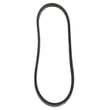
If you are doing seasonal maintenance and notice the auger is not pulling snow in well, a worn belt can be part of the problem. For this model, the compatible belt option listed is the mtd snowblower auger drive belt, 1/2 x 35-1/4-in 256963.
Last updated: January 2026
How many years should a snowblower last?
A Craftsman gas snow thrower like model 247886940 typically lasts 10 to 20 years when it’s maintained consistently; heavy use, poor storage, and skipped tune-ups can shorten that. Following the maintenance schedule in the 247886940 owner’s manual is the best way to maximize service life.
What most affects lifespan
- Maintenance frequency: oil changes, lubrication, and periodic adjustments
- Fuel habits: fresh fuel, stabilizer for storage, clean carburetor practices
- Wear items: belts, skid shoes, scraper bar, shear pins (as equipped)
- Storage conditions: dry storage, protected from moisture and rodents
- Operating load: deep, wet snow and gravel drives increase wear
Typical lifespan ranges (what we see most often)
| Snowblower type | Typical lifespan | Notes |
|---|---|---|
| Gas snowblower (like 247886940) | 10 to 20 years | Often longer with regular tune-ups and proper storage |
| Electric corded | 5 to 10 years | Fewer engine issues, but motors/switches can wear |
| Battery | 5 to 10 years | Battery health is a major factor |
Signs it may be time to repair vs replace
- It starts hard even after fresh fuel and a tune-up
- The machine won’t drive or won’t throw snow consistently
- You see repeated belt slipping or burning rubber smell
- Repairs are becoming frequent each season
- Key components are rusted, bent, or heavily worn
If the auger stops turning or performance drops under load, a worn auger belt is a common cause; for this model, the mtd snowblower auger drive belt, 1/2 x 35-1/4-in 256963 is one of the compatible wear parts to check.
Why it matters
A snowblower that’s maintained and stored correctly is safer, starts more reliably in cold weather, and costs less over time because you replace predictable wear parts (like belts) before they cause bigger failures.
Last updated: January 2026