Owner’s manual
 Error Codes


What is the average lifespan of a Kenmore 79578556800 refrigerator?
A Kenmore Elite 79578556800 bottom-mount refrigerator typically lasts 10 to 15 years with normal household use and basic maintenance (clean condenser coils, keep door gaskets sealing, and maintain proper temperatures). Heavy use, poor airflow, and skipped cleaning shorten lifespan.
Typical lifespan and what to expect
Most modern bottom-mount refrigerators fall into this range:
- Average lifespan: 10 to 15 years
- Common “wear” items during ownership: water filters, light bulbs, and door gaskets
- Bigger repair risk as the unit ages: sealed system and cooling components
The owner's manual for this model family includes routine care topics like cleaning condenser coils and checking door gaskets, which directly affects how long the refrigerator runs efficiently.
Maintenance that extends life (high impact)
We recommend focusing on these basics:
- Clean condenser coils regularly to reduce compressor strain
- Inspect and clean door gaskets so cold air does not leak
- Keep vents clear inside the fresh food and freezer compartments
- Set stable temperatures and avoid frequent wide swings
- Fix water leaks quickly to prevent corrosion and ice buildup
Quick “repair vs. replace” guide
Use this simple checklist when deciding what to do as the refrigerator ages.
| If your refrigerator is… | And the issue is… | Usually makes sense to… |
|---|---|---|
| Under 10 years old | Minor (leak, switch, gasket) | Repair |
| 10 to 15 years old | Moderate (fan, sensor, defrost issue) | Compare repair cost to value |
| Over 15 years old | Major cooling or sealed system problem | Consider replacement |
Why it matters
Lifespan is mostly about compressor workload and heat removal. Dirty condenser coils, restricted airflow, and leaky door seals force the compressor to run longer, which accelerates wear on cooling-system parts.
If you are troubleshooting cooling performance or unusual noises on this model, our Kenmore 795 model bottom freezer refrigerator error codes guide can help you narrow down the problem before ordering parts.
Last updated: February 2026
What are the common problems with Kenmore 79578556800 refrigerators?
Common problems we see with the Kenmore Elite 79578556800 bottom-mount refrigerator are warm temperatures from restricted airflow, frost buildup from door sealing or defrost issues, unusual fan noise, and water leaks from a clogged drain system. Many of these symptoms trace back to door gaskets, fans, sensors, or the defrost circuit; use the owner's manual troubleshooting section to match symptoms to checks.
Most common symptoms and what they usually point to
- Not cooling or weak cooling: dirty condenser area, evaporator fan issue, defrost system problem, or a temperature sensor reading wrong
- Frost or ice crystals on frozen food: door not closing fully or frequent door openings (warm, humid air entering the freezer)
- Doors not sealing or sticking: dirty gasket sealing surfaces, misalignment, or a worn gasket
- Loud humming, buzzing, or rattling: evaporator fan blade interference, failing fan motor, or vibration from an unlevel cabinet
- Water under the refrigerator or in the freezer: clogged/iced drain path or a drain tube issue
Quick checks we recommend before replacing parts
- Confirm door closure: make sure bins and drawers are fully seated and nothing is holding the door open.
- Inspect and clean the gasket: wipe the gasket and the surface it seals against; if the gasket sticks, the manual recommends cleaning and applying a thin coat of paraffin wax.
- Check airflow: verify you feel cold air moving in the freezer compartment and that vents are not blocked by food packages.
- Level the refrigerator: wobble and poor door sealing often improve after leveling.
- Look for drain issues: if you see puddles or ice near the bottom, inspect the drain area for blockage.
Parts that commonly relate to these problems (for this model)
| Symptom | Common suspect part | Example part on this page |
|---|---|---|
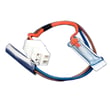
| Frost buildup, warm fridge section | Defrost system sensing | Refrigerator defrost sensor assembly 6615JB2005H |
| Warm temps, inconsistent temps | Temperature sensing | Refrigerator temperature sensor 6500JB2001B |
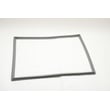
| Door not sealing, frost, moisture | Door seal | Refrigerator door gasket MDS64172919 |
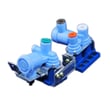
| Water dispenser issues, no ice | Water supply control | Lg refrigerator water inlet valve 5221JB2006K |
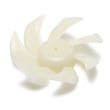
| Fan noise, poor airflow | Fan blade | Refrigerator evaporator fan blade 5901JA1021A |
Why it matters
Cooling, frost, and leak complaints usually start as airflow or sealing problems. Fixing a door seal, leveling issue, or drain restriction early helps prevent temperature swings that can spoil food and overwork the compressor.
Last updated: February 2026
Where to find model number on Kenmore 79578556800 fridge?
On Kenmore Elite model 79578556800, the model and serial number are printed on an identification label located on the right-hand side of the refrigerator compartment. Use that label when ordering parts, checking the warranty, or looking up troubleshooting information in the owner's manual.
Where to look (quick checklist)
- Open the fresh food (refrigerator) door and look along the right interior wall
- Check near the crisper drawer area (labels are often placed where they stay visible but protected)
- Look for a sticker that lists Model No. and Serial No.
- Write both numbers down exactly as shown (including dots and dashes, if present)
- Take a clear photo of the label for future reference
What the label looks like
Most ID labels include the same core fields. Here is what to expect:
| Field on label | What it’s used for | Example of what you’ll see |
|---|---|---|
| Model No. | Matching the correct parts diagrams and parts list | 795.7854… (series format) |
| Serial No. | Identifying production run details | Letters and numbers |
| Date of purchase (not always on label) | Warranty documentation | Month/day/year |
Why it matters
Using the exact model number from the ID label helps us match your refrigerator to the correct parts list (for items like a door switch, door gasket, or water inlet valve) and prevents ordering a similar-looking part that does not fit.
Tip for parts lookup
When you search or order, use the full model number exactly as printed. For this refrigerator, common service and maintenance details are also organized by model series in the owner's manual.
Last updated: February 2026
What size is Kenmore refrigerator model 79578556800?
Kenmore Elite refrigerator model 79578556800 is a bottom-mount (bottom freezer) refrigerator. Use the dimensions listed in the specifications section of the 79578556800 owner's manual to confirm the exact width, height, and depth for your specific color/trim version before delivery or installation.
What “size” usually means for fit
When customers ask for size, we recommend confirming these measurements from the manual and then measuring your space to match.
- Overall width (side-to-side at the cabinet)
- Overall height (floor to top hinge cover)
- Overall depth (cabinet-only and with handles)
- Door swing clearance (space needed to open doors fully)
- Ventilation clearance (space behind and above for airflow)
How to measure your space (quick checklist)
Measure the opening and the path to the kitchen so the refrigerator fits through doorways and into the cutout.
- Measure opening width at the front and back of the cutout
- Measure opening height to the lowest cabinet or soffit
- Measure opening depth to the wall, then account for baseboards
- Measure doorway width and any tight turns (hallways, stairs)
- Plan for water line routing if you have an ice maker or dispenser
Size terms to compare
| Spec term | What it includes | Why it matters |
|---|---|---|
| Width | Cabinet width | Determines if it fits between cabinets |
| Height to top of hinge | Includes hinge cover area | Prevents top clearance issues |
| Depth with handles | Doors plus handles | Prevents sticking out too far |
| Depth without handles | Cabinet and doors, no handles | Helps compare “counter-depth” feel |
Why it matters
Correct dimensions prevent delivery problems, door interference, and poor airflow that can reduce cooling performance. The manual also covers moving the unit through narrow openings, including handle removal steps.
Last updated: February 2026