



Is a 16 or 18 inch chainsaw better?
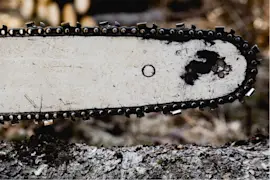
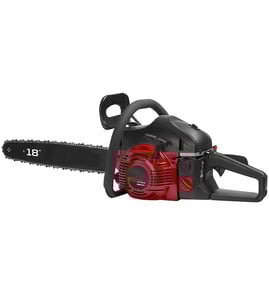
For most homeowners, a 16-inch chainsaw is the better all-around choice because it’s lighter, easier to control, and less tiring for limbing and storm cleanup. An 18-inch bar is better when you regularly cut thicker wood and want more reach, but it adds weight and needs more engine power to cut well.
| Feature | 16-inch bar | 18-inch bar |
|---|---|---|
| Best for | Limbing, pruning, small trees, general yard work | Firewood, larger limbs, small-to-medium tree felling |
| Handling | More maneuverable | Less maneuverable |
| Fatigue | Lower | Higher |
| Cutting capacity | Good for smaller diameter wood | Better for thicker diameter wood |
| Power demand | Lower | Higher (bogs down more easily on smaller engines) |
Pick the bar length based on what you cut most often and how long you run the saw in one session.
- Choose 16-inch if you want easier control, faster limbing, and less fatigue.
- Choose 18-inch if you often buck thicker logs and want extra reach.
- Match bar length to engine strength; a longer bar on an underpowered saw cuts slower and can overheat the clutch.
- Plan on more sharpening and chain maintenance with heavier cutting.
- Always confirm the correct chain pitch, gauge, and drive link count for the bar you install.
Your Craftsman 358352050 is designed to run best when the guide bar and chain are correctly matched. If you move up in bar length, the most common problems we see are poor cutting performance (chain speed drops) and faster wear on the clutch drum and sprocket.
If your saw is cutting crooked or throwing the chain, start by checking chain tension, bar rail wear, and sprocket condition; then review our chainsaw care and troubleshooting tips.
Last updated: February 2026
How to find model number on Craftsman chainsaw?
Every Craftsman chainsaw has a model/serial label from the factory; on the Craftsman 358352050 it’s typically on the engine housing or rear handle area. Wipe off oil and sawdust first, then look for a sticker or metal tag with a long number.
Check these common label locations first:
- Side of the engine/motor casing near the starter cover
- Rear handle area (underside or back side)
- Near the fuel tank or oil tank area
- Bottom of the saw body (you may need to tip the saw over)
- Under the top cover (after removing the cover fasteners)
On many Craftsman saws, the model number is a 9-digit number (often in a format like 358.XXXXXX). Your parts page is for 358352050, so you’re looking for that exact number (sometimes printed with a dot, sometimes without).
| What you see on the label | What it means | Why it matters |
|---|---|---|
| Model number | Identifies the exact saw version | Ensures parts diagrams match your saw |
| Serial number | Unique ID for your specific unit | Helps with age tracking and service records |
| Engine family info (sometimes) | Engine identification | Useful for carburetor and fuel system work |
If the sticker is scratched off or covered in grime:
- Clean the area with a rag and mild degreaser; avoid soaking decals
- Use a flashlight at an angle to read faint printing
- Look for an embossed number on the plastic housing (less common)
- Match your saw using the illustrated parts list and common wear parts (chain, guide bar, fuel and oil lines)
The model number is the fastest way to get the right Craftsman chainsaw parts (chain pitch/length, guide bar fit, fuel and oil line routing). Using the correct model number helps avoid ordering a chain or guide bar that will not tension or oil correctly.
For repair and maintenance help by symptom (won’t start, runs rough, leaking fuel), use our DIY resources like chainsaw symptoms landing page.
Last updated: February 2026
How to adjust H and L screws on chainsaw?
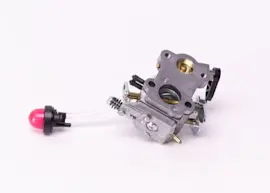
On the Craftsman 358352050 gas chainsaw, we adjust the L (low-speed) and H (high-speed) carburetor screws to correct idle quality and full-throttle power. Start from a safe baseline, tune L for crisp acceleration, then tune H for strong cutting power while keeping the chain from moving at idle.
- Work outdoors on a flat surface; engage the chain brake when starting.
- Wear eye protection and gloves; keep bystanders away.
- Use fresh, properly mixed fuel and a clean air filter.
- Warm the engine 2 to 3 minutes before final tuning.
- Confirm the chain is sharp and properly tensioned; a dull chain can mimic a “bogging” tune.
- Find the screws: L and H are usually marked on the carburetor body; there is often a separate idle speed screw (sometimes labeled T or LA).
- Set a baseline: Gently turn L and H clockwise until they lightly seat (do not force), then back each out about 1 to 1-1/2 turns.
- Tune the L screw (low speed):
- With the saw idling, turn L in small steps (about 1/8 turn).
- Aim for a smooth idle and clean throttle response (no hesitation or stall).
- Set idle speed: Adjust the idle speed screw so the engine stays running but the chain does not move.
- Tune the H screw (high speed):
- At full throttle (preferably while cutting), adjust H in tiny steps.
- Aim for strong power without a “screaming” lean sound or a heavy, bogging rich sound.
| Symptom | Likely direction | What to do |
|---|---|---|
| Hesitates or dies when you hit the throttle | L too lean | Open L slightly (counterclockwise) |
| Smoky exhaust, sluggish pickup | L too rich | Close L slightly (clockwise) |
| Weak power at full throttle, runs hot | H too lean | Open H slightly |
| Blubbers at full throttle, won’t clean out | H too rich | Close H slightly |
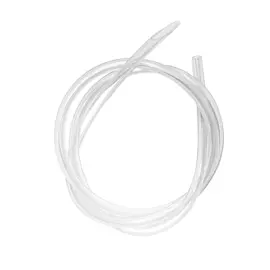
Correct H and L adjustment protects the engine from running too lean (overheating and scoring) and improves cutting performance. If tuning does not stabilize the saw, a fuel delivery issue is common; inspect fuel and oil lines and replace cracked lines such as the oil line 530069216 when needed.
For more detailed troubleshooting steps, we recommend our tips for a hard to start chainsaw article.
Last updated: February 2026
What are common chainsaw problems?
Common problems on the Craftsman 358352050 gas chainsaw include hard starting, rough running, stalling under load, chain not oiling, chain not cutting well, and fuel or oil leaks. Most issues trace back to fuel delivery, air flow, ignition, or bar-and-chain wear.
- Won’t start or starts then dies: stale fuel, clogged carburetor passages, dirty air filter, fouled spark plug
- Runs rough or surges: restricted air filter, carburetor out of adjustment, air leak at crank seals
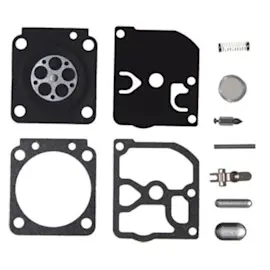
- Stalls when you squeeze the throttle: fuel line restriction, carburetor diaphragm wear, clogged muffler screen
- Chain won’t move or slips: worn clutch drum/sprocket, chain too loose, bar groove packed with debris
- Chain won’t oil: empty bar oil tank, plugged oiler port, cracked oil line
- Leaking fuel or oil: loose cap, cracked lines, hardened seals
- Use fresh, properly mixed fuel and confirm the choke and primer (if equipped) are working.
- Inspect the air filter and muffler outlet for blockage.
- Check chain tension and bar condition; a dull chain makes the saw feel weak.
- Confirm bar oil is flowing; run the tip near cardboard and look for an oil line.
- Look for wet spots around the tank, lines, and fittings.
| Symptom | Part to inspect/replace | What it affects |
|---|---|---|
| No bar oil or oil leak | Oil line 530069216 | Oil delivery to the bar and chain |
| Fuel seepage at a connection | Fitting 530023877 | Fuel line sealing and routing |
| Chain slips or won’t drive | Drum sprocket 530069166 | Power transfer from clutch to chain |
| Poor cutting, excessive dust | Chain 91PX045G or chain 91PX040G | Cutting performance and safety |
A chainsaw that runs lean (too much air, not enough fuel) can overheat and score the engine; a dull chain or poor oiling increases kickback risk and rapidly wears the guide bar.
For step-by-step troubleshooting, we recommend starting with chainsaw care and troubleshooting tips and, for starting issues, tips for a hard to start chainsaw.
Last updated: February 2026