Error Codes


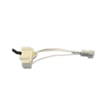
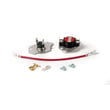
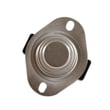
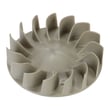
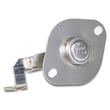
How do I know if my dryer thermistor is bad?
A bad thermistor in your Estate dryer model TEDS840JQ0 usually shows up as temperature problems: the dryer overheats, does not heat enough, takes too long to dry, or shuts off mid-cycle because the control is getting the wrong temperature signal.
Common signs you can spot
- Clothes come out too hot or feel “scorched” on normal settings
- Dryer runs but heat cycles on and off erratically
- Loads take much longer than normal to dry (poor temperature control)
- Dryer stops mid-cycle (often after getting too hot)
- You notice a burning smell or the cabinet feels unusually hot
Quick checks before blaming the thermistor
Airflow problems can mimic a bad thermistor by trapping heat.
- Clean the lint screen and check the lint chute area
- Inspect the vent hose for kinks, crushing, or heavy lint buildup
- Confirm strong airflow at the outside vent hood
- If the dryer overheats, check safety devices such as the dryer thermal cut-off fuse kit 279816
What to test (basic diagnostic approach)
A thermistor is a temperature-sensitive resistor. If you have a multimeter, you can test it for a stable resistance reading and for change with temperature (resistance should change smoothly as it warms).
| What you observe | Most likely cause | What to check next |
|---|---|---|
| Overheats or shuts down | Restricted airflow or failed temperature sensing/control | Venting, lint chute, thermostats |
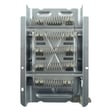
| No heat at all | Heating circuit fault | Dryer element 279838, thermal cut-off kit |
| Runs but takes too long | Airflow restriction or weak heat | Venting, blower wheel, element |
| Loud rumble plus poor drying | Airflow and drum drive issues | Dryer blower wheel WP694089, belt/idler |
Why it matters
The thermistor helps regulate drum temperature. When it reads wrong, the dryer can under-dry (wasting time and energy) or overheat (triggering safety shutoffs and damaging fabrics).
For deeper troubleshooting steps, use our electric dryer wont heat troubleshooting video and dryer takes a long time to dry guides.
Last updated: February 2026
How do I know if my dryer thermostat is bad?
A bad thermostat in your Estate TEDS840JQ0 dryer usually shows up as no heat, overheating, short cycling (shuts off too soon), or very long dry times. We confirm it by checking airflow first, then testing the thermostat and related heat-safety parts with a multimeter.
Common signs the thermostat is failing
- Dryer runs but clothes stay cold or damp
- Dryer gets too hot, smells hot, or scorches fabrics
- Heat cuts in and out rapidly during a cycle
- Cycle ends early but the load is still wet
- Dryer takes much longer than normal to dry
Quick checks before you test parts
Poor venting can mimic a bad thermostat and can also cause repeated thermostat or fuse failures.
- Clean the lint screen and check the lint chute for buildup
- Inspect the vent hose for kinks, crushing, or long runs
- Check the outside vent hood for a stuck flap or blockage
- Run a timed dry cycle and confirm strong airflow at the vent outlet
Helpful guide: dryer takes a long time to dry
How we test a dryer thermostat (basic method)
- Unplug the dryer (electric shock hazard).
- Access the thermostat (commonly on the blower housing or heater housing, depending on design).
- Label wires, then remove at least one wire from the thermostat terminal.
- Use a multimeter on continuity/ohms:
- At room temperature, many operating thermostats read closed (continuity).
- When warmed (carefully), the thermostat should open at its rated temperature and then close again as it cools.
If the thermostat does not switch states, replace it. For this model, a common related control part is the dryer operating thermostat WP3387134.
Thermostat vs. other heat-related parts (what symptoms point to)
| Symptom | More likely cause | Example part to check |
|---|---|---|
| No heat at all | Thermal cut-off or heater circuit issue | Dryer thermal cut-off fuse kit 279816 |
| Overheats, burning smell | Restricted venting or thermostat stuck closed | Dryer operating thermostat WP3387134 |
| Heat cycles oddly, long dry times | Airflow restriction or weak heater | Dryer element 279838 |
Why it matters
A thermostat helps regulate drum temperature. If it fails or if airflow is restricted, the dryer can overheat, blow a thermal cut-off, damage the heating element, and increase dry time and energy use.
Last updated: February 2026
Is a 7 cubic foot dryer big?
Yes. A 7 cubic foot dryer is considered a large-capacity size for most households, and it is big enough to handle bulky loads like comforters and multiple towels in an Estate dryer like model TEDS840JQ0.
What “7 cu. ft.” means in real use
A 7 cu. ft. drum is designed to tumble larger loads with better airflow, which helps drying performance and reduces wrinkling.
- Fits bulky items (queen comforter in many cases)
- Handles family-size loads more comfortably than compact dryers
- Leaves more room for items to lift and separate while tumbling
- Often pairs well with full-size washers
Quick size comparison
| Dryer capacity | Common label | Best for |
|---|---|---|
| 3.4 to 4.4 cu. ft. | Compact | Apartments, 1 to 2 people |
| 5.0 to 6.5 cu. ft. | Standard | Most households |
| 7.0 to 9.0 cu. ft. | Large | Bulky items, families |
Why it matters
Capacity affects more than “how much fits.” Overloading reduces airflow and can make clothes take longer to dry. If drying times are long even with reasonable loads, check lint and venting first; restricted airflow is the most common cause.
- Clean the lint screen every load
- Make sure the vent hose is not crushed or kinked
- Keep the outside vent hood opening freely
- Avoid packing the drum tight; leave space for tumbling
If the dryer tumbles but struggles to dry, heating and airflow parts can also be involved, such as the dryer element 279838 or the dryer blower wheel WP694089. For airflow and efficiency tips, follow dryer takes a long time to dry.
Last updated: February 2026
What are the parts of a dryer called?
A dryer like the Estate TEDS840JQ0 is made up of airflow parts, heat-control parts, and drive parts that work together to tumble clothes while moving heated air through the drum and out the vent. Knowing the common part names helps you match symptoms to the right repair.
Common dryer parts and what they do
- Drum: holds and tumbles the load
- Drive system: turns the drum (belt, idler pulley, motor)
- Heating system: creates heat (electric heating element on electric models)
- Airflow system: moves air (blower wheel, lint chute, vent duct)
- Safety temperature controls: prevent overheating (thermal cut-off, high-limit thermostat, operating thermostat)
- Door and start safety: allows operation only when closed (door switch, strike)
Examples of real part names you will see for TEDS840JQ0
| System | Part name (example) | What you might notice when it fails |
|---|---|---|
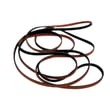
| Drive | Dryer drum belt 341241 | Drum will not tumble; motor may run but drum stays still |
| Heat | Dryer element 279838 | No heat or weak heat on electric drying cycles |
| Airflow | Dryer blower wheel WP694089 | Poor airflow, longer dry times, unusual rattling or thumping |
| Overheat protection | Dryer thermal cut-off fuse kit 279816 | Dryer stops heating or shuts down if it overheats |
Why it matters
When you use the correct part name, you can troubleshoot faster and order the right replacement the first time. For example, “not heating” often points to the heating element or thermostats, while “not tumbling” points to the belt, idler pulley, or motor.
Helpful next step
If you want a quick overview of how these components fit together, we recommend what are the main parts of a clothes dryer.
Last updated: February 2026