Installation guide
 Owner’s manual


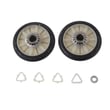
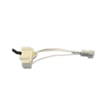
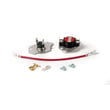
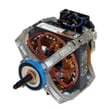
Can you get parts for a Kenmore dryer?
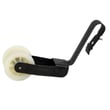
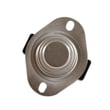
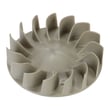
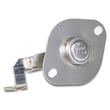
Yes. We can help you get replacement parts for your Kenmore electric dryer model 11061202011, including common wear items (drum belt, door switch, thermal fuse) and heating and airflow components. Matching parts to the exact model number helps prevent fit and wiring issues.
How we match parts to model 11061202011
Use the full model number from the dryer’s rating label, then confirm the part by name and ID before ordering.
- Match the full model number: 11061202011
- Use the parts diagrams to identify the correct component location
- Compare your old part to photos and descriptions (terminals, mounting holes)
- Replace related wear items together when appropriate (belt and roller components)
- Disconnect power before servicing; allow the heater area to cool
For model-specific setup, venting, and electrical requirements, use the 11061202011 installation guide.
Common replacement parts for this model
Here are examples of compatible parts we list for Kenmore 11061202011.
| Symptom | Part to check | Example compatible part |
|---|---|---|
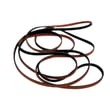
| Drum won’t turn | Drum belt | Belt 341241 |
| Dryer won’t start | Door switch | Dryer door switch WP3406107 |
| Runs but stops or won’t run | Thermal cut-off/fuse kit | Dryer thermal cut-off fuse kit 279816 |
Why it matters
Kenmore dryers can share similar-looking parts across different series. Using the exact model number 11061202011 helps us narrow to the correct fit so your repair is safer, faster, and more reliable.
Last updated: January 2026
How do I know if my Kenmore dryer thermal fuse is blown?
On Kenmore electric dryer model 11061202011, a blown thermal fuse often shows up as a dryer that won’t run at all, or a dryer that runs but won’t heat. The only sure way to confirm is to unplug the dryer and test the fuse for continuity with a multimeter. See the 11061202011 installation guide for venting and electrical safety basics before servicing.
Quick symptoms to watch for
- Dryer won’t start (no motor run)
- Dryer runs but produces no heat
- Dryer stops mid-cycle during a heated cycle
- Clothes take much longer to dry than normal
- Exhaust airflow feels weak or the cabinet feels unusually hot
How we confirm a blown thermal fuse (continuity test)
- Unplug the dryer or shut off the breaker.
- Access the thermal fuse (commonly mounted on the blower housing or exhaust duct area on many Kenmore electric dryers).
- Remove at least one wire from the fuse terminal.
- Set a multimeter to continuity or the lowest ohms setting.
- Test across the fuse terminals.
What the meter reading means
| Meter result | What it indicates | What we do next |
|---|---|---|
| Continuity or near 0 ohms | Fuse is good | Keep troubleshooting (power supply, door switch, timer, heater circuit) |
| No continuity or OL | Fuse is blown | Replace the fuse and correct the overheating cause |
Parts that may be involved on this model
The exact thermal fuse part number used in Kenmore model 11061202011 can vary by production series. If you’re replacing an overheat safety device, one compatible option listed for this model is the dryer thermal cut-off fuse kit 279816.
Why it matters
A thermal fuse usually blows because the dryer overheated. Overheating is commonly caused by restricted airflow, so fixing the venting issue helps prevent repeat failures.
Airflow checks we recommend after a blown fuse
- Clean the lint screen and the lint chute area
- Inspect the vent hose behind the dryer for kinks or crushing
- Clear lint from the full vent run to the outside
- Confirm the outside vent hood opens freely and isn’t blocked
- Use 4-inch heavy metal venting (avoid plastic or foil)
Last updated: January 2026
How do I tell if my dryer heating element is bad?
If your Kenmore 11061202011 electric dryer runs but produces little or no heat (or drying times suddenly get much longer), the heating element may be failed. The most reliable check is a continuity test with a multimeter after disconnecting power.
Quick symptoms that point to a bad heating element
- Dryer tumbles normally but clothes stay cold and damp
- Dry cycle takes much longer than normal
- You smell a “hot metal” odor or see scorching near the heater area
- Dryer heats briefly, then stops heating (can also be thermostat or fuse related)
- Breaker trips when heat should turn on (can indicate a grounded element)
How we test the heating element (safe, basic method)
- Unplug the dryer (electric shock risk).
- Access the heater terminals using the cabinet access steps in the 11061202011 installation guide.
- Set a multimeter to ohms (Ω).
- Test across the two element terminals:
- Good element: continuity (typically a low resistance reading)
- Bad element: no continuity (open circuit)
- Check for a short to ground: place one probe on an element terminal and the other on the metal heater housing. Any continuity suggests the coil is touching metal and the element is bad.
Don’t skip these related checks (often the real cause)
A “no heat” complaint on the Kenmore 11061202011 is commonly caused by a safety device opening due to overheating or poor airflow.
- Inspect and clean the lint screen and venting
- Check the thermal fuse and thermal cut-off
- Check the operating thermostat and high-limit thermostat
Common heat-related parts to consider
| What you’re testing | What it does | What failure looks like |
|---|---|---|
| Heating element | Creates heat | No heat, or breaker trips if grounded |
| Thermal fuse | Safety cutout | Dryer runs but won’t heat |
| High-limit thermostat | Prevents overheating | Overheats or cycles heat incorrectly |
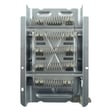
If you confirm the element is open or grounded, replace the dryer element 279838. If you find heat damage at the terminals, also inspect the dryer heating element wire kit 279457.
Why it matters
A failed heating element stops proper drying, but overheating from restricted venting can also damage thermostats and fuses. Fixing airflow issues helps prevent repeat failures and improves drying performance.
Last updated: January 2026
How do I tell what model my Kenmore dryer is?
Your Kenmore dryer’s model number is printed on the serial/rating label; on many Kenmore electric dryers like model 11061202011, that label is typically found on the door opening (cabinet frame) or on the back of the dryer near the top. Use the exact model number to match parts and manuals.
Where to look on model 11061202011
Check these common label locations first:
- Open the dryer door and look around the door opening on the cabinet frame
- Check the back panel near the top edge
- Look along the inside edge of the front panel near the door opening
- If the label is hard to read, use a flashlight and take a close-up photo
For diagrams and model-specific references, use the 11061202011 installation guide.
What the model number looks like (and what to record)
For Kenmore dryers, the model number is usually a long number string (example: 11061202011). We recommend writing down:
- Model number (example: 11061202011)
- Serial number (unique to your unit)
- Type (electric vs. gas; this model is an electric dryer)
Quick checklist
| Item | Why you need it | Example |
|---|---|---|
| Model number | Ensures correct parts and diagrams | 11061202011 |
| Serial number | Helps identify production run details | Varies |
| Power type | Confirms correct electrical and heating parts | Electric |
Why it matters
Kenmore model numbers can look similar, but small differences can change the correct belt, door switch, timer, or heating circuit parts. Using the exact model number helps us match the right replacement parts the first time.
Last updated: January 2026
How do you reset a Kenmore dryer control board?
To reset the control board on your Kenmore electric dryer model 11061202011, disconnect power for about 2 minutes, then restore power. This power-cycle forces the electronic control to reboot and can clear a temporary control glitch.
Reset steps (safe power-cycle)
- Turn the dryer OFF.
- Unplug the power cord (or switch the dryer breaker OFF).
- Wait 2 minutes.
- Restore power.
- Select a cycle and press Start.
For model-specific operating and troubleshooting guidance, use the 11061202011 owner’s manual.
If the reset does not help
A reset will not fix an open safety device, failed switch, or wiring issue. On model 11061202011, these are common no-start checks:
- Confirm the dryer door fully closes; test the door switch
- Verify the home electrical supply is correct for the installation
- Check for an overheat condition caused by restricted venting
- Check the push-to-start circuit and timer/selector operation
- Inspect the terminal block area for loose or burned connections
Electrical supply note (from installation requirements)
Your installation may be wired for either of these supplies, depending on the rating plate and local requirements:
| Supply type | Where you’ll see it | Why it matters |
|---|---|---|
| 120/240V, 60 Hz | Most homes | Loss of one leg can cause odd symptoms (lights work, no heat, or no start) |
| 120/208V, 60 Hz | Some apartments/condos | Dryer may run with different heating performance than 240V |
Parts that commonly relate to “won’t start” symptoms
If testing points to a failed component, these parts are listed for model 11061202011:
- Dryer door switch WP3406107 (confirms the door is closed)
- Dryer thermal cut-off fuse kit 279816 (overheat protection that can open if airflow is restricted)
Why it matters
Power-cycling is the fastest safe first step because it can clear a locked-up control state without disassembly. If the symptom returns immediately, it usually points to a repeatable electrical, airflow, or component failure.
Last updated: January 2026