Owner’s manual
 Error Codes


How do I reset my GE side by side refrigerator?
To reset your GE GSHS9NGYBCSS side-by-side refrigerator, we recommend a full power reset: unplug the refrigerator (or switch the breaker off) for 2 to 5 minutes, then restore power and allow the controls to reboot. This clears many minor control glitches.
- Power cycle reset: Unplug for 2 to 5 minutes, then plug back in.
- Breaker reset: Turn the refrigerator circuit breaker OFF for 2 to 5 minutes, then ON.
- Control setting check: If either temperature control is set to OFF, set it to a colder setting so cooling resumes.
- Showroom mode exit (common fix): If the refrigerator is in showroom mode, unplug it and plug it back in.
- Cooling recovery time: After any reset, allow 24 hours for temperatures to fully stabilize.
| What you notice | What it usually means | What we do next |
|---|---|---|
| Lights and display come back on | Controls rebooted normally | Set temps and wait 24 hours |
| Unit runs but temps are slow to drop | Normal after restart | Keep doors closed, avoid loading warm food |
| No cooling and controls appear OFF | Controls set to OFF | Change to a colder setting |
| Dispenser or icemaker not working | Filter missing or not seated | Install filter or bypass plug per the GSHS9NGYBCSS owner's manual |
A reset restores normal control logic after a power blip or minor electronic hiccup. It also helps you quickly rule out simple causes (controls set to OFF, showroom mode) before replacing parts like a control board or temperature sensor.
If the refrigerator still will not cool after the reset and a 24-hour recovery period, we typically check these common causes next:
- Dirty condenser area restricting heat removal
- Evaporator fan not running (air not circulating)
- Defrost system issue causing frost buildup
- Temperature sensing problem (thermistor)
- Control problem
For model-matched replacement parts and diagrams, use the parts list for GSHS9NGYBCSS or search by model on Sears PartsDirect.
Last updated: February 2026
How long do GE side by side refrigerators last?
GE side-by-side refrigerators last 13 years. For your GE GSHS9NGYBCSS, routine airflow and seal maintenance helps you reach that service life; use the care and cleaning schedule in the GSHS9NGYBCSS owner's manual.
A refrigerator’s life is driven by compressor workload, airflow, and door sealing.
- Typical lifespan: 13 years
- Helps it last: clean condenser area, steady temperatures, good door seals
- Shortens life: dirty coils, warm air leaks, blocked vents, heavy frost
These steps reduce strain on the sealed system (compressor, condenser, evaporator).
- Vacuum dust from the condenser area every 6 to 12 months (more often with pets)
- Keep freezer and fresh food vents clear for proper airflow
- Set stable temps (avoid extreme cold settings that force constant running)
- Check that doors close fully and gaskets seal all the way around
| Task | Typical interval | Why it matters |
|---|---|---|
| Clean condenser area | 6 to 12 months | Lowers compressor workload |
| Check door gasket seal | 3 to 6 months | Prevents warm air leaks and frost |
| Clear/organize vents | Monthly | Prevents warm spots and icing |
If cooling performance drops, fixing the root cause reduces run time and wear.
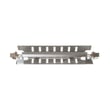
- Frost buildup on the freezer back wall: consider the refrigerator defrost heater WR51X10055
- Warm temps with weak airflow: consider the refrigerator evaporator fan motor WR60X10307
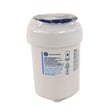
- Slow water flow or bad taste: replace the refrigerator water filter MWFP
A side-by-side can seem “okay” while running inefficiently; that extra run time accelerates wear on the compressor, fans, and defrost system. Consistent upkeep and timely part replacement are the most reliable ways to hit the 13-year lifespan.
Last updated: February 2026
What is the most common problem with a GE refrigerator?
The most common issue we see with GE refrigerators like model GSHS9NGYBCSS is a cooling complaint (fresh food too warm, freezer not holding temperature). In most cases, the root cause is restricted airflow or heat removal, not a sealed-system failure; start with basic checks and cleaning in the GSHS9NGYBCSS owner's manual.
- Dirty condenser coils causing high cabinet temperatures and long run times
- Evaporator fan not moving cold air through the freezer and into the fresh food section
- Frost buildup from a defrost system problem (heater, defrost thermostat, or controls)
- Air vents blocked by overpacked food or ice buildup
- Temperature sensing or control issues (sensor or electronic control board)
- Confirm doors fully close and gaskets seal all the way around.
- Set controls to typical targets: 0°F freezer and 37°F fresh food.
- Make sure interior vents are not blocked by food packages.
- Clean condenser coils and verify the condenser fan (if equipped) runs when the compressor runs.
- Listen for the evaporator fan in the freezer; it should run when the unit is calling for cooling.
| Symptom | Likely area | Example part on this model |
|---|---|---|
| Warm temps, fan noise changes, weak airflow | Evaporator airflow | Refrigerator evaporator fan motor WR60X10307 |
| Temps swing, runs too long or too short | Temperature sensing | GE profile refrigerator temperature sensor WR55X10025 |
| Heavy frost on freezer back wall, warm fresh food | Defrost system | Refrigerator defrost heater WR51X10055 and refrigerator defrost bi-metal thermostat WR50X10065 |
| Warm temps plus odd behavior or intermittent operation | Controls/power to compressor | Refrigerator electronic control board WR55X10956 or inverter WR49X10283 |
Cooling problems can spoil food and overwork the compressor. Catching airflow restrictions, dirty coils, or a defrost failure early usually prevents bigger, more expensive repairs.
If the refrigerator seems cold but water flow is weak or stops, the manual points to common causes such as a clogged filter or a locked dispenser. Replacing the filter and purging air after installation often restores normal flow; see how to replace the water filter in a GE refrigerator and consider the GE refrigerator water filter MWFP.
Last updated: February 2026