Installation guide
 Owner’s manual


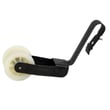
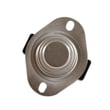
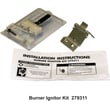
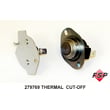
Where can I find the Amana dryer model number?
On your Amana NGD4600YQ2 dryer, the model number is printed on the model and serial number label (model/serial plate). You’ll typically find it on the dryer cabinet opening (inside the door area) or on the back of the dryer near the top.
Most common places to check
- Inside the door opening on the cabinet frame (open the door and look around the opening)
- On the back panel near the top edge
- Along the front edge of the cabinet (near the door opening)
- On the model/serial number plate used for installation notes and service records
Quick steps to find it fast
- Open the dryer door and inspect the cabinet frame around the opening.
- If you don’t see a label, move to the back of the dryer and look near the top.
- Write down both the model number and serial number; you’ll need both for parts and service.
- Confirm the model number matches exactly (for example, NGD4600YQ2).
What the label looks like
Most labels include the same core fields. Here’s what to look for:
| Label field | What it’s used for |
|---|---|
| Model number | Matching the correct parts diagrams and parts list |
| Serial number | Identifying production details for service and compatibility |
| Gas rating/BTU info | Installation and altitude related requirements |
Why it matters
Using the exact model number helps us match the correct Amana 29" gas dryer parts for your configuration. Even small model number differences can change items like the drive belt, igniter, gas valve coils, thermostats, and timer.
For more model and serial label details and other identification tips, check the NGD4600YQ2 installation guide.
Last updated: February 2026
How much does it cost to replace drum bearings on a dryer?
For an Amana NGD4600YQ2 29" gas dryer, replacing drum bearings or drum support parts typically costs $120 to $350 total when you pay for service (parts plus labor). If you do it yourself, the cost is usually $30 to $120 depending on which wear parts you replace and whether you also install a new belt.
Typical cost breakdown
Labor is usually the biggest variable because the dryer must be opened and the drum removed.
- Parts: $30 to $120 (common wear items)
- Labor: $90 to $250 (shop rates and time on site)
- Service call/diagnostic: sometimes included, sometimes separate
| Repair approach | What you pay for | Typical total cost |
|---|---|---|
| DIY repair | Parts only | $30 to $120 |
| Pro repair | Parts + labor | $120 to $350 |
| Pro repair (multiple worn parts) | Parts + labor + extra time | $200 to $450 |
What usually gets replaced with “drum bearings”
On many dryers, “drum bearings” can mean the front bearing, rear support rollers, and related wear parts. If the dryer is already apart, it often makes sense to refresh the full wear set.
- Drum support rollers and shafts (if worn or flat-spotted)
- Front drum bearing or bearing ring (if your model uses one)
- Idler pulley (if noisy or loose)
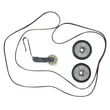
- Drum belt (if cracked, glazed, or stretched)
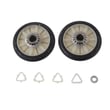
For this model, common wear items customers replace during a noisy drum repair include the bearing ring 279441 and the belt 341241.
Why it matters
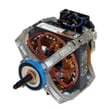
Worn drum support parts can cause squealing, thumping, poor drum alignment, and extra strain on the drive motor. Replacing the worn bearing components early helps prevent secondary damage to the drum, belt, and blower system.
Tips to keep the repair cost down
- Confirm the noise source before ordering parts (rollers vs. idler vs. blower wheel).
- Replace wear parts as a set when the drum is out; it reduces repeat tear-down labor.
- Follow the safety and disassembly guidance in the NGD4600YQ2 installation guide and your dryer’s manual before servicing.
Last updated: February 2026
How do you know if a thermal fuse is blown on an Amana dryer?
On an Amana NGD4600YQ2 gas dryer, a blown thermal fuse commonly shows up as a dryer that will not start, or a dryer that runs but has no heat. The sure way to know is a continuity test with a multimeter; a good fuse shows continuity, a blown fuse reads open.
Quick symptoms to look for
- Dryer will not start (no motor run)
- Dryer runs but does not heat (clothes stay damp)
- Cycle seems normal but drying time increases (often from restricted venting that overheats the dryer)
- You recently had a clogged vent or heavy lint buildup
How we test the thermal fuse (continuity)
- Unplug the dryer (and shut off the gas supply valve for safety).
- Access the fuse location using the steps in the NGD4600YQ2 installation guide.
- Pull the wires off the fuse terminals (note their positions).
- Set a multimeter to continuity or ohms.
- Touch a probe to each terminal:
- Good fuse: continuity beep or near 0 ohms
- Blown fuse: no beep or infinite resistance (open)
What to do if it is blown
A thermal fuse usually blows because the dryer overheated. Fix the airflow problem first, then replace the failed safety part.
- Clean the lint screen and housing
- Check the vent path for kinks or crushing behind the dryer
- Confirm the dryer is exhausted outdoors (metal venting only)
- Clean the outside vent hood and verify strong airflow
- Inspect the blower area for lint buildup (a damaged blower wheel can reduce airflow)
If you are also chasing poor airflow or long dry times, the dryer takes a long time to dry guide helps you narrow down venting and airflow causes.
Parts that are often involved
| Symptom | Common airflow or heat-related suspect | Example part for NGD4600YQ2 |
|---|---|---|
| Long dry times, weak airflow | Blower issue | Dryer blower wheel WP694089 |
| Overheating, cycling issues | Temperature control | Dryer operating thermostat WP3387134 |
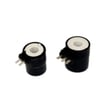
| No heat after initial warm-up | Gas ignition components | Dryer valve coil kit 279834 |
Why it matters
The thermal fuse is a one-time safety device. If it is blown and you replace it without correcting restricted venting, the dryer can overheat again and blow the new fuse quickly.
Last updated: February 2026