Owner’s manual
 Error Codes



Why is my LG steam dryer not drying?
When an LG DLGX3371V steam dryer runs but clothes stay damp, the most common cause is restricted airflow (lint screen, lint housing, or venting). Start with simple checks, then move to heat and sensor-related parts if drying times stay long.
Quick checks we recommend first
- Clean the lint screen before every load; even a thin film can block airflow.
- Confirm the exhaust vent is not crushed behind the dryer and the outside hood opens freely.
- Run a timed dry cycle on high heat to compare results versus sensor cycles.
- Avoid overloading; tightly packed loads cannot tumble and dry evenly.
- Verify the cycle and options match the load (for example, don’t use low-temp settings for heavy towels).
If you want the model-specific venting and maintenance guidance, follow the airflow and venting sections in the DLGX3371V owner’s manual.
Airflow problems (most likely)
Poor airflow makes the dryer heat up but not remove moisture, so cycles run long or end with damp clothes.
Common airflow culprits on this model include:
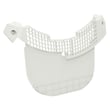
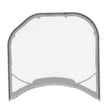
- A clogged or damaged lint screen: lint filter - dryer part by LG ADQ56656401
- Lint buildup or blockage at the lint screen housing: LG dryer lint screen housing MCK49049101
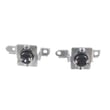
- A restriction inside the exhaust path: dryer exhaust duct 5209EL1006A
- A loose or damaged blower wheel that cannot move air: dryer blower wheel 5835EL1002A
Heat and sensor-related causes
If airflow is good but drying is still poor, we look next at heat control and moisture sensing.
| Symptom | What it often points to | Example part to check |
|---|---|---|
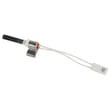
| Dryer tumbles, little or no heat | Gas ignition or heat control issue | LG dryer burner igniter 5318EL3001A |
| Dryer heats then stops heating | Overheat protection opening due to restriction or failed thermostat | Dryer high-limit thermostat AGM30045804 |
| Sensor cycles end too soon, clothes still damp | Moisture sensor not reading correctly | Dryer moisture sensor 6500EL3001A |
Why it matters
Drying depends on two things working together: heat and airflow. Even with perfect heat, a blocked vent or lint path traps moisture in the drum, increases drying time, and can cause repeated shutdowns from overheating protection.
Last updated: January 2026
How do you reset the flow sensor on a LG dryer?
On the LG DLGX3371V dryer, the Flow Sense indicator is an airflow restriction alert, not a “sensor reset” you can permanently clear without fixing the venting. After you clean the lint filter and exhaust ducting, you can usually clear the alert by unplugging the dryer for 5 minutes and then restarting a cycle (see the DLGX3371V owner’s manual).
Steps to clear Flow Sense on DLGX3371V
- Turn the dryer off and unplug it (or switch off the breaker) for 5 minutes.
- Clean the lint filter completely; wash it with warm water if it has fabric softener residue, then dry it fully.
- Check the lint screen area for buildup; a damaged housing can leak lint and reduce airflow.
- Inspect the vent run behind the dryer for kinks, crushed sections, or long runs with too many elbows.
- Confirm the outside vent hood opens freely and is not blocked by lint or a stuck damper.
- Run a timed dry cycle and verify strong airflow at the outside vent.
What Flow Sense is telling you (and what it is not)
Flow Sense on this LG dryer is designed to detect restricted exhaust airflow and prompt you to clean or repair the ducts. It typically will not stay “reset” if the restriction remains.
| Situation | What you’ll usually see | What to do next |
|---|---|---|
| Lint filter clogged | Longer dry times, Flow Sense may light | Clean/replace the filter |
| Vent duct restricted | Weak airflow outside, hot cabinet | Clean/shorten vent, remove kinks |
| Airflow OK but alert returns | Intermittent warning | Recheck for hidden blockage, verify duct type and routing |
Parts that commonly affect airflow on this model
If cleaning does not restore normal airflow, these model-compatible parts are worth inspecting for damage or heavy lint buildup:
- Lint filter - dryer part by LG ADQ56656401 (primary lint screen)
- Dryer exhaust duct 5209EL1006A (internal exhaust duct section)
- Dryer blower wheel 5835EL1002A (moves air through the dryer and vent)
Why it matters
Restricted venting can cause long dry times, overheating, and repeated Flow Sense warnings. Keeping the lint filter, blower area, and vent ducting clear helps your LG DLGX3371V dry efficiently and reduces strain on thermostats and other heating components.
Last updated: January 2026
Are LG gas dryers any good?
Yes. LG gas dryers are generally a good choice for strong drying performance and useful features; the LG DLGX3371V specifically includes Sensor Dry, steam functions, and Flow Sense duct blockage sensing, which can improve results when the venting is installed correctly.
What’s good about the LG DLGX3371V
These model-specific features are called out in the DLGX3371V owner’s manual and are practical benefits for everyday loads:
- Sensor Dry cycles that adjust time as the load dries
- Steam cycles/options to refresh items and reduce wrinkles
- Flow Sense duct blockage sensing to alert you to restricted airflow
- Reversible door to fit your laundry layout
- Drum light to help you see items inside
Common complaints and what usually causes them
Most “not drying well” complaints are not brand-specific; they are usually airflow, lint, or load issues.
- Clothes still damp on Sensor Dry: mixed fabric weights, overloading, restricted vent
- Long dry times: crushed duct, too many elbows, lint buildup in ducting
- Lint around the opening: lint screen not seated, lint path leaks
If you’re troubleshooting airflow or lint performance, these model-compatible parts are often involved:
Quick setup and use checklist
- Clean the lint screen before every load
- Use rigid or semi-rigid 4-inch metal ducting (avoid plastic)
- Keep the vent run as short and straight as possible
- Don’t overload; allow room for tumbling
- Use Sensor Dry for most loads; use Time Dry for special items
Feature vs. real-world benefit
| Feature on DLGX3371V | Helps with | Still depends on |
|---|---|---|
| Sensor Dry | Preventing overdrying | Good airflow, correct load size |
| Flow Sense | Warning of duct restriction | Cleaning/repairing the vent system |
| Steam functions | Refreshing, wrinkle reduction | Correct cycle selection and setup |
Why it matters
A “good” gas dryer is mostly about consistent heat plus strong airflow. When the venting and lint system are clean, the DLGX3371V’s Sensor Dry and Flow Sense features help you get faster, more even drying.
Last updated: January 2026
What is the most common problem with LG dryers?
For the LG DLGX3371V dryer, the most common problem we see is long dry times or “not drying” caused by restricted airflow (lint buildup, a crushed vent, or a clogged outside vent hood). The next most common complaint is abnormal noise from drum support or belt-drive parts.
What to check first on DLGX3371V
- Clean the lint screen before every load and make sure it seats fully.
- Confirm strong airflow at the outside vent while the dryer runs.
- Inspect the vent run for kinks, crushed sections, or heavy lint.
- Keep the vent run as short and straight as possible.
- If you hear thumping or squealing, inspect drum support and belt-drive wear parts.
For model-specific venting, safety, and maintenance details, follow the DLGX3371V owner’s manual.
Parts that commonly relate to these symptoms
If drying is slow or airflow seems weak, these parts often come up during inspection:
- Lint filter - dryer part by LG ADQ56656401 (captures lint; a clogged or damaged screen restricts airflow)
- LG dryer lint screen housing MCK49049101 (supports the filter; damage can let lint bypass into the cabinet)
- Dryer blower wheel 5835EL1002A (moves air through the dryer; a loose or broken wheel reduces airflow)
If the dryer is noisy:
- Dryer drum support roller 4581EL2002L (worn rollers can cause thumping or rumbling)
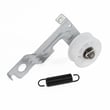
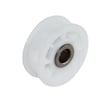
- LG dryer idler pulley 4561EL3002A (a worn pulley can squeal and affect belt tracking)
Symptom-to-likely-cause quick guide
| Symptom | Most likely cause | What we do first |
|---|---|---|
| Long dry times | Vent restriction or lint buildup | Clean lint screen, then check venting to outdoors |
| Weak airflow | Blower or duct restriction | Inspect blower wheel and internal lint path |
| Thumping or rumbling | Drum support wear | Check rollers for flat spots |
| Squealing | Idler pulley wear | Check pulley spin and belt alignment |
Why it matters
Restricted airflow is the root cause behind many drying complaints because it increases cycle time and heat stress on components such as thermostats and sensors. Keeping the lint screen and venting clear protects performance and helps prevent avoidable part failures.
Last updated: January 2026