 Installation guide
 Owner’s manual
 Error Codes




What is the most common problem with a GE dishwasher?
For the GE GDT695SMJ2ES dishwasher, the most common customer-reported issue we see is the dishwasher not starting or not running a cycle. In many cases, the cause is simple (power, door not fully latched, or control lock), but it can also involve a failed latch or control.
- Confirm the breaker is on and any wall switch feeding the dishwasher is ON.
- Make sure the door is fully closed; this model will not start if the latch is not engaged.
- If the unit beeps once per minute, the door is being detected as open during operation.
- Check whether Control Lock is enabled; unlock it using the button combination shown in the GDT695SMJ2ES owner’s manual.
- If the display shows “LEAK DETECTED”, the cycle can stop and the dishwasher may drain.
If basic checks do not fix it, these model-compatible parts are often involved:
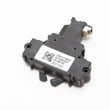
- GE dishwasher door latch lock WD21X10490 (door must latch for the control to allow a cycle)
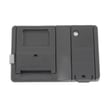
- Dishwasher user interface WD21X31902C (Start button and selections)
- Dishwasher electronic control board WD21X24901C (main control that runs the cycle)
| What you notice | Often points to | What to do next |
|---|---|---|
| No response at all | Power supply issue | Check breaker, wall switch, wiring connection |
| Buttons respond but won’t run | Door not latched or Control Lock | Re-close door, unlock controls |
| Starts then stops with message | Leak detection event | Inspect for leaks, standing water, loose hoses |
| Intermittent starting | Latch or control issue | Inspect latch alignment and wiring harness |
A dishwasher that will not start is often a safety interlock doing its job (door latch, leak detection) or a power/control issue. Checking the simple items first can prevent unnecessary parts replacement.
For display messages and model-specific operating steps, use the GDT695SMJ2ES owner’s manual.
Last updated: January 2026
What is the average life expectancy of a GE dishwasher?
A GE dishwasher like model GDT695SMJ2ES typically lasts 10 to 15 years, with about 12 years being a solid average life expectancy when it’s installed correctly, run with proper detergent, and maintained (especially filter cleaning). For care details, see the GDT695SMJ2ES owner's manual.
A dishwasher’s service life is usually determined by how hard it works and how clean the wash system stays.
- Water quality (hard water speeds mineral buildup)
- Filter maintenance (clogged filters strain the circulation system)
- Loading habits (blocked spray arms reduce cleaning and increase run time)
- Detergent and rinse aid use (wrong detergent can cause suds and poor performance)
- Heat and drying use (heated dry adds wear but improves drying)
The GE manual for this platform calls out periodic filter cleaning; we recommend following a simple routine.
| Task | Typical frequency | Why it helps |
|---|---|---|
| Clean the filters | Every 1 to 2 months | Prevents gritty dishes and protects wash performance |
| Check spray arms for clogs | Every 2 to 3 months | Keeps water jets strong and even |
| Run a dishwasher cleaner cycle | Monthly (hard water) or quarterly | Reduces odor and mineral film |
| Verify hot water temp | Occasionally | Best cleaning starts around 120°F |
These symptoms often show up as the unit approaches the 10+ year mark.
- Cycles complete but dishes stay gritty or cloudy
- Standing water or slow draining becomes frequent
- Loud circulation noise that wasn’t there before
- Intermittent power or control issues
- Recurring leaks around the door or underneath
Knowing the typical lifespan helps you decide whether to invest in a repair (like a pump, drain component, or control) or focus on maintenance to extend the life of your GE GDT695SMJ2ES dishwasher.
Last updated: January 2026
How to do a hard reset on a GE dishwasher?
On the GE GDT695SMJ2ES dishwasher, the most reliable “hard reset” is to fully remove power for a short time, then restore power and restart a cycle. This clears many temporary control glitches without replacing parts. For control steps and canceling a cycle, use the GDT695SMJ2ES owner’s manual.
- Press and hold Start for 3 seconds to cancel the current cycle; close the door so it can drain.
- Turn OFF power to the dishwasher at the circuit breaker (or wall switch, if your installation uses one).
- Wait 5 to 10 minutes.
- Turn power back ON.
- Press Start and close the door within a few seconds to begin a new cycle.
These checks are specific to common “won’t start” situations on this GE platform:
- Make sure the door is fully latched; a loose latch can prevent starting.
- If Control Lock is enabled, press and hold the correct lock buttons for about 3 seconds (button pair varies by model).
- If the unit has power but acts “stuck,” cancel the cycle again (press and hold Start for 3 seconds).
- If the dishwasher still won’t run, the issue can be in the user interface, wiring, or control.
A reset that only works temporarily can indicate an intermittent control or input issue. These parts are commonly involved:
| Symptom after reset | Likely area to inspect | Example compatible part for this model |
|---|---|---|
| Dead or erratic buttons/display | Console/user interface | Dishwasher user interface WD21X31902C |
| Random stopping, no response | Main control | Dishwasher electronic control board WD21X24901C |
| Won’t start unless you push door hard | Door latch | GE dishwasher door latch lock WD21X10490 |
A true hard reset (power removal) helps you separate a one-time software/control “hiccup” from a repeatable failure in the door latch, user interface, or electronic control board. That saves time before you move into deeper troubleshooting.
Last updated: January 2026
Can a clogged drain cause an FTD error?
Yes. On the GE GDT695SMJ2ES dishwasher, a clogged drain path can prevent the tub from emptying on time, which can lead to a drain-related fault or stopping mid-cycle. GE may display different messages depending on the control, so we focus on verifying actual draining.
Use the drain and cleaning guidance in the GDT695SMJ2ES owner’s manual and work through these common restrictions:
- Cancel the cycle by pressing and holding Start for 3 seconds; listen for a strong drain.
- Remove the bottom rack; clean the filters (fine and ultra-fine) and reinstall them fully.
- Check the sink air gap (if your installation has one) and clean it.
- Check the disposer inlet where the dishwasher drain hose connects; clear food buildup.
- Inspect the drain hose for kinks, crushing, or a sag that traps water.
- Confirm the drain setup uses a proper high drain loop or an air gap (installation requirement).
If the drain path is clear but the dishwasher still drains weakly or intermittently, the drain pump can be the next likely suspect.
- Humming with little water movement can indicate a jammed impeller.
- Intermittent draining can indicate a failing pump.
- Debris in the sump area can repeatedly re-clog the system.
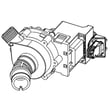
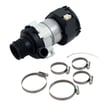
Model-compatible part to consider: dishwasher drain pump WD19X25187.
| What you notice | Most likely cause | What to do |
|---|---|---|
| Standing water after cycle | Filters, air gap, disposer port, or hose restriction | Clear the drain path and rerun Cancel/Drain |
| Humming during drain | Pump jam or blockage at pump inlet | Check for debris; retry drain |
| Slow drain | Partial clog or poor hose routing | Clear buildup; correct routing |
A drain restriction leaves dirty water in the tub, which can cause odors and can prevent the next fill and wash from starting normally.
Last updated: January 2026





