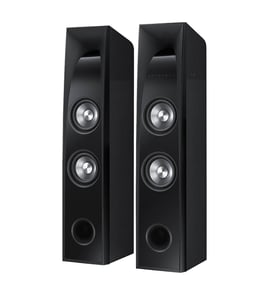

Are Cerwin-Vega speakers made in China?
Cerwin-Vega speakers are made in different countries depending on the product line and production era; many modern consumer models are built in Asia, and many older models were built in the USA. For your Cerwin-Vega model E-712, the correct way to confirm is the country-of-origin label on the cabinet.
How to confirm the country of manufacture on an E-712
Check the physical markings on the speaker; that is what identifies where that specific unit was made.
- Look for a rear-panel label near the input terminals that lists “Made in …”
- Check the serial number sticker; country-of-origin is often printed on the same label
- Inspect the back plate (terminal cup) and any compliance labels for origin text
- If labels are missing, remove the woofer and look for markings on the driver magnet or crossover board
What varies by era (and why you may see different answers)
Cerwin-Vega production has changed over time, so two Cerwin-Vega speakers can legitimately have different origins.
| Speaker type/era | Most common manufacturing pattern | Best confirmation method |
|---|---|---|
| Vintage home speakers | Often USA-built | Rear label and serial tag |
| Newer consumer speakers | Commonly Asia-built | Rear label and compliance label |
| Pro/PA cabinets | Varies by series and year | Rear label and model tag |
Why it matters for repairs and parts matching
Country of manufacture is less important than the exact build details when you are matching replacement components. Production runs can change driver impedance, mounting patterns, and crossover values even within the same model family.
- Match the exact model number: E-712
- Compare driver impedance (ohms) and power handling
- Measure cutout diameter and bolt pattern before ordering
- Photograph the crossover and terminal cup to match connectors
Helpful DIY resource
If you are chasing intermittent sound, crackling, or dropouts, start with wiring and connection checks: how to repair broken or damaged wires video.
Last updated: February 2026
How old is Cerwin-Vega?
Cerwin-Vega has been around since 1954, so as of February 2026 the brand is 72 years old. That long history matters when you are identifying compatible components and planning repairs for a Cerwin-Vega E-712 audio speaker.
Quick age reference
| Item | Value |
|---|---|
| Founded | 1954 |
| Age in February 2026 | 72 years |
Why the brand’s age matters for speaker repairs
Older and long-running audio brands often have multiple product generations with similar names. For the Cerwin-Vega E-712, confirming the exact model helps you avoid mismatched drivers or wiring.
- Verify the model number on the speaker’s rear label (use E-712, not just “E series”).
- Check whether your issue is mechanical (torn surround, rubbing voice coil) or electrical (open circuit, loose lead).
- Inspect the input terminals and internal wiring for corrosion or broken connections.
- If sound is distorted, test each driver (woofer, midrange, tweeter) one at a time.
- If there is no sound, start with continuity checks before replacing components.
Basic troubleshooting steps we recommend
- Swap speaker cables left-to-right to rule out the amplifier or source.
- Check the binding posts for a loose connection.
- Use a multimeter to check driver continuity (a completely open reading usually indicates a failed driver or broken lead).
- Inspect internal wires for breaks, pinches, or cold solder joints.
Helpful DIY reference
For safe, reliable electrical checks during troubleshooting, use our guide: how to use a multimeter to test electrical parts video.
Why it matters
Knowing Cerwin-Vega’s long history helps set expectations: parts availability and design details can vary by production era, so accurate model identification and careful testing prevent unnecessary replacements.
Last updated: February 2026
What are Cerwin-Vega speakers known for?
Cerwin-Vega speakers are known for high-output sound with strong, punchy bass and a reputation for rugged, performance-focused designs. For the Cerwin-Vega E-712 audio speaker, those traits typically show up as loud, dynamic playback that holds up well in demanding listening setups.
What you’ll notice most in real-world use
- Big bass impact: a forward low end that feels powerful at higher volumes
- High efficiency: they tend to play loud with less amplifier power than many hi-fi speakers
- Live-sound character: energetic, “concert-like” presentation that emphasizes dynamics
- Durability mindset: cabinets and drivers are commonly built for higher-output use
- Room-filling output: well-suited for larger rooms, parties, and garage or basement systems
Why that reputation matters when troubleshooting or replacing parts
When a speaker brand is designed for output, small issues can become obvious quickly (buzzing, rattling, distortion, or dropouts). For an E-712, we focus first on the basics that most often affect loud, bass-heavy playback:
| Symptom | Most common cause | What to check first |
|---|---|---|
| Distortion at volume | Clipping or damaged driver | Amp settings, source level, driver movement |
| Rattle/buzz on bass notes | Loose hardware or cabinet vibration | Tighten screws, inspect grille and baffle |
| No sound from one speaker | Wiring or connection issue | Speaker wire polarity, terminals, amp channel |
| Intermittent sound | Broken/loose wire inside cabinet | Inspect and repair internal leads |
Quick checks we recommend (safe, no special tools)
- Swap left/right speaker connections at the amplifier to confirm whether the issue follows the speaker
- Inspect the speaker wire for cuts, corrosion, or loose strands shorting at the terminals
- Play a bass sweep at moderate volume and listen for cabinet or grille vibration
- Check that all driver mounting screws are snug (do not overtighten)
Helpful DIY guidance
If you suspect a loose lead, broken conductor, or intermittent connection, follow the same best practices used for appliance wiring repairs: how to repair broken or damaged wires video.
Why it matters
Strong bass and high output are exactly what make problems like loose fasteners, fatigued wiring, and overdriven amplifiers show up sooner; addressing those basics restores clean, powerful sound.
Last updated: February 2026