Owner’s manual
 Error Codes



Is the Samsung 4.5 front load washer any good?
Yes. The Samsung WF42H5200AP 4.5 cu. ft. front-load washer is a solid choice for most homes because it cleans well with less water, spins fast to reduce dry time, and typically runs quieter than many top-load designs. For the best results and cycle details, use the WF42H5200AP user manual.
What “good” looks like in day-to-day use
A good front-load washer should deliver consistent cleaning, stable spinning, and low maintenance. Here’s what we see most often with this style of Samsung washer:
- Strong cleaning performance with HE detergent and proper load sizing
- High-speed spin that leaves clothes less wet (shorter dryer time)
- Good capacity for bulky items (comforters, towels) when loaded loosely
- More efficient water and energy use than many older washers
- Best performance when the washer is level and the door boot is kept clean and dry
Common pros and tradeoffs (front-load washers)
| What you’ll like | What to plan for |
|---|---|
| Efficient washing and rinsing | Door boot can hold moisture if you keep the door closed all the time |
| Faster spin, less drying time | Needs occasional cleaning to prevent odor |
| Gentle tumbling action on fabrics | More sensitive to out-of-balance loads than some top-loaders |
If yours is noisy, shakes, or walks
Those symptoms usually come from installation, load balance, or worn suspension parts.
- Confirm the washer is level and firmly on the floor
- Avoid washing single heavy items (add similar items to balance)
- Do not overload; pack the drum loosely
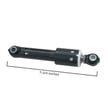
- If banging persists, inspect suspension components such as the Samsung washer shock absorber DC66-00470A
Why it matters
A “good” washer is one that matches your laundry habits. With a front-load design like the WF42H5200AP, correct loading, leveling, and basic maintenance are what keep cleaning performance high and vibration low over the long run.
Last updated: February 2026
Why is my Samsung WF42H5200AP A2 not filling with water?
If your Samsung WF42H5200AP washer isn’t filling, the most common causes are a closed water supply valve, kinked inlet hoses, clogged inlet screen filters, or a failed water inlet valve. We recommend checking the simple water-supply items first, then testing the valve.
Quick checks (fastest fixes first)
- Confirm both hot and cold shutoff valves are fully open.
- Make sure the inlet hoses aren’t kinked, crushed, or frozen.
- Verify the washer door fully latches; a door lock issue can prevent filling.
- Check household water pressure; most washers need steady pressure to fill normally.
- If the washer shows an error code, match it to the correct troubleshooting steps.
Clean the inlet screen filters
Sediment can clog the tiny screens where the hoses connect to the washer.
- Unplug the washer.
- Turn off both water valves.
- Remove the hoses at the washer and inspect the screens.
- Rinse debris off the screens; reinstall hoses and check for leaks.
For model-specific access and safety notes, follow the WF42H5200AP owner’s manual.
When the inlet valve is the problem
If water supply is good and screens are clean, the inlet valve solenoids may not open.
| Symptom | Most likely cause | What we do next |
|---|---|---|
| No water at all | No supply, door not locking, failed inlet valve | Verify supply, then test valve |
| Slow fill | Clogged screens, low pressure, restricted hose | Clean screens, confirm pressure |
| Only hot or only cold fills | One side of inlet valve failed | Replace inlet valve |
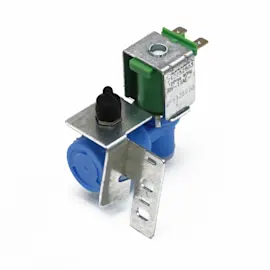
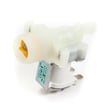
For this model, the inlet valve is commonly replaced with washer water inlet valve DC62-30314K or washer water inlet valve DC62-30312J (match by your original part and connections).
Why it matters
Running a cycle with little or no water can leave detergent undissolved, cause poor cleaning, and trigger fill-related error codes. Fixing the supply or inlet valve restores normal wash performance and helps prevent repeat interruptions.
Related help: Samsung front load washer nf error code.
Last updated: February 2026
What is the life expectancy of a Samsung front load washing machine?
A Samsung front-load washer like model WF42H5200AP lasts 10 to 13 years with normal household use. Regular cleaning, correct loading, and fixing leaks or vibration quickly are what most often determine whether it reaches the high end of that range.
Typical lifespan and what changes it
Most front-load washers wear out from bearing, suspension, drain, or control problems rather than the tub itself. These factors have the biggest impact:
- Overloading or frequent unbalanced loads (stresses bearings and suspension)
- Keeping the door shut between loads (traps moisture and damages the door boot)
- Hard water and scale buildup (wears valves and can cause fill issues)
- Debris in the drain path (strains the drain pump)
- Poor leveling (increases vibration and shock absorber wear)
Maintenance that extends life (high impact)
We recommend these habits for WF42H5200AP:
- Run the tub-clean cycle on the schedule in the WF42H5200AP owner’s manual
- Wipe the door glass and gasket after wash day; leave the door slightly open to dry
- Use HE detergent and avoid overdosing (excess suds stresses the drain system)
- Check pockets to keep coins, screws, and lint out of the pump
- Keep the washer level and stable; recheck leveling after moving it
Quick symptom-to-part map
| Symptom | Most common cause | Example part used on this model |
|---|---|---|
| Loud banging, walking, heavy vibration | Worn suspension | Samsung washer shock absorber DC66-00470B |
| Won’t drain, slow drain, water left in tub | Clogged filter or failing pump | Washer drain pump motor and impeller DC31-00178A |
| Door won’t lock or cycle won’t start | Failed door lock | Washer door lock DC64-00519B |
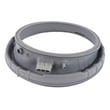
| Leaks at the door area | Worn door boot | Samsung washer door boot DC97-18094B |
Why it matters
A front-load washer is often repairable well past 10 years; catching early signs (vibration, slow draining, small leaks) helps prevent secondary damage to the tub, bearings, and electronics.
Last updated: February 2026