 Installation guide
 Owner’s manual


How to find model number on a Frigidaire washer?
On the Frigidaire washer model FWS833AS2, the model and serial numbers are printed on the serial plate located on the underside of the washer lid. We recommend writing both numbers down so you can match parts and documentation correctly.
Where to look on the washer
- Lift the washer lid fully.
- Look underneath the lid for a serial plate or sticker.
- Record both the model number and serial number.
- Keep the numbers with your paperwork for future repairs.
- Use the model number when ordering parts like a belt, drain pump, or water inlet valve.
Quick location guide
| Washer style | Most common model tag location | What you will see |
|---|---|---|
| Top-load washer (like FWS833AS2) | Underside of the washer lid | Model number and serial number |
| Front-load washer | Door opening area (around the door frame) | Model number and serial number |
Why it matters
Using the exact model number helps us match the correct Frigidaire washer parts and the right procedures in the FWS833AS2 owner's manual. It also prevents ordering a look-alike part that will not fit or connect correctly.
If the label is hard to read
- Wipe the label gently with a damp cloth and mild soap.
- Use a flashlight at an angle to make faded print easier to see.
- Take a close-up photo and zoom in.
- If the sticker is damaged, check your purchase paperwork for the recorded model/serial.
Last updated: February 2026
How to remove front panel frigidaire washer?
To remove the front panel on your Frigidaire washer model FWS833AS2, unplug the washer, then remove the fasteners securing the panel (typically along the top edge and/or lower edge) and lift the panel off its mounting tabs. Use the FWS833AS2 installation guide for safe access and handling steps.
Before you start (safety and access)
- Unplug the power cord before removing any panels.
- Turn off both water faucets to prevent leaks while you work.
- Pull the washer forward enough to work comfortably without stretching hoses.
- Keep screws organized by location so reassembly is straightforward.
- Wear cut-resistant gloves; sheet metal edges can be sharp.
Front panel removal steps (typical for this Frigidaire design)
- Disconnect power and turn off water.
- Stabilize the washer: if you need to tilt it, set it back down gently so it sits solidly on all four legs.
- Remove the top fasteners: take out the screws at the top of the front panel (often accessible after opening the lid or from the top edge).
- Remove any lower fasteners (if present): some versions use screws near the bottom corners.
- Lift and release: pull the panel slightly forward, then lift up to unhook it from the lower tabs/clips.
- Set the panel aside on a protected surface to avoid scratches.
What you can service once the front panel is off
| Symptom | Common area behind the front panel | Related part for FWS833AS2 |
|---|---|---|
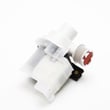
| Won’t drain, water left in tub | Drain pump and hoses | Washer drain pump 137221600 |
| Slow drain or leaks at outlet | Drain hose routing/clamps | Washer drain hose 134592700 |
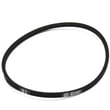
| Burning rubber smell, weak spin | Drive system | Belt 134511600 |
Why it matters
Removing the front panel correctly prevents stripped screw holes, bent panels, and pinched wiring. It also gives you safe access to high-failure items like the drain pump, drain hose connections, and the drive belt.
Last updated: February 2026
Is Frigidaire a good brand for washers?
Frigidaire is a solid, value-focused washer brand; for the Frigidaire FWS833AS2, you can expect dependable everyday performance when it’s installed correctly, used with the right load size and detergent amount, and maintained regularly. For best results, follow the cycle, care, and troubleshooting guidance in the FWS833AS2 owner's manual.
What “good” usually means for a washer brand
We judge washer brands on a few practical factors that affect real-world ownership:
- Cleaning performance on normal and heavy soil loads
- Reliability of core systems (fill, drain, spin)
- Ease of service (parts availability and straightforward repairs)
- Operating cost (water and energy use, detergent needs)
- Expected lifespan for the design
Typical lifespan and what to expect
Most washers of this type typically last 8 to 10 years with normal household use and basic maintenance.
| Ownership factor | What to expect | What helps most |
|---|---|---|
| Reliability | Good for everyday laundry | Correct installation and avoiding overloads |
| Maintenance | Routine cleaning prevents many issues | Periodic hose checks and cleaning |
| Repairability | Many common parts are replaceable | Address small symptoms early |
How to get the best results from your FWS833AS2
A few habits make a bigger difference than brand alone:
- Run the washer through a full cycle after setup and check for leaks (installation guidance matters).
- Use the correct water temperature and cycle for the fabric type.
- Avoid overloading; heavy loads strain the drive system and can reduce spin performance.
- If draining is slow or incomplete, check for kinks or clogs in the drain path; a failing pump can also be a cause.
- Keep the model and serial information recorded for parts matching and service history (covered in the manual).
If you’re troubleshooting a drain issue on this model, the washer drain pump 137221600 is one of the key components in the drain system.
Why it matters
Most “brand” complaints come down to installation, detergent use, and maintenance. Your FWS833AS2 documentation specifically emphasizes reading the operating instructions and using the built-in troubleshooting checklist before scheduling service, which helps you avoid unnecessary repairs and downtime.
Last updated: February 2026
Why is my Frigidaire washer not washing?
If your Frigidaire FWS833AS2 washer powers on but will not agitate or clean, the most common causes are a fill problem (valves off, low water pressure, siphoning from an incorrect drain setup) or a drive problem (belt not turning the tub). Start with the quick checks in the FWS833AS2 owner's manual.
Quick checks we recommend first
- Confirm the washer is getting full power; reset the tripped breaker or replace a blown fuse.
- Make sure both hot and cold supply valves are fully open.
- Verify the inlet hoses are not kinked and the screens at the inlet valve are not clogged.
- Check that the drain hose is not pushed too far down the standpipe.
- Confirm standpipe height is correct; it must be at least 33 inches high to prevent siphoning.
What to check based on the symptom
| What you see | Most likely cause | What to do next |
|---|---|---|
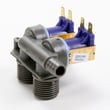
| Tub never fills or fills very slowly | Water supply issue or inlet valve restriction | Check valves, hose kinks, inlet screens; consider the universal/multiflex (Frigidaire) washer water inlet valve 134211400 if the valve is not opening properly |
| Water enters but level stays low and clothes stay mostly dry | Drain siphoning due to drain setup | Set the drain hose correctly and confirm the 33-inch minimum standpipe height (installation requirements) |
| Washer fills but does not agitate or spin well | Drive system issue | Inspect the belt 134511600 for wear, glazing, or slipping |
| Washer washes but will not drain, leaving clothes dirty and wet | Drain pump or drain path issue | Check for clogs in the drain hose; if the pump is not moving water, consider the washer drain pump 137221600 |
Why it matters
Washing performance depends on three basics: correct fill, correct mechanical drive, and correct draining. A siphoning drain hose or weak fill can make the washer look like it is “running” while it never reaches the water level needed to wash properly.
When a repair is likely
- You smell rubber or hear squealing during agitation or spin (often a worn/slipping belt).
- The washer hums but does not drain water (often a failing drain pump).
- The washer consistently under-fills even with good household water pressure (often an inlet valve issue).
Last updated: February 2026


