




How much is the Honda HRR216 self-propelled mower?
Honda HRR216 is a model family of gas walk-behind mowers, so the price depends on the exact HRR216 version, condition (new vs. used), and what is included (bag, mulch plug, blade, etc.). For a cost-effective path, we focus on keeping your current HRR216 running with the right replacement parts.
- Exact HRR216 sub-model and trim (self-propelled vs. push)
- New, used, or refurbished condition
- Local availability and season (spring pricing is often higher)
- Included wear items (blade, wheels, cables)
- Shipping and assembly costs
If your HRR216 is self-propelled but not driving well, replacing common wear parts often restores performance for far less than a new mower.
| Situation | Most likely fix | Example part to check |
|---|---|---|
| Self-propel feels weak or slips | Drive cable out of adjustment or worn | Lawn mower drive control cable 54510-VG4-B01 |
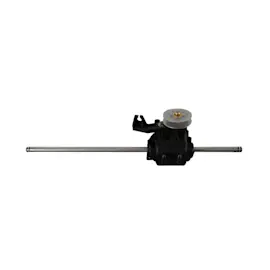
| Mower will not self-propel at all | Cable broken or transmission issue | Lawn mower transmission assembly 20001-VG3-B03 |
| Poor cut quality | Blade dull/bent | Lawn mower 22-in deck mulching blade 72531-VE2-020 |
- Confirm the drive control lever fully engages and returns smoothly.
- Inspect the drive cable for kinks, fraying, or slack.
- Check wheels for binding and clear packed grass from the deck.
- If the engine surges or stalls, service the air intake and fuel system.
Pricing varies widely, but the HRR216 platform is usually worth maintaining. A sharp blade, clean deck, and properly working drive system improve cut quality, reduce engine strain, and extend mower life.
Related DIY help: how to tune up a lawn mower video
Last updated: February 2026
How much oil does a Honda HRR mower take?
Most Honda HRR216 walk-behind mowers take about 0.6 US qt (20 oz) of 4-cycle engine oil when you’re filling from empty; we always fill slowly and use the dipstick to set the final level so you do not overfill.
- Park the mower on a level surface and let the engine cool.
- Remove the dipstick, wipe it clean, then reinsert it to check the level.
- Add oil in small amounts (a few ounces at a time).
- Recheck the dipstick after each top-off until it reaches the full mark.
- Tighten the dipstick securely when finished.
| Item | Typical recommendation for Honda HRR216 | Notes |
|---|---|---|
| Oil capacity (approx.) | 0.6 US qt (20 oz) | Final level is set by dipstick |
| Oil type | 4-cycle engine oil | Do not use 2-cycle oil |
| Common viscosity | SAE 10W-30 | Choose viscosity for your temperature range |
Correct oil level protects the crankshaft and bearings, reduces overheating, and prevents smoking or hard starting. Overfilling can cause oil to foam and push into the air intake, which can make the engine run poorly.
- Make sure the mower is level when checking.
- Let oil drain down for a minute before rechecking.
- If oil got into the air box, inspect and clean the area around the filter and cover.
- Replace a damaged or missing air box cover so debris stays out of the engine; see air cleaner cover 17231-Z0L-030.
- For fuel storage and seasonal maintenance, follow how to winterize a lawn mower.
Last updated: February 2026
What is the part number for the Honda Lawnmower HRR216 carburetor?
For the Honda HRR216 walk-behind mower, the carburetor part number depends on the exact engine version installed on your mower (Honda used multiple GCV-series engines across HRR216 variants). We match the correct carburetor by confirming your engine model and type code, then selecting the carburetor that fits that engine.
Check these items on the engine identification label (typically on the engine shroud):
- Engine family/model (commonly GCV160 or GCV170 on HRR216 series)
- Type code (a short code after the engine model)
- Serial number (helps confirm production range)
- Whether your mower is self-propelled and the control cable routing matches
- Whether the carburetor uses a manual choke or auto-choke linkage
A carburetor mismatch usually shows up as linkage or mounting issues. Before buying, compare:
- Throttle/governor linkage attachment points
- Choke linkage style (manual vs auto)
- Air cleaner mounting pattern and gasket shape
- Fuel inlet direction and hose size
- Primer bulb presence (if equipped)
| What you compare | Why it matters |
|---|---|
| Engine model + type code | Determines the correct carburetor assembly |
| Linkage/choke style | Prevents no-start or runaway RPM issues |
| Gasket/mount pattern | Prevents vacuum leaks and surging |
If you are replacing the carburetor because of surging, hard starting, or fuel leaks, these related items often matter just as much:
- Air filter housing condition and sealing surfaces
- Carburetor insulator gasket (prevents air leaks)
- Fuel line condition and clamps
- Fresh fuel and a clean tank
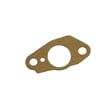
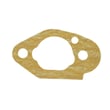
A common air-leak culprit is the lawn & garden equipment engine carburetor insulator gasket 16212-ZL8-000, which can cause lean running and surging if it is cracked or not sealing.
The HRR216 platform spans multiple engine configurations; ordering by “HRR216 carburetor” alone can lead to the wrong linkage or gasket pattern. Matching by engine model and type code prevents repeat repairs and starting problems.
Last updated: February 2026
What kind of gas does a Honda hrr216 take?
For a Honda HRR216 gas walk-behind mower, we recommend regular unleaded gasoline with no more than 10% ethanol (E10). Avoid higher-ethanol blends (like E15 or E85) because they can cause hard starting, rough running, and fuel-system damage over time.
- Use fresh regular unleaded gasoline (typical pump octane is fine).
- Use fuel with 10% ethanol or less (E10 max).
- Avoid E15 and E85.
- Avoid old gas; if it smells sour or looks dark, replace it.
- Keep the fuel cap area clean so dirt does not fall into the tank.
| Fuel type at the pump | OK for HRR216? | Notes |
|---|---|---|
| Regular unleaded (E0) | Yes | Best for storage and fewer fuel issues |
| Regular unleaded (E10) | Yes | Acceptable and commonly available |
| Unleaded (E15) | No | Too much ethanol for small engines |
| Flex fuel (E85) | No | Can prevent starting and damage fuel components |
These checks solve most “won’t start” complaints tied to fuel quality:
- Drain the tank and refill with fresh regular unleaded (E0 or E10).
- Inspect the air filter area and make sure the cover seals correctly; a loose or damaged cover can let debris in (see air cleaner cover 17231-Z0L-030).
- Check that the fuel shutoff (if equipped) is on and the choke is set correctly for a cold start.
- If the mower sat with fuel in it, clean the carburetor bowl and jets (or service the carburetor).
Small-engine fuel systems are sensitive to ethanol and stale gasoline. Using fresh regular unleaded (E10 max) helps prevent varnish buildup in the carburetor, reduces starting problems, and protects seals and fuel lines.
Last updated: February 2026
What year was the Honda HRR216 made?
Honda HRR216 walk-behind mowers were produced across multiple years (not a single model-year), and the exact build year depends on the mower’s specific serial number and type code. We use that ID information to match the correct parts and diagrams for your HRR216.
Look for the identification label on the mower (commonly on the rear of the deck, near the wheels, or on the handle support). Then record:
- Model family: HRR216
- Type code (often shown as a suffix like HRR216K#)
- Serial number
- Engine model (often GCV series on many HRR216 versions)
Use this list before ordering parts or troubleshooting:
- HRR216 model family
- Type code (letters and numbers after HRR216)
- Serial number range
- Whether it is self-propelled or push (drive control present)
- Deck size (commonly 21 to 22 inches on this class of mower)
“HRR216” is a platform name Honda used for several revisions over time. Small changes (cables, brackets, blade style, hardware) can vary by type code and serial range, so the year matters mainly because it helps confirm the correct part fit.
| What you have | What it tells us | Why it matters |
|---|---|---|
| HRR216 model family | General mower series | Narrows to the right parts category |
| Type code | Exact version/revision | Prevents ordering the wrong cable, bracket, or control |
| Serial number | Production range | Confirms the correct diagrams and substitutions |
If you are trying to date the mower because a part does not match, these are frequent “version-dependent” items:
- Lawn mower drive control cable 54510-VG4-B01
- Lawn mower 22-in deck mulching blade 72531-VE2-020
- Control bar and brake/zone control cable assemblies
Getting the correct year or production range helps ensure the drive system, blade, and control cables match your exact HRR216 configuration, which prevents fit issues and repeat repairs.
Last updated: February 2026