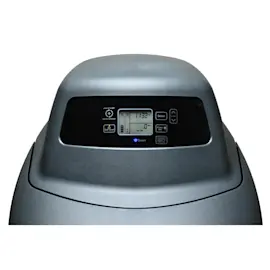
Owner’s manual
 Error Codes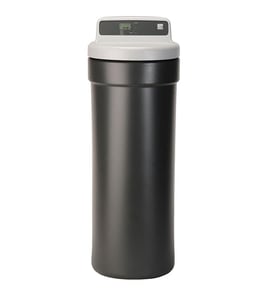




How to tell if a whirlpool water softener is working?
On the Whirlpool WHES40 water softener, the quickest way to confirm it’s working is to verify the bypass is in service, confirm the control is programmed (time and hardness), and then test your water hardness before and after a manual recharge. Use the WHES40 water softener manual for the exact button steps.
Quick checks on the WHES40 (no tools)
- Bypass valve position: the single bypass stem should be pulled out for service/soft water (pushed in is bypass).
- Salt level and salt type: make sure there’s salt in the brine tank and the salt type setting matches what you use (NaCl or KCl).
- Water flow indicator: when water is running, the display should show droplets indicating flow through the softener.
- No obvious drain issues: the valve drain hose should not be kinked or elevated excessively.
- No error codes: if an error code appears, address it before judging performance.
The most reliable test: hardness before and after
- Test a cold hard-water source (an outdoor faucet is often left unsoftened) to confirm your incoming hardness.
- Test a cold softened-water faucet inside.
- Start a manual recharge (regeneration) and re-test softened water after the unit has had time to return to service.
What results should look like
| What you see | What it usually means | What to do next |
|---|---|---|
| Softened water tests significantly lower hardness than raw water | Softener is working | Keep salt above 1/3 full and recheck monthly |
| No change in hardness | Softener is bypassed, not regenerating, or not drawing brine | Check bypass, settings, then inspect nozzle/venturi |
| Water feels soft but tests hard | Hardness setting may be wrong or iron compensation needed | Reprogram hardness and retest |
If it’s not softening: most common WHES40 causes
- Bypass left in bypass position
- No salt, wrong salt type setting, or a salt bridge
- Incorrect water hardness programmed
- Plugged nozzle/venturi (common when sediment is present)
- Valve not moving through cycles (motor/control issue)
If you suspect the suction system is plugged, the nozzle/venturi parts are serviceable; the water softener nozzle and venturi gasket kit 7114533 is one of the compatible repair items used when resealing that area.
Why it matters
A WHES40 can appear “on” but still deliver hard water if it’s bypassed, mis-programmed, or not drawing brine during regeneration. Confirming operation with a hardness test prevents scale buildup in plumbing, water heaters, and appliances.
Last updated: January 2026
What is the life expectancy of a whirlpool water softener?
A Whirlpool water softener like model WHES40 typically lasts 8 to 12 years in normal household use. With good maintenance and reasonable water conditions, it can run longer; the resin bed and valve seals are often the first wear items that drive performance issues.
What usually determines how long a WHES40 lasts
- Incoming water hardness and iron: harder water and iron increase regeneration demand and wear.
- Salt quality and salt bridging: poor salt or high humidity can cause bridging and reduce regeneration effectiveness.
- Water pressure and temperature: the WHES40 is designed for typical residential ranges; consistently high pressure can stress valve seals.
- Maintenance habits: keeping salt above 1/3 full and cleaning the nozzle and venturi when needed helps prevent “no soft water” complaints.
- Usage changes: more people in the home means more gallons treated and more regenerations.
Typical lifespan breakdown (what wears out first)
| Component | Typical service life | What you notice when it’s wearing out |
|---|---|---|
| Resin media (resin bed) | 7 to 10 years | Soft water quality drops, more frequent recharges |
| Valve seals/rotor components | 5 to 10 years | Water running to drain, hard water, internal leakage symptoms |
| Electronic controls/motor | 8 to 12 years | Error codes, stalled motor, no regeneration |
For maintenance and operating steps specific to this model, use the WHES40 owner’s manual.
When a repair makes sense vs. replacement
If the unit is within the typical life range and the tank is sound, repairs are often worthwhile, especially for common wear parts.
Common repair paths on WHES40 units include:
- Replacing valve seals if you see internal leaking symptoms (use a kenmore water softener seal kit 7185487).
- Cleaning the nozzle and venturi if the softener is not drawing brine.
- Addressing salt bridging and correcting hardness programming.
For troubleshooting patterns and code meanings, we recommend Whirlpool error codes.
Why it matters
A softener near or past its expected lifespan can still run, but efficiency and water quality often decline first. Knowing the typical 8 to 12 year window helps you decide whether to invest in resin/seal repairs or plan for a full replacement.
Last updated: January 2026
Are whirlpool water softeners any good?
Yes. Whirlpool water softeners are a solid choice for most homes, and the Whirlpool WHES40 is designed to deliver dependable soft water with demand-controlled regeneration for better salt and water efficiency when it’s set up and maintained correctly (see the WHES40 owner’s manual).
What “good” looks like on the WHES40
When the WHES40 is installed correctly and programmed for your water hardness, you should notice:
- Less scale buildup on fixtures, shower doors, and appliances
- Better soap lather and less soap scum
- More consistent water feel (especially after the first few days)
- Predictable regeneration behavior (about a 2-hour cycle)
- Quiet, normal operation during service and recharge
Strengths and common tradeoffs
Most “good vs. not good” feedback comes down to expectations and setup.
Strengths
- Demand-controlled operation helps avoid unnecessary regenerations
- Adjustable settings for hardness, recharge time, and salt type
- Built-in diagnostics and error codes for troubleshooting
Tradeoffs to plan for
- Like many residential softeners, performance depends heavily on correct programming and drain setup
- Hard water can still happen if salt bridges, the unit is in bypass, or the nozzle and venturi get dirty
Quick spec snapshot (WHES40)
| Item | WHES40 spec |
|---|---|
| Rated service flow rate | 12 gpm |
| Max hardness (supply) | 125 gpg |
| Max clear-water iron (supply) | 10 ppm |
| Water pressure limits | 20 to 125 psi |
| Salt storage capacity | 200 lb |
If you’re comparing brands, focus on these 5 checks
- Your tested hardness (gpg) and iron (ppm)
- Proper drain routing and air gap
- Correct bypass valve position (service vs. bypass)
- Salt type and salt quality (pellet, nugget, or coarse solar)
- Maintenance items like cleaning the venturi and checking for salt bridging
Why it matters
A “good” water softener is one that matches your water conditions and is easy to keep running. With the WHES40, most performance complaints trace back to setup (hardness setting, drain restrictions) or routine maintenance, not the core softening process.
Last updated: January 2026
What is the best brand of water softener to buy?
There is not one “best” brand for everyone; the best choice depends on your water hardness, iron level, household size, and whether you want a demand-initiated (metered) softener like the Whirlpool WHES40. If you already own a WHES40, keeping it properly programmed and maintained often delivers the best value.
How to choose the best brand for your home
We recommend comparing brands by the things that affect real-world performance and ownership cost:
- Sizing and capacity: match the unit to your grains-per-day demand (hardness x water use).
- Water conditions: clear-water iron, sediment, and pressure can change what works best.
- Regeneration style: demand-initiated (metered) vs time clock.
- Serviceability: availability of parts, local support, and clear troubleshooting.
- Operating cost: salt use, water use per regeneration, and efficiency settings.
For Whirlpool WHES40 owners, the programming steps and maintenance routines in the WHES40 owner’s manual are the fastest way to confirm your settings and keep performance consistent.
Quick brand comparison (what “best” usually means)
| If you care most about | Look for | Why it matters |
|---|---|---|
| Lowest ongoing salt use | High efficiency settings, demand regeneration | Reduces salt and water consumption over time |
| Minimal downtime | Easy-to-service valve design, common parts | Faster repairs and less waiting |
| Tough water (iron/sediment) | Pre-filtration options, cleaning features | Helps prevent plugging and loss of softening |
| Long-term ownership | Strong parts availability and documentation | Makes maintenance predictable |
If you already have a Whirlpool WHES40
Before replacing the whole system, we usually see better results by verifying these WHES40-SPECIFIC items:
- Set the correct hardness number (and compensate for clear-water iron when applicable)
- Confirm the unit is in service, not bypass
- Use the correct salt type setting (NaCl vs KCl)
- Break up any salt bridge and keep salt above 1/3 full
- Clean the nozzle and venturi if brine draw is weak
If you are troubleshooting “no soft water” symptoms, a common repair path is servicing seals in the valve; the kenmore water softener seal kit 7185487 is one of the compatible replacement parts listed for this model.
Why it matters
A “top brand” will still underperform if it is undersized or not matched to your water conditions. Correct sizing, proper programming, and routine maintenance usually matter more than the logo on the tank.
Last updated: January 2026
How to troubleshoot common whirlpool water softener problems?
For the Whirlpool WHES40 water softener, most “no soft water” and “not using salt” complaints trace back to salt issues (empty tank or salt bridge), a bypass valve left in bypass, a clogged nozzle and venturi, or a drain line restriction. Use the WHES40 water softener manual troubleshooting chart to match symptoms to checks.
Quick checks first (fastest fixes)
- Confirm the bypass valve is in service/soft water, not bypass.
- Check the salt level; refill if the tank is below about 1/3 full.
- Look for a salt bridge (hard crust under loose salt) and break it up.
- Avoid using hot water during regeneration; the water heater can refill with hard water.
- Verify the drain hose is not kinked and is routed with an air gap.
Symptom-based troubleshooting (WHES40)
| Symptom | Most likely cause | What to do next |
|---|---|---|
| No soft water | No salt, salt bridge, bypass in bypass | Refill salt, break bridge, set bypass to service |
| Tank full of water, not using salt | Clogged nozzle and venturi, drain restriction | Clean nozzle and venturi; check drain routing |
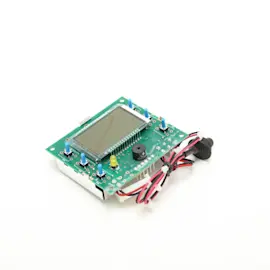
| Display blank | Power issue or control problem | Check outlet, breaker/fuse, transformer connection |
| Error code (E1/E3/E4/E5) | Switch, wiring, motor, or control issue | Use diagnostics and code guidance |
Clean the nozzle and venturi (common WHES40 fix)
A clogged nozzle and venturi can stop brine draw, so the resin bed never regenerates and you get hard water. If cleaning doesn’t restore operation, the sealing surfaces may need service.
- Follow the cleaning steps in the manual and our guide: how to clean a water softener nozzle and venturi
- If you find damaged seals or persistent leakage, consider replacing the water softener nozzle and venturi gasket kit 7114533
When to suspect a part problem
If the WHES40 has power and settings are correct but it still won’t regenerate or it leaks internally, common repair paths include:
- Worn internal seals (hard water, water running to drain)
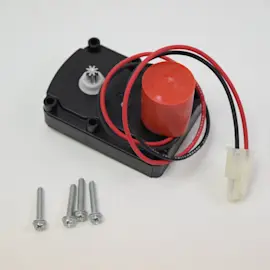
- Motor or cam/gear issues (motor stalled/clicking)
- Position switch faults (error codes)
Helpful part examples for this model:
- Kenmore water softener seal kit 7185487 (internal sealing components)
- Whirlpool water softener rotor position switch 7145186 (position sensing for valve cycles)
Why it matters
A water softener that isn’t drawing brine or is stuck in bypass will quickly cause hard-water scale on fixtures and reduce soap efficiency. Catching salt bridges, venturi clogs, and drain restrictions early prevents bigger valve and resin-bed problems.
Last updated: January 2026
What are the parts of a water softener?
The Whirlpool WHES40 water softener is built around two main tanks (the resin tank and the salt storage tank) plus a control valve assembly that moves water through softening and regeneration cycles. You can confirm the exact component names and locations in the WHES40 owner’s manual.
Main components you will see on the WHES40
These are the core parts that make the system soften water and regenerate:
- Resin tank (mineral tank): holds the resin bed that removes hardness minerals.
- Resin (ion exchange media): the beads that capture calcium and magnesium.
- Control valve (valve body and internal rotor/disc): directs flow during service, brine draw, backwash, and rinse.
- Brine (salt storage) tank: stores salt and water to make brine.
- Brinewell and brine valve/float: controls brine level and helps prevent overfilling.
- Nozzle and venturi assembly: creates suction to pull brine into the resin tank during regeneration.
- Bypass valve: lets you isolate the softener for service while keeping water on in the home.
- Drain line and fittings: carries regeneration discharge water to a drain.
Quick “what it does” guide
| Component | What it does | Common symptom if it fails/gets dirty |
|---|---|---|
| Resin tank + resin | Removes hardness minerals | Water stays hard even after recharge |
| Nozzle and venturi | Pulls brine from brine tank | Not using salt, brine level stays high |
| Rotor and disc / seals | Routes water through cycles | Leaks, constant drain flow, poor softening |
| Brine valve float | Controls brine tank fill level | Brine tank overfills or won’t refill correctly |
| Bypass valve | Sends water through or around softener | Hard water when set to bypass |
Parts customers commonly replace
If you are troubleshooting leaks, hard water, or regeneration problems on the WHES40, these are frequent service items:
- Water softener nozzle and venturi gasket kit 7114533 (seals the nozzle/venturi area to prevent air leaks and loss of suction)
- Kenmore water softener seal kit 7185487 (multiple internal seals used to stop leaks and restore valve performance)
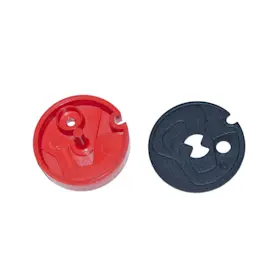
- Waterworks water softener rotor and disc 7185500 (key internal valve component that directs water flow)
Why it matters
Knowing which component does what helps you diagnose faster. For example, “hard water” can be a programming/salt issue, but it is also commonly tied to a dirty nozzle and venturi or worn valve seals.
Last updated: January 2026
How to replace resin beads in Whirlpool water softener?
To replace resin beads in a Whirlpool WHES40 water softener, we bypass and depressurize the unit, remove the valve from the resin tank, dump and rinse out the old media, then refill with the model-correct resin amount and reassemble. For WHES40, the resin amount is 1 cu. ft.
Before you start (WHES40 safety and prep)
- Put the bypass valve in bypass.
- Open a nearby softened cold-water faucet to relieve pressure, then close it.
- Unplug the transformer (prevents an unexpected regeneration).
- Protect the floor; resin beads spill easily and are slippery.
- Review cautions and the sanitize-after-service steps in the WHES40 water softener manual.
Step-by-step: replacing the resin bed
- Bypass and depressurize: Confirm bypass is set, then relieve pressure at a softened faucet.
- Access the valve area: Remove the top cover so you can reach the valve head and brine line.
- Disconnect lines: Disconnect the brine tubing and any drain or sensor connections that prevent valve removal.
- Remove the valve head: Lift the valve off the resin tank carefully so you do not damage O-rings or the distributor.
- Empty the tank: Dump old resin into a container; rinse remaining beads out with clean water.
- Inspect resin-retaining parts: Check the top and bottom distributors for cracks or damage (a common cause of resin beads at faucets).
- Refill with correct resin: Add 1 cu. ft. of resin for WHES40 using water softener resin 0502272.
- Reassemble and seal: Seat and lubricate O-rings, reinstall the valve, and reconnect lines.
- Sanitize and recharge: Sanitize per the manual (bleach in the brinewell) and start a manual recharge.
Parts and quantities for WHES40
| Item | Model-specific detail | Why you might need it |
|---|---|---|
| Resin | 1 cu. ft. | Restores softening capacity when resin is fouled or contaminated |
| Seals | Inspect during reassembly | Prevents internal leaks and bypass after the valve is removed |
Why it matters
Using the correct resin quantity helps the WHES40 maintain proper flow, softening capacity, and regeneration performance. Underfilling can reduce capacity; overfilling can interfere with distribution and cause resin carryover.
Helpful related DIY content
Last updated: January 2026