 Owner’s manual
 Error Codes


Why is my JennAir refrigerator not making ice?
If your Jenn-Air JCD2389GES isn’t making ice, the most common causes are the ice maker being turned off (wire lever arm up), freezer temperature not cold enough yet, or restricted water flow from a clogged filter or shutoff valve. Start with the quick checks in the JCD2389GES owner’s manual.
- Make sure the ice maker wire lever arm is down (up is OFF).
- Confirm the freezer is cold enough; new or recently adjusted settings can take 8 to 12 hours before the ice maker produces usable cubes.
- If the unit was just connected to water, discard the first 2 to 3 batches of ice.
- Verify the household water shutoff valve to the refrigerator is fully open.
- If you have a dispenser model, make sure the dispenser is not locked.
Restricted water flow is a top reason for no ice or small/slow ice.
| What you notice | Likely cause | What to do |
|---|---|---|
| No ice and no water at dispenser (if equipped) | Water supply off or low pressure | Open shutoff valve; check for kinks in the supply line |
| Slow water dispensing or small cubes | Water filter restricted | Replace the filter; flush water for about 10 minutes after installing |
| Ice maker won’t run with filter removed | Missing filter or bypass plug | Install a filter or the bypass plug before operating |
- Look for ice buildup where water enters the ice maker; a frozen fill tube can stop filling.
- If cubes are clumping or the bin is jammed, empty and wash the bin, then dry it completely before reinstalling.
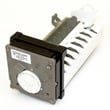
If the wire arm is down, freezer is cold, and water supply is good, the issue is often a failed water inlet valve, ice maker module, door switch, or electronic control. At that point, we recommend service diagnosis to avoid replacing the wrong part.
An ice maker depends on both temperature and water flow. Fixing airflow/temperature or a restricted filter often restores ice production without deeper repairs.
Last updated: January 2026
What is the life expectancy of a JennAir refrigerator?
We can’t confirm an official “life expectancy” for Jenn-Air model JCD2389GES from the model’s documentation; manufacturers typically don’t publish a guaranteed service-life number. In real-world home use, many refrigerators are often kept in service for roughly a decade or more, depending on conditions and maintenance.
The best model-specific guidance is how to reduce wear and prevent common failures using the care and troubleshooting steps in the JCD2389GES use & care manual. Those practices usually have more impact than the model number alone.
- Condenser and airflow: blocked base grille or dusty coils increase run time
- Door seal condition: gasket leaks cause warm air intrusion and frost
- Room temperature and placement: heat sources and tight clearances add load
- Temperature control habits: extreme settings can increase cycling and icing
- Ice and water system upkeep: filter restrictions and leaks stress valves and components
- Keep front base grille clear for airflow
- Clean spills and odors; keep door bins and shelves seated correctly
- Check doors close and seal evenly; address gaps or tearing in gaskets
- If equipped, replace the water filter on schedule and flush after changes
- Minimize long door openings; let hot foods cool before loading
| If your JCD2389GES is doing this | Try this first | Why it matters |
|---|---|---|
| Runs very often | Improve airflow, clean condenser area | Reduces compressor workload |
| Frost or moisture buildup | Inspect door seal and closing | Prevents warm-air intrusion |
| Weak ice or water flow | Replace/seat filter, verify supply | Protects valves and dispenser performance |
A realistic lifespan range helps with repair decisions, but condition matters more than age. If cooling is stable and seals, airflow, and water filtration are maintained, you often get more usable years out of the refrigerator.
Last updated: January 2026
How do I reset my JennAir Ice Maker?
On Jenn-Air model JCD2389GES, there is not a dedicated “reset button” described for the refrigerator ice maker. The model-specific reset is to cycle the ice maker OFF, then ON using the ice maker wire lever arm, then allow time for the freezer to reach temperature and begin harvesting ice. See the JCD2389GES owner’s manual for the wire arm on/off procedure and expected timing.
- Open the freezer and access the ice bin area.
- Move the ice maker wire lever arm up to the OFF position.
- Make sure nothing is holding the arm up (ice pile, container, or a mis-seated bin).
- Move the wire lever arm down to the ON position.
- Keep the freezer door closed as much as possible.
- Allow 8 to 12 hours for the first usable cubes once the freezer is cold enough.
- Confirm the freezer is at or near 0°F (ice makers will not cycle well if the freezer is too warm).
- Verify the household water supply valve to the refrigerator is fully open.
- If you have a dispenser model, purge air after any water shutoff by dispensing water for several minutes.
- If cubes are clumping or taste stale, empty and wash the ice bin in lukewarm water, then dry it completely.
- If water flow is slow, replace the water filter; restricted flow can reduce ice production.
| Situation | What to expect on JCD2389GES |
|---|---|
| Ice maker turned ON after being OFF | Ice may begin in 8 to 12 hours |
| First-time use after water hookup | Discard the first 2 to 3 batches |
| Dispenser first-time use | Bleed the line by dispensing water for 10 minutes |
Cycling the wire lever arm OFF/ON corrects many “no ice” complaints caused by an accidentally raised shutoff arm, a full bin holding the arm up, or a temporary water interruption, without guessing at parts.
Last updated: January 2026
What are common problems with JennAir refrigerators?
Common problems we see on Jenn-Air refrigerators like model JCD2389GES include warm temperatures, water leaks, ice maker or dispenser issues, unusual noises, and interior moisture. Many are caused by airflow restrictions, dirty condenser coils, a clogged defrost drain, or a worn door gasket; the JCD2389GES owner’s manual helps confirm the correct checks and settings.
- Refrigerator too warm / freezer too warm: blocked air vents, doors not sealing, controls set incorrectly, dirty condenser coils, fan problems
- Water leaking: clogged defrost drain, loose water line connections, cracked drain pan, filter or housing leaks (on filtered models)
- Ice maker not making ice: shutoff arm in OFF position, water supply turned off, freezer not cold enough, clogged filter or low water pressure
- Dispenser not working (ice or water): dispenser lock enabled, ice jam in bin/chute, filter restriction, door switch issue
- Noisy operation or long run times: condenser coils dirty, base grille blocked, frequent door openings, cabinet not level
- Verify temperature controls are not set to OFF and allow 24 hours after any adjustment for temperatures to stabilize.
- Make sure the front base grille is not blocked and air can flow.
- Check that doors close fully and the gasket is sealing all the way around.
- If you have an ice maker, confirm the wire shutoff arm is down (ON) and the household water valve is open.
- Look for frost buildup or a “snowy” freezer back wall, which can point to a defrost airflow problem.
This model uses Twin Fresh™ Climate Control sliders; changing one control can affect the other compartment. It also defrosts automatically, so occasional sounds and brief temperature swings during defrost can be normal.
| Symptom | What to check first | Why it matters |
|---|---|---|
| Warm fresh food | Vents clear, controls set correctly | Poor airflow causes uneven cooling |
| Leak inside fridge | Defrost drain area, door left ajar | Prevents water damage and icing |
| Ice tastes stale/clumps | Empty and wash bin periodically | Old ice absorbs odors and sticks |
Catching airflow, cleaning, and sealing issues early helps protect food temperatures, reduces compressor run time, and can prevent secondary failures like ice buildup or water damage.
Last updated: January 2026





