
What is the hardest type of welder?
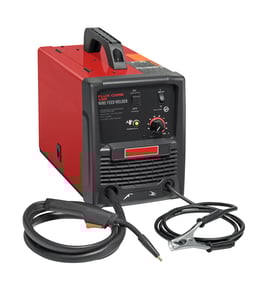
TIG (GTAW) is the hardest type of welding to learn because you control more variables at once (heat, filler, arc length, and torch angle) and it demands steady coordination. For a Craftsman 93420111 85-amp MIG welder, MIG is typically much easier to pick up than TIG.
Why TIG is usually the hardest
TIG welding adds complexity that most beginners do not face with MIG (GMAW) or stick (SMAW):
- You control heat continuously (often with a foot pedal or fingertip control)
- You add filler metal separately while maintaining a tight arc length
- Cleanliness matters more (base metal prep and contamination control)
- Travel speed is slower, so mistakes show up quickly
- Thin metal and aluminum work require extra technique and practice
Quick comparison: MIG vs TIG vs stick
| Process | Typical learning curve | Best for beginners | Common use cases |
|---|---|---|---|
| MIG (GMAW) | Easiest | Yes | Mild steel projects, general fabrication |
| Stick (SMAW) | Medium | Sometimes | Outdoor work, thicker steel, dirty/rusty metal |
| TIG (GTAW) | Hardest | No | Precision work, thin metal, stainless, aluminum |
If you are using a MIG welder like model 93420111
MIG is the practical starting point because the wire feed and shielding gas (or flux-core wire) simplify the process.
- Set wire speed and voltage/heat in small steps
- Practice on scrap of the same thickness as your project
- Keep a consistent stick-out and travel angle
- Watch for poor connections, damaged leads, or loose clamps if the arc is unstable
Why it matters
Choosing a process that matches your skill level saves time and reduces rework. Starting with MIG builds fundamentals (joint fit-up, travel angle, puddle control) that transfer later if you move up to TIG.
For parts and diagrams for Craftsman model 93420111, start with the parts list for your welder, or search by model number on Sears PartsDirect.
Last updated: February 2026
Are cheap MIG welders any good?
Cheap MIG welders can be a solid choice for learning and light-duty repairs, especially if you stay within their limits. For a small machine like the Craftsman 93420111 85-amp MIG welder, expect best results on thin steel with short welds; pushing thicker metal usually leads to inconsistent penetration and more spatter.
What “good” looks like for a budget MIG
A low-cost MIG can be “good” when your expectations match the machine’s output and duty cycle.
- Best for thin mild steel, small brackets, and tack welds
- Works well for basic home projects and occasional repairs
- More sensitive to setup (wire size, polarity, clean metal, clamp contact)
- More likely to struggle with long beads due to heat buildup (duty cycle)
- Usually less forgiving on very thin sheet metal and out-of-position welding
Common tradeoffs you’ll notice
Budget MIG welders often weld acceptably, but they demand better technique and prep.
| Area | What you may see on cheaper MIGs | What helps most |
|---|---|---|
| Arc stability | More “stutter” and spatter | Clean ground, correct settings, steady stickout |
| Wire feed | Less consistent feed speed | Good liner condition, correct tension, quality wire |
| Power headroom | Limited penetration on thicker steel | Multiple passes, beveling edges, slower travel |
| Duty cycle | Thermal shutdown on long welds | Short welds, cooling breaks |
How to get better results from a small MIG
These steps make the biggest difference on compact welders like the Craftsman 93420111.
- Clean to bare metal (paint, rust, oil cause porosity and spatter)
- Keep stickout consistent (typically about 3/8 to 1/2 inch)
- Use the right wire diameter for the job (thin metal prefers smaller wire)
- Verify polarity matches your process (solid wire with gas vs flux-core)
- Clamp the work lead to clean metal close to the weld
- Practice on scrap of the same thickness before welding the actual part
Why it matters
Most “cheap MIG welder” complaints come from using the wrong process for the material thickness, poor metal prep, or inconsistent wire feed. When you match the welder’s amperage to the job, you get cleaner beads, fewer burn-throughs, and stronger joints.
If you’re shopping for parts or accessories for this welder, start with the model-based parts list, or search by model number on Sears PartsDirect.
Last updated: February 2026
What are the parts of a welder called?
On a Craftsman 93420111 85-amp MIG welder, the main parts are the power source, wire feed system, welding gun (torch), work clamp (ground clamp), and the consumables at the gun tip (contact tip and nozzle). Together, these parts deliver welding current and wire to create a stable arc.
Common MIG welder parts (and what they do)
- Power source: Converts input power into welding output (voltage/current) for the arc.
- Wire feeder: Uses drive rolls and a motor to push welding wire at a controlled speed.
- Welding gun/torch: Carries the wire, current, and (if used) shielding gas to the weld.
- Work clamp (ground clamp): Clamps to the workpiece to complete the electrical circuit.
- Shielding gas system (if equipped): Regulator/flowmeter and hose supply gas to protect the weld puddle.
- Consumables: Contact tip transfers current to the wire; nozzle directs gas and shields the arc.
Quick reference table
| Part name | Other common name | What you notice when it fails |
|---|---|---|
| Wire feeder/drive system | Feed mechanism | Wire “birdnests,” slips, or surges |
| Contact tip | Tip | Arc becomes unstable; wire burns back |
| Nozzle | Gas cup | Excess spatter; poor gas coverage |
| Work clamp | Ground clamp | Intermittent arc; weak starts |
Why it matters
Knowing the correct part names helps you troubleshoot faster and order the right replacement. For example, inconsistent wire feed points to the drive system, while porosity in the weld often points to shielding gas flow or a clogged nozzle.
Tips we use to identify what you need
- Match the model number 93420111 before ordering.
- Check whether your setup is gas-shielded or flux-core; parts and symptoms differ.
- Inspect consumables first; they are the most common wear items.
- Look for heat damage on the gun lead and loose connections at the work clamp.
- Use a meter for electrical checks when needed; see how to use a multimeter to test electrical parts video.
For replacement parts, start with the parts list for Craftsman 93420111, or search by model on Sears PartsDirect.
Last updated: February 2026
What's the difference between a wire feed welder and a MIG welder?
A MIG welder is a type of wire feed welder that uses shielding gas to protect the weld puddle from oxygen and moisture. Your Craftsman 93420111 (85-amp MIG welder) is in the wire-feed family; the key difference is whether the process uses gas-shielded MIG wire or self-shielded flux-cored wire.
Quick definitions (wire feed vs. MIG)
- Wire feed welder: Any welder that feeds a spool of wire through a gun automatically.
- MIG (GMAW): A wire feed process that uses solid wire plus shielding gas.
- Flux-cored (FCAW): A wire feed process that uses flux-cored wire; many setups run without external gas.
- Same machine, different setup: Many small wire-feed welders can run MIG or flux-core depending on polarity, wire type, and whether a gas bottle/regulator is used.
Side-by-side comparison
| Feature | MIG (gas-shielded) | Flux-cored (self-shielded) |
|---|---|---|
| Shielding | External gas (typically CO2 or argon mix) | Flux inside the wire (no gas bottle) |
| Best for | Cleaner indoor welding, thinner steel | Outdoor/windy conditions, dirtier steel |
| Weld appearance | Smoother bead, less spatter | More spatter, slag to chip/brush |
| Cleanup | Minimal | Slag removal required |
How to choose for common jobs
- Auto body or thin sheet metal: MIG with gas and solid wire.
- Outdoor repairs (windy driveway, farm gate): Flux-cored wire.
- Beginner-friendly results: MIG is usually easier to dial in for a clean bead.
- Rusty or painted steel: Flux-core often tolerates contamination better (prep still matters).
Why it matters
Choosing MIG vs. flux-core affects weld strength consistency, spatter and cleanup time, and how sensitive the arc is to wind. Matching the process to your environment helps your Craftsman 93420111 perform its best and reduces rework.
Parts and setup help
If you are replacing consumables (contact tips, nozzles, liners) or looking up model-specific components, start with the parts list for Craftsman 93420111, or search by model number on Sears PartsDirect.
Last updated: February 2026
How thick of steel can a 200 amp MIG welder weld?
A true 200-amp MIG welder commonly welds mild steel up to about 1/4 inch in a single pass; with beveling and multi-pass technique, 5/16 inch to 3/8 inch is typical. Your Craftsman model 93420111 is an 85-amp MIG welder, so it is designed for thinner steel than a 200-amp unit.
Typical thickness ranges (mild steel)
These are practical ranges for short-circuit MIG with solid wire and good joint fit-up:
- 200-amp MIG (single pass): about 3/16 inch to 1/4 inch
- 200-amp MIG (multi-pass with bevel): about 5/16 inch to 3/8 inch
- 85-amp MIG like Craftsman 93420111 (single pass): about 18 gauge to 1/8 inch
- 85-amp MIG (with bevel and multiple passes): up to about 3/16 inch
| Welder output class | Best-use thickness range | Common use cases |
|---|---|---|
| 200-amp MIG | 3/16 inch to 3/8 inch | fabrication, frames, brackets |
| 85-amp MIG (93420111) | 18 gauge to 3/16 inch | sheet metal, light repairs |
What changes the max thickness the most
To get the best penetration and strength, we focus on setup and joint prep:
- Joint design: bevel thick joints, leave a small root gap for butt welds
- Clean metal: remove paint, rust, oil, and mill scale to bare steel
- Wire and polarity: match wire size to the machine; use correct polarity for solid wire with gas
- Travel speed and stickout: steady stickout and slower travel increase heat into the joint
- Multiple passes: build the weld in layers instead of trying to do it all at once
Why it matters
A weld can look good on the surface but still lack fusion if the welder is undersized for the material. Matching amperage to thickness helps you get full penetration and a stronger joint.
If you need replacement parts or want to confirm your exact welder configuration, search by model 93420111 on Sears PartsDirect.
Last updated: February 2026