Owner’s manual
 Error Codes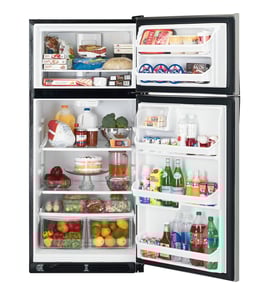



How many cubic feet is the Kenmore refrigerator model 10670213410?
The Kenmore top-mount refrigerator model 10670213410 has a total capacity of 21.9 cubic feet. For the exact breakdown between fresh food and freezer sections (and any configuration notes), we recommend confirming the specs in the 10670213410 owner's manual.
| Item | Value |
|---|---|
| Brand | Kenmore |
| Model number | 10670213410 |
| Refrigerator type | Top-mount (top freezer) |
| Total capacity | 21.9 cu. ft. |
Capacity helps you compare refrigerators and plan storage. It also affects airflow and temperature stability; overpacking a 21.9 cu. ft. unit can restrict vents and lead to warm spots or frost buildup.
- Keep air vents clear in both compartments.
- Store taller items away from the back wall to avoid blocking airflow.
- Set typical temperatures: 37°F for fresh food and 0°F for freezer.
- Leave room around the ice maker area if equipped to prevent cubes clumping.
- If cooling seems uneven, check for heavy frost on the back freezer panel.
If the refrigerator feels “small” because items are spoiling or freezing, it is usually a cooling or airflow issue. Common checks include:
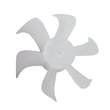
- Evaporator fan running (air movement from freezer to fridge)
- Door seals closing fully
- Frost buildup indicating a defrost problem
If you are diagnosing cooling or airflow problems, the how to fix your evaporator cooling fan guide is a good next step.
Last updated: February 2026
How to read Kenmore model numbers?
Kenmore model numbers tell us who built the appliance and which design family it belongs to, which is exactly how we match the right parts for your Kenmore refrigerator model 10670213410. For most Kenmore appliances, the first three digits are the manufacturer prefix, followed by the base model and a suffix that identifies specific variations.
Most Kenmore model numbers follow this pattern:
- Prefix (first 3 digits): identifies the manufacturer (who made it for Kenmore)
- Base model (middle digits): identifies the core design platform
- Suffix (last digits): identifies feature, color, or production variations
Example format:
| Section | Example | What it tells us |
|---|---|---|
| Manufacturer prefix | 106 | Who built it |
| Base model + suffix | 70213410 | The exact design and variation |
On Kenmore top-mount refrigerators like 10670213410, the model/serial tag is typically found in one of these spots:
- Inside the fresh food compartment on a side wall
- On the ceiling of the refrigerator section near the light
- Along the door frame (hinge side)
- Behind the lower toe grille (less common)
- On the back of the cabinet (less convenient to access)
For diagrams and the exact identification label location for your unit, use the 10670213410 owner’s manual.
The prefix helps us narrow down the correct parts system and common component families (ice maker, evaporator fan motor, control board, door gasket). That reduces ordering mistakes when multiple Kenmore refrigerators look similar.
- Copy the full model number exactly as shown (include all digits)
- If present, record the serial number too (helps with production changes)
- Match parts by model number first, then confirm by part description
- If you are troubleshooting, identify the symptom (no cooling, no ice, leaking)
If you are diagnosing a display or fault code on a Kenmore 106-prefix refrigerator, the Kenmore 106 model refrigerator error codes guide helps you interpret what the refrigerator is reporting.
Last updated: February 2026
What's the average lifespan of a Kenmore refrigerator?
Most Kenmore refrigerators average 10 to 15 years of service life. For a Kenmore top-mount like model 10670213410, lifespan depends most on basic care (airflow, clean coils, good door seals) and fixing cooling or ice maker issues early; see the 10670213410 manual for model-specific care and operating guidance.
- 10 to 15 years: common for many household refrigerators
- 15 to 20 years: achievable with consistent maintenance and timely repairs
- Under 10 years: usually tied to poor airflow, dirty condenser coils, or unresolved cooling problems
| What you notice | What it often means | What to do first |
|---|---|---|
| Fridge warm, freezer OK | Airflow or evaporator-side issue | Check vents, listen for fan; inspect refrigerator evaporator fan motor WP2315539 |
| Frost buildup, weak cooling | Defrost system problem | Check door seal, then test refrigerator defrost heater WPW10316428 |
| Water leaks or no ice | Water supply/valve issue | Inspect line and valve; consider refrigerator water inlet valve WPW10279909 |
| Door not sealing, moisture | Worn gasket | Inspect for gaps; replace with the correct gasket for your door color/style |
- Vacuum condenser coils and the front or rear air intake/exhaust area
- Keep door gaskets clean and sealing (paper-strip test around the perimeter)
- Set stable temps (about 37°F fresh food, 0°F freezer)
- Avoid overpacking; blocked vents cause long run times and icing
- Replace failing fans, switches, or controls promptly to prevent compressor strain
A refrigerator usually fails early from heat and long run times. Clean airflow and a tight door seal reduce compressor workload, which is the biggest factor in reaching the upper end of the 10 to 20 year range.
Last updated: February 2026