Installation guide
 Owner’s manual


Is a 7.4 cu ft dryer big?
Yes. A 7.4 cu. ft. dryer is generally considered a large-capacity size, meaning it can handle bigger everyday loads and bulkier items with more room for tumbling. For Whirlpool model WED5100VQ1 specifically, the exact drum capacity is not identified in the model’s documentation we have, so 7.4 cu. ft. is best treated as a general “large” benchmark.
A larger drum can improve drying results because items have space to lift and separate.
- Fits larger mixed loads (towels, jeans, sweatshirts) without packing the drum
- Better for bulky items like comforters and blankets (depending on fabric and fill)
- Can reduce wrinkles because clothes tumble more freely
- Often shortens dry time compared with an overloaded smaller drum
- Helps prevent overheating from restricted airflow caused by overloading
For cycle and loading guidance on your Whirlpool electric dryer, use the WED5100VQ1 dryer user manual.
| Dryer capacity | Typical label | Best for |
|---|---|---|
| Under ~6.5 cu. ft. | Compact to medium | Smaller households, lighter loads |
| ~6.5 to 7.3 cu. ft. | Medium to large | Most families, regular weekly laundry |
| 7.4 cu. ft. and up | Large capacity | Large households, bulky items, frequent big loads |
Even with a large drum, performance depends on airflow and heat.
- Do not overfill; stop around 3/4 full for mixed loads
- Clean the lint screen every load
- Use the correct cycle (timed vs. automatic) for the fabric type
- Keep venting straight and clear; long or kinked venting increases dry time
- If drying seems slow, check airflow at the outside hood and clean the venting
Choosing the right capacity helps prevent long dry times, hot loads, and extra wear on fabrics. If you are comparing dryers, 7.4 cu. ft. is a solid “large” size for most households, but the best match still depends on how often you dry bulky items and how well the dryer is vented.
Last updated: January 2026
What is the life expectancy of a Whirlpool dryer?
A Whirlpool electric dryer like model WED5100VQ1 commonly lasts about 10 to 13 years in typical household use. Lifespan varies most with venting, load size, and routine care; consistent lint and vent cleaning can help many dryers reach 15 years or longer. See the maintenance guidance in the WED5100VQ1 dryer user manual.
The biggest “life-shorteners” are heat stress and restricted airflow. We see the longest-lasting Whirlpool dryers when these basics are handled consistently:
- Clean the lint screen before or after every load (per the manual)
- Keep the exhaust vent clear and properly routed (short, straight, heavy metal vent)
- Avoid overloading; heavy loads strain the drive system and reduce airflow
- Use the correct cycle and temperature for the fabric
- Level the dryer to reduce vibration and wear
A simple schedule helps prevent overheating, long dry times, and premature part wear.
| Task | How often | Why it helps |
|---|---|---|
| Clean lint screen | Every load | Improves airflow and drying efficiency |
| Check outside vent hood airflow | Monthly | Catches clogs early |
| Clean full vent run | At least every 2 years | Reduces heat buildup and drying time |
| Inspect drum movement/noise | Every few months | Helps spot belt/roller wear early |
These symptoms do not automatically mean replacement, but they are common “age” indicators:
- Drying times getting longer even after vent cleaning
- No heat or intermittent heat (often electrical/thermal protection related)
- Squealing, thumping, or rumbling while the drum turns
- Drum not turning, but motor runs (belt or drive components)
- Repeated shutdowns from overheating
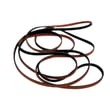
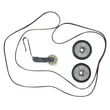
If the drum stops turning, a common wear item is the belt 341241.
A dryer that is restricted by lint or poor venting runs hotter and longer, which increases wear on the heating system, thermostats, and drive components. Keeping airflow strong is the most practical way to extend the service life of a Whirlpool dryer.
Last updated: January 2026
How do I reset a Whirlpool duet dryer?
To reset a Whirlpool dryer like model WED5100VQ1, we recommend disconnecting power for 1 minute, then restoring power and starting a new cycle. “Duet” is a different Whirlpool dryer family, so the exact button-sequence reset steps can vary by control style.
- Turn the cycle selector to Off (or end the cycle).
- Unplug the dryer (or switch the breaker off).
- Wait 60 seconds to let the control fully power down.
- Restore power.
- Select a Timed Dry cycle and press Start.
For model-specific operating details, use the WED5100VQ1 dryer user manual.
On WED5100VQ1, the most common “looks dead” or “won’t run” causes are basic power and start-interlock issues:
- Confirm the door is fully closed; a failed door switch can prevent starting.
- Check the home electrical supply; many electric dryers need two fuses or breakers.
- Make sure the cycle is actually selected (not sitting in an “Off” area).
- Press the Start button firmly.
If the door is shutting but the dryer acts like it is open, the dryer door switch WP3406107 is the part we typically inspect first.
“Whirlpool Duet” models often use electronic controls and may support diagnostic modes and stored error codes. WED5100VQ1 is a Whirlpool electric dryer, but it may not use the same Duet control interface.
| Dryer type | Typical reset | What it clears |
|---|---|---|
| Mechanical-timer style | Power off 1 minute | Control power state |
| Electronic-control style | Power off 1 minute (sometimes plus key sequence) | Control lockups, some errors |
If you have a Duet model and you are trying to interpret an error code, use Whirlpool duet dryer error codes.
A proper reset can clear a temporary control glitch, but repeated no-start problems usually point to a door switch, push-to-start switch, timer/control, or a power supply issue. Resetting without checking airflow and electrical supply can delay the real fix.
Last updated: January 2026