
Is there a difference between a wood drill press and a metal drill press?
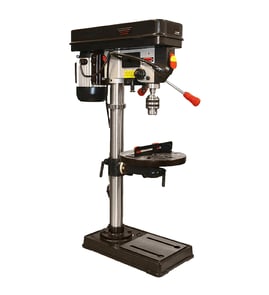
Yes. The main difference is speed control and rigidity: drilling metal needs slower spindle speeds, more torque, and a sturdier setup, while drilling wood typically uses faster speeds and lighter feed pressure. Your Craftsman 11324560 drill press can often do both when it has the right speed range and you use the correct bit and technique.
What actually changes between “wood” and “metal” drill presses
Most drill presses are general-purpose, but models marketed for metalworking usually emphasize lower speeds and heavier construction.
- Speed range: Metal needs slower RPM; wood usually drills cleaner at higher RPM.
- Torque at low speed: Important for larger metal bits and hole saws.
- Quill and spindle rigidity: Reduces chatter and bit breakage in metal.
- Table and base mass: Helps keep the work stable under higher cutting loads.
- Workholding: Metal drilling typically requires a vise or clamps every time.
Practical speed guidance (typical starting points)
Use this as a safe baseline, then fine-tune based on bit size, material, and results.
| Material | Typical RPM range | Notes |
|---|---|---|
| Softwood | 1,500 to 3,000 | Higher RPM helps reduce tear-out with sharp bits |
| Hardwood | 800 to 2,000 | Slower than softwood to reduce burning |
| Aluminum | 500 to 1,500 | Use cutting fluid; clear chips often |
| Mild steel | 150 to 600 | Slow RPM, steady feed, cutting oil |
Setup tips that matter more than the label
These steps make a bigger difference than whether the drill press is called “wood” or “metal.”
- Clamp the work or use a drill press vise; never hand-hold metal.
- Use the right bit type (brad-point for wood; HSS or cobalt for metal).
- Use cutting oil for steel and many alloys; it improves finish and bit life.
- Peck drill in metal (short in-and-out strokes) to break chips and reduce heat.
- If the bit squeals, smokes, or turns blue, reduce speed and increase lubrication.
Why it matters
Running metal at wood speeds overheats bits, dulls cutting edges fast, and can grab the workpiece. Running wood too slowly can cause tear-out and rough holes. Matching RPM, bit type, and workholding gives cleaner holes and safer drilling.
For more DIY safety basics that apply to power tools like a drill press, see are diy appliance repairs safe.
Last updated: February 2026
What are 5 important rules for a drill press?
For the Craftsman drill press model 11324560, five important rules are: remove the chuck key before starting, clamp the workpiece so it cannot spin, wear eye protection and avoid loose clothing, set the correct spindle speed for the bit and material, and never adjust, measure, or clear chips while the machine is running.
The 5 rules (quick checklist)
- Chuck key out: Tighten the bit, then remove the chuck key immediately.
- Work clamped down: Use a vise or clamps; never hold small parts by hand.
- PPE and clothing: Safety glasses (or a face shield); tie back hair; no gloves or loose sleeves near rotating parts.
- Correct speed and feed: Slower for larger bits and metal; faster for small bits and wood; apply steady pressure.
- Hands off while spinning: Stop the spindle before changing speed, moving the table, measuring, or brushing away chips.
Safe setup steps we recommend
- Inspect the bit and chuck for damage; seat the bit fully and tighten evenly.
- Set table height and angle; lock the table and head so nothing shifts.
- Clamp the workpiece and add a backer board for cleaner holes in wood.
- Set speed before powering on; keep the belt cover closed during operation.
Speed guidance (typical starting points)
| Material | Bit size | Typical approach |
|---|---|---|
| Wood | 1/8 in to 1/4 in | Higher speed, light to moderate feed |
| Wood | 3/8 in to 1 in | Medium speed, steady feed |
| Steel/aluminum | Any size | Lower speed, cutting oil, peck drilling |
Why it matters
Most drill press injuries happen when a workpiece spins like a propeller, a chuck key becomes a projectile, or hands get too close to the rotating bit. These five rules prevent the most common, most severe incidents.
Related DIY reading
Last updated: February 2026
What is a good horsepower for a drill press?
For a Craftsman drill press like model 11324560, a good horsepower depends on what you drill most often: 1/3 to 1/2 HP handles typical home woodworking and light metal drilling, while 3/4 to 1 HP is a better fit for frequent larger bits, thicker stock, and tougher metals.
Quick horsepower guide (what to buy for your work)
- 1/4 to 1/3 HP: light-duty drilling, small bits, softwoods, occasional use
- 1/2 HP: best all-around choice for most DIY shops (wood, plastics, light steel)
- 3/4 HP: frequent metalwork, larger Forstner bits, hole saws, and step bits
- 1 HP: heavy, repeated drilling in hardwoods and thicker metals; less bogging under load
Horsepower vs. what actually matters day to day
Horsepower helps, but drill press performance is usually limited by speed control, rigidity, and the bit you use.
| What you’re doing | What you want most | Typical HP range |
|---|---|---|
| Small holes in wood | smooth feed, sharp brad-point bits | 1/4 to 1/2 HP |
| Forstner bits in hardwood | low speed, solid table support | 1/2 to 3/4 HP |
| Drilling steel | very low RPM, cutting oil, firm clamping | 1/2 to 1 HP |
| Hole saws/large cutters | torque at low speed, minimal belt slip | 3/4 to 1 HP |
How to choose the right HP for your shop
- Match HP to bit size: bigger cutters need more torque at low RPM.
- Prioritize low-speed capability: metal drilling needs slower speeds than wood.
- Plan to clamp the work: a vise or clamps improve safety and hole accuracy.
- Use the right accessories: sharp bits, cutting oil for metal, and a stable drill press table setup.
- Avoid forcing the feed: steady pressure prevents stalling and reduces belt slip.
Why it matters
Choosing enough horsepower helps prevent stalling, overheating bits, and rough holes, especially when drilling hardwood or metal. That said, a well-tuned drill press with correct speeds and sharp bits often outperforms a higher-HP press that’s run too fast or fed too aggressively.
For more help identifying the exact model details you have before ordering parts, use how to find your appliance model number (and what it means for parts).
Last updated: February 2026