Owner’s manual
 View engine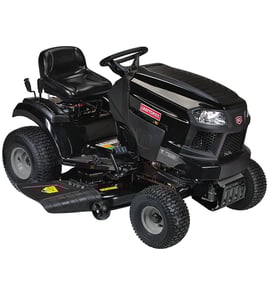


What kind of oil do you use in a Craftsman lawn tractor?
For the Craftsman lawn tractor model 917257562, use SAE 30 4-cycle engine oil when temperatures are above 32°F, and SAE 5W-30 when temperatures are below 32°F. Use oil that meets API service classification SF or SG, and fill to the dipstick “FULL” mark.
Oil type and temperature chart
Use the oil viscosity that matches your typical mowing conditions:
| Outdoor temperature | Recommended oil type | Why it’s used |
|---|---|---|
| Above 32°F (0°C) | SAE 30 | Better protection in warm weather |
| Below 32°F (0°C) | SAE 5W-30 | Easier cold-weather starting |
Capacity and fill tips
These basics help prevent hard starting and engine wear:
- Oil capacity: about 3.0 pints (fill, then verify on the dipstick)
- Park the tractor on level ground before checking oil
- Wipe the dipstick clean, reinstall fully, then recheck the level
- Add oil slowly; do not overfill
- Tighten the oil fill cap/dipstick securely after checking
For the exact check and change procedure for your tractor, follow the steps in the owner's manual.
Oil change interval (typical for this model)
A consistent schedule keeps the engine lubricated and cooler:
- Change oil after the first 2 hours of operation
- Then change oil every 25 hours of use
- If you do not reach 25 hours in a year, change oil at least once per year
Why it matters
Using the correct viscosity (SAE 30 vs. SAE 5W-30) helps maintain proper lubrication across temperature swings, reduces overheating risk, and supports easier starting, especially in cold weather.
Last updated: February 2026
Is it worth replacing a lawn mower engine?
Yes, replacing the engine on your Craftsman 917257562 front-engine lawn tractor is worth it when the tractor’s deck, steering, and drive system are still solid and the total engine-swap cost stays well below the cost of replacing the whole tractor. We use the tractor’s overall condition and repair economics to decide.
Quick decision checklist
- The mower deck is structurally sound (no major rust-through or cracks)
- The tractor still drives and shifts normally (transaxle feels strong)
- You can source the correct engine and any swap hardware needed
- The total cost (engine + incidentals) is under about 50% of a comparable replacement tractor
- You plan to keep the tractor several more seasons and already know its maintenance history
What to inspect on model 917257562 before you commit
Use the troubleshooting and maintenance guidance in the owner's manual to evaluate the rest of the machine, not just the engine.
Focus on these areas:
- Mower deck and blade system: uneven cut, poor discharge, or blades not rotating can point to deck-leveling issues, belt wear, or mandrel problems
- Blade drive belt and pulleys: a worn belt or frozen idler can mimic bigger problems; consider the lawn tractor drive belt 532144200 if the belt is cracked, glazed, or stretched
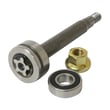
- Mandrels and shafts: bent or frozen mandrels cause vibration and poor cutting; a common repair path is a mandrel replacement such as the husqvarna lawn tractor mandrel assembly 532130794
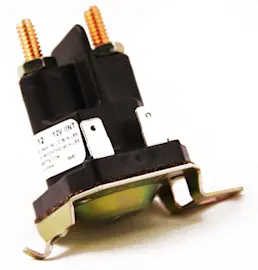
- Electrical starting circuit: if you are chasing a “click no crank” symptom, the issue is often battery, cables, or solenoid; the solenoid 532146154 is a common wear item
Cost and effort: engine swap vs. targeted repairs
| Option | Best when | Typical downside |
|---|---|---|
| Engine replacement | Tractor is otherwise in good shape; you want to extend life | Higher up-front cost; more labor and setup time |
| Repair what’s failing | Problem is isolated (belt, mandrel, solenoid, fuel delivery) | Can turn into repeated repairs if the engine is truly worn out |
| Replace tractor | Multiple major systems are worn (engine + deck + transaxle) | Highest cost; you start over on fit, features, and maintenance |
Why it matters
An engine swap only pays off when the rest of the Craftsman 917257562 is dependable. If the deck, belt drive, and safety systems are already showing multiple failures, you spend money twice: once on the engine and again on the next major breakdown.
Last updated: February 2026
What model number is a Craftsman 917257562 lawn mower?
The model number is 917.257562; it identifies a Craftsman front-engine lawn tractor (18 HP with a 42-inch mower deck). Use this exact model number when looking up parts diagrams, decals, and mower deck components in the owner's manual.
Where to find the model number on the tractor
We use the model number to match the correct parts list for your Craftsman tractor. Common places to check include:
- Under the seat on the frame or fender pan
- On the rear fender area near the seat
- On the left or right side of the frame rail
- Near the engine compartment on a model/serial label
- In the documentation that came with the tractor
Why your question matters (and why the dot matters)
In the manual, the tractor is shown as MODEL NUMBER 917.257562. That dot is part of how the model is printed in some documentation, but parts lookup typically works with the same digits as 917257562.
Quick ID checklist for 917257562
If you are confirming you have the right Craftsman tractor, these model-specific details line up:
| Item | What you should see for this model |
|---|---|
| Brand | Craftsman |
| Model number | 917257562 (often printed as 917.257562) |
| Tractor type | Front-engine lawn tractor |
| Deck size | 42-inch mower deck |
Parts that commonly match this model
Once you confirm the model number, you can confidently choose parts that fit the 42-inch deck and related assemblies, such as:
- Husqvarna lawn tractor mulching blade, 21-in 532134149
- Lawn tractor drive belt 532144200
- Lawn tractor deflector shield 532130968
- Deck 532176031
Last updated: February 2026
What year is my Craftsman mower serial number lookup?
For Craftsman model 917257562, you find the build year by reading the serial number on the product ID label and decoding the date portion (when present). The label location and ID format for your tractor are shown in the owner's manual.
Where to find the model and serial label
On most front-engine Craftsman riding mowers and tractors, the ID label is typically in one of these places:
- Under the seat (seat pan area)
- On the frame near the rear wheels
- Under the hood near the engine compartment
- Along a left or right chassis rail
How the year is commonly encoded
Many Craftsman serial numbers include a 6-digit date code (often embedded within a longer serial string). A common pattern is:
- First 2 digits: month (01 to 12)
- Next 2 digits: day (01 to 31)
- Last 2 digits: year (00 to 99)
Example date-code decode
| Date code | Month | Day | Year |
|---|---|---|---|
| 072811 | 07 | 28 | 11 (2011) |
If your serial includes letters, multiple number groups, or more than 6 digits, use the label diagrams and identification notes in the owner's manual to confirm which digits represent the date.
Why it matters
The correct build year helps us match the right parts variations that can change over time (deck components, belts, steering, and electrical parts). For example, common wear items you may replace on this tractor include the solenoid 532146154 and the molded ignition key 532140403.
Last updated: February 2026
What engine does Craftsman riding mower use?
Craftsman riding mower model 917257562 uses a Briggs & Stratton single-cylinder gasoline engine. For the exact horsepower rating and the engine family details (model, type, code), confirm the ID tag on the engine and cross-check it in the owner's manual.
How to identify the exact Briggs & Stratton engine
Because the same tractor model can be built with closely related engine variants, the engine ID label is the most accurate way to identify what you have.
- Park on level ground, set the parking brake, remove the key, let the engine cool
- Lift the hood and find the Briggs & Stratton ID label (commonly on the blower housing)
- Write down the model, type, and code from the label
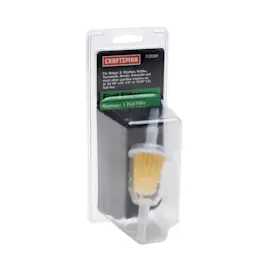
- Use those numbers when selecting tune-up parts (spark plug, air filter, fuel filter)
- Use the same ID when troubleshooting no-start or hard-start conditions
Starting and cranking problems: what to check first
If the engine clicks or cranks inconsistently, the starting circuit is the fastest place to narrow down the cause.
| What you hear/see | Most common cause | What to do next |
|---|---|---|
| Single click, no crank | Weak battery, loose cables, or bad solenoid | Clean/tighten connections; test battery; inspect solenoid wiring |
| Rapid clicking | Low battery voltage | Charge battery and retest |
| Cranks but will not start | Fuel, spark, or air restriction | Check fresh fuel, choke operation, and air filter condition |
A common replacement item for click-no-crank symptoms is the solenoid 532146154.
Why it matters
Correct engine identification prevents ordering the wrong maintenance parts and helps you follow the right service specs (oil recommendations, tune-up intervals, and adjustments) for your specific Briggs & Stratton engine.
Last updated: February 2026