Installation guide
 Owner’s manual
 Error Codes


Is it worth replacing the motor on a washing machine?
Replacing the drive motor on a Kenmore washer model 11024822200 is worth it when the washer is otherwise in good shape and the total repair cost stays well below the cost of a comparable replacement washer. If the washer also has drive system problems (gearcase, clutch, coupling), replacement usually makes more sense.
Quick decision checklist
- The washer fills, drains, and spins normally when it does run (no major transmission or basket-drive symptoms).
- The tub does not leak and the cabinet is not rusted through.
- You are not also chasing multiple expensive drive parts (gearcase, clutch, basket drive).
- The motor failure is confirmed (burnt smell, seized shaft, won’t start with correct power).
- You can do the repair safely and correctly using the 11024822200 owner’s manual.
What to check before you buy a motor
A “dead” washer motor is often caused by a simpler part in the drive or safety circuit. Before replacing the motor, we recommend checking these common items first:
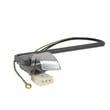
- Lid switch: If the lid switch fails, the washer may not spin or agitate. Consider the washer lid switch WP3949238.
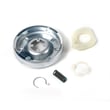
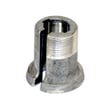
- Motor coupling: A broken coupling can stop agitation/spin even though the motor runs or hums. Consider the washer motor coupling 285753A.
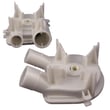
- Drain pump: A jammed pump can overload the drive system and cause no-drain or no-spin symptoms. Consider the washer drain pump WP3363394.
- Clutch and gearcase: If the washer struggles to spin, slips, or makes grinding noises, the issue may be beyond the motor.
Cost and value guide (typical)
| Scenario | Typical recommendation | Why |
|---|---|---|
| Motor is the only failed part | Replace the motor | Restores operation with a single major repair |
| Multiple drive parts also failing | Consider replacing the washer | Costs add up quickly and reliability drops |
| Washer has leaks or severe rust | Replace the washer | Structural issues usually keep getting worse |
Why it matters
A motor replacement can be a solid investment, but only when it solves the root cause. Confirming the lid switch, coupling, and drain system first helps prevent spending money on a motor when the real problem is elsewhere.
Last updated: January 2026
How to tell if a washer motor is bad?
A bad motor in your Kenmore 11024822200 washer usually shows up as a no-agitate or no-spin condition, a loud hum or grinding noise, or the washer stopping mid-cycle. Before replacing the motor, we confirm the lid switch, drain system, and drive coupling are not the real cause.
Quick symptoms checklist
- Washer fills but will not agitate or spin
- Motor hums but the basket and agitator do not move
- Burning smell or motor feels unusually hot (unplug the washer)
- Intermittent operation: runs sometimes, then quits
- Loud grinding, squealing, or rattling during agitation or spin
What to check first (most common non-motor causes)
- Lid switch: If the lid switch fails, the washer may not spin or may act dead during spin. Check the lid strike alignment and switch operation; see the 11024822200 owner's manual.
- Drain pump and drain path: A jammed pump can overload the drive system and stop the cycle. Look for socks, coins, or debris in the pump and hoses.
- Motor coupling (direct-drive style): If the coupling breaks, the motor can run but the washer will not agitate or spin.
Helpful model-matched parts:
Simple diagnostic steps (safe, no special tools)
- Listen: If you hear the motor running but nothing moves, suspect the coupling or drive train before the motor.
- Smell/heat: If you notice a burning odor or excessive heat, unplug the washer and inspect for a seized pump or binding gear case.
- Spin by hand (power off): With the washer unplugged, rotate the basket by hand; it should turn smoothly without grinding.
Multimeter test (for a definitive motor check)
Use the wiring diagram and test points in the 11024822200 installation guide to verify:
| Test | What you’re looking for | What it suggests |
|---|---|---|
| Motor winding continuity | Consistent continuity across windings | Open winding points to a failed motor |
| Power to motor during agitation/spin | Correct voltage present when commanded | If voltage is present but motor will not run, motor is likely bad |
Why it matters
Replacing a motor is a bigger repair than many common failures on this washer. Checking the lid switch, drain pump, and motor coupling first helps avoid replacing a good motor and gets the washer back to spinning and draining faster.
Last updated: January 2026
How to hard reset kenmore washer?
For Kenmore washer model 11024822200, a hard reset is simple: disconnect power for 1 to 2 minutes, then restore power and restart a cycle. This clears many temporary control glitches; if the washer still will not agitate, spin, or drain, check basic lid and drain setup next.
Hard reset steps (power reset)
- Push in the Cycle Control knob to stop the washer.
- Unplug the washer (or switch the breaker off).
- Wait 1 to 2 minutes.
- Restore power.
- Close the lid and pull out the Cycle Control knob to start.
- If the washer was mid-cycle, select a fresh cycle and restart.
For model-specific operating details (including stopping and restarting), use the 11024822200 owner's manual.
If a reset did not fix it, check these common “no start / no spin” causes
A reset will not overcome a safety or installation issue. We see these items most often:
- Lid not fully closed; this model will not agitate or spin with the lid open.
- Normal cycle pause; some cycles pause for about 2 minutes.
- Overload or unbalanced load; reduce load size and redistribute items.
- Drain hose problem; clogs or an end height above 96 in. can prevent draining/spinning.
- Extension cord in use; do not use an extension cord.
If the washer will not spin because it is not sensing the lid closed, a failed washer lid switch WP3949238 is a common fix.
Quick symptom guide
| What you see | What to do after the reset | What it points to |
|---|---|---|
| Won’t agitate or spin | Confirm lid fully closes | Lid switch or lid not closing |
| Stops for a couple minutes | Wait and let cycle continue | Normal pause |
| Won’t drain, won’t spin | Check drain hose height and clogs | Drain restriction or install issue |
| Basket crooked | Center basket, level washer | Load balance or leveling |
Why it matters
A hard reset clears temporary electrical states, but the washer still must meet safety conditions (lid closed) and installation requirements (proper drain hose setup) to run correctly.
Last updated: January 2026
How big is a 2.2 cubic feet washer?
A 2.2 cubic feet washer refers to the tub capacity, not the outside size. For a Kenmore model 11024822200, washers in this capacity range are typically compact to mid-size, and they usually fit standard laundry spaces when installed with the clearances shown in the 11024822200 installation guide.
What “2.2 cubic feet” means
2.2 cu. ft. is the volume inside the wash basket. It helps you estimate load size, not the cabinet dimensions.
Typical load guidance for 2.2 cu. ft.:
- 1 to 2 bath towels plus a few small items
- A small mixed load (light to medium soil)
- A few pairs of jeans (avoid overfilling)
- Bedding: usually not ideal for bulky comforters
Typical outside dimensions (what most people mean by “how big”)
Most washers around 2.2 cu. ft. are commonly in these ranges:
- Width: about 24 to 27 inches
- Height: about 36 to 40 inches
- Depth: about 24 to 30 inches (more if you include hoses)
Use the exact cabinet and clearance specs in the 11024822200 installation guide before you plan a closet or recessed install.
Space and clearance checklist (installation fit)
The installation guidance for this washer type focuses on safe spacing, ventilation, and hookups. Plan for:
- A level floor (max slope about 1 inch under the washer)
- Extra clearance for servicing and noise reduction (often about 1 inch on sides)
- A grounded outlet within about 4 ft of the power cord connection
- Hot and cold faucets within about 4 ft of the fill valves
- A drain setup that matches your home (standpipe, laundry tub, or floor drain)
Quick reference table
| Measurement type | What it tells you | Why it matters |
|---|---|---|
| Capacity (cu. ft.) | Basket volume | Load size and cycle performance |
| Width/height/depth | Cabinet size | Whether it fits your space |
| Clearance/venting | Space around washer | Noise, heat, service access |
Why it matters
If you size only by capacity, the washer can still be too deep for a closet once you add hoses and required airflow. Using the installation spacing guidance prevents vibration, “walking,” and service headaches.
Last updated: January 2026