 Owner’s manual



What is the biggest problem with front load washers?
The biggest problem we see with front-load washers, including the GE GFW148SSM0WW, is musty odor from mold and mildew when moisture and detergent residue stay trapped around the door opening, gasket folds, and dispenser area. Consistent cleaning and drying habits prevent most odor issues.
Why it happens on the GE GFW148SSM0WW
Front-load washers seal tightly for water efficiency, but that tight seal can hold moisture after a cycle. GE’s care guidance for this model emphasizes routine cleaning of the door gasket area and the pump filter; see the GFW148SSM0WW owner’s manual.
Common odor “trap” areas:
- Door gasket folds and door glass
- Dispenser drawer and drawer cavity
- Pump filter and pump housing (can hold debris and stagnant water)
- Wet laundry left in the drum after the cycle
- Too much detergent (residue can feed odor)
Best prevention habits
These steps work well for most GE front-load washers:
- Leave the door slightly open between loads so the drum and gasket can dry
- Wipe the door glass and gasket folds after the last load of the day
- Run the Tub Clean cycle at least monthly
- Use only HE detergent and do not overfill the dispenser
- Clean the pump filter monthly (this model’s manual recommends every month)
Quick checklist
| Task | How often | What it helps prevent |
|---|---|---|
| Wipe gasket and door glass | After last load | Odor, mildew spots |
| Leave door ajar | Daily | Musty smell |
| Tub Clean cycle | Monthly | Biofilm, residue buildup |
| Clean pump filter | Monthly | Odor, drain issues |
When it becomes a repair issue
If odor is paired with leaking, poor draining, or the door not closing or locking, you may be dealing with a mechanical problem (not just cleaning). For example:
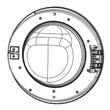
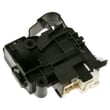
- A door that will not close securely can involve the door strike WH01X28362
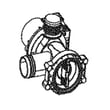
- Drain odors and standing water can point to a restriction or a failing washer drain pump WH23X28375
Why it matters
Odor is usually a maintenance issue, but residue and trapped moisture can also contribute to oversudsing, poor rinsing, and small leaks over time.
Last updated: January 2026
What is the life expectancy of a GE washing machine?
A GE washing machine typically lasts 10 to 14 years. For your GE GFW148SSM0WW front-load washer, reaching the high end of that range depends most on proper installation, using HE detergent correctly, and keeping the tub, pump filter, and door area clean (see the GFW148SSM0WW owner’s manual).
What affects lifespan the most on the GFW148SSM0WW
- Overloading: increases strain on the motor, suspension, and bearings.
- Too much detergent: causes oversudsing, residue, and odor issues.
- Moisture left at the door opening: can lead to gasket buildup and leaks.
- Skipping pump filter cleaning: can cause drain problems and extra wear.
- Not leveling the washer: vibration accelerates wear on dampers and springs.
Maintenance schedule we recommend
| Task | How often | Why it helps |
|---|---|---|
| Run the Tub Clean cycle | Monthly | Reduces residue and odor buildup |
| Clean the pump filter | Monthly | Helps prevent drain and spin problems |
| Wipe the door opening area dry | After laundry days | Helps protect seals and reduce mildew |
| Replace water supply hoses | Every 5 years | Reduces leak risk |
Parts that can impact “repair vs replace” decisions
If the washer is near the 10 to 14-year mark, repeated failures of major components can influence whether repair is worthwhile.
- Drain and no-spin issues often point to the washer drain pump WH23X28375.
- Door not latching or starting can involve the door strike WH01X28362 or the door lock WH01X28354.
- Excessive vibration can involve suspension components (check the parts list for compatible dampers and springs).
Why it matters
Knowing the typical 10 to 14-year lifespan helps us plan maintenance and make smarter repair decisions, especially when symptoms like leaking, vibration, or drain problems start showing up together.
Last updated: January 2026
How do I find the model number on my GFW148SSM0WW?
For your GE GFW148SSM0WW washer, the model number and serial number are printed on a label inside the washer door opening. Open the door and look around the inner door frame area for the sticker; then write the numbers down for parts and service reference.
Where to look (fast checklist)
- Open the washer door fully
- Look for a sticker or rating label inside the door opening
- Check the inner door frame and the front edge of the cabinet opening
- Copy the Model # and Serial # exactly as shown
- Take a clear photo of the label for future parts ordering
What the label looks like
Most GE front-load washers use a rectangular rating label that includes:
- Model number (example: GFW148SSM0WW)
- Serial number
- Electrical information (voltage/amps)
- Compliance markings
You can also confirm the correct format and where GE expects you to record it in the gfw148 owner’s manual and installation instructions.
Why it matters
Using the exact model number ensures we match the correct diagrams and manufacturer-approved parts for your washer. Even small model variations can change items like the door lock, drain pump, or control components.
Quick reference
| What you need | Where it’s found | When you’ll use it |
|---|---|---|
| Model number | Label inside the door opening | Parts lookup, diagrams, compatibility |
| Serial number | Same label | Warranty paperwork, service history |
Last updated: March 2026


