Installation guide
 Owner’s manual


What is the average life of a Maytag dryer?
Most Maytag dryers, including model MEDB835DW4, typically last about 10 to 15 years with normal household use and basic upkeep. Real-world lifespan varies most with airflow (venting), load size, and how quickly small issues like noise or long dry times are addressed; see the maintenance guidance in the MEDB835DW4 user manual.
A dryer’s life is usually limited by heat stress, friction wear, and restricted airflow. These are the biggest factors we see:
- Vent restriction (long runs, crushed flex duct, lint buildup) causing overheating and longer cycles
- Overloading that strains the drum support system and drive components
- Skipped lint cleaning (screen and internal ducting)
- High-heat cycles for every load instead of using sensor/auto cycles when possible
- Delayed repairs when you notice squealing, thumping, or burning smells
Use these habits to reduce wear and keep drying performance consistent:
- Clean the lint screen every load; wash it with mild soap occasionally to remove residue
- Check airflow at the outside vent hood; weak airflow usually means a vent cleaning is needed
- Keep loads balanced; avoid drying heavy items with lightweight items
- Level the dryer to reduce vibration and drum wear
- If you hear rumbling or squealing, inspect drum support and belt-drive parts early
If your dryer is noisy, slow to dry, or stops heating, these model-compatible parts are often involved:
| Symptom | Common wear area | Example compatible part |
|---|---|---|
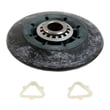
| Thumping/rumbling | Drum support | Dryer drum support roller WPW10314173 |
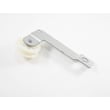
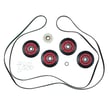
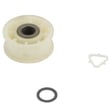
| Squealing | Belt tension system | Dryer idler pulley W10837240 |
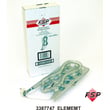
| No heat/weak heat | Heating circuit | Dryer heating element WP3387747 |
Knowing the typical 10 to 15 year range helps you decide whether to maintain, repair, or plan ahead. On a dryer like the Maytag MEDB835DW4, restoring airflow and replacing wear items can often bring drying times and noise levels back to normal.
Last updated: January 2026
What is the capacity of the Maytag model medb835dw4?
We can’t confirm the exact drum capacity for Maytag model MEDB835DW4 from the model-specific information available here because capacity is a spec that isn’t always listed consistently by model number. The most reliable way to verify capacity is to check the specifications section in the MEDB835DW4 use & care manual.
Capacity is typically shown as “cu. ft.” in the specs section.
- Look for a “Specifications” or “Product dimensions and capacity” section
- Check any “Model and serial number” page that lists key specs
- If the manual doesn’t list it, compare the model’s marketing name on the rating label to published specs
- Use the exact model number (MEDB835DW4) when searching; close models can have different capacities
Even without the exact number, these load rules help prevent long dry times and overheating on Maytag dryers.
| Load type | What we recommend | Why |
|---|---|---|
| Everyday mixed load | Fill loosely, leave space at the top | Better tumbling and airflow |
| Bulky items (comforter) | Dry one bulky item at a time | Prevents balling and damp spots |
| Small loads | Use timed dry if sensor cycles end early | Sensors can under-detect small loads |
Dryer capacity helps you avoid overloading, which restricts airflow and can cause slow drying, higher operating temperatures, and extra wear on components like the belt and drum support system.
If you’re troubleshooting long dry times, our dryer takes a long time to dry guide covers airflow checks and maintenance steps that apply to MEDB835DW4.
Last updated: January 2026
What is the most common problem with the Maytag dryer?
For the Maytag MEDB835DW4 dryer, we cannot name one single “most common” failure with certainty because that varies by usage, installation, and maintenance. In our experience, the most frequent service complaints are no heat/poor drying, won’t start, and noise or no tumble; the best next step is to match your exact symptom to checks in the MEDB835DW4 use & care manual.
- Clothes take too long to dry or no heat: clean the lint screen, confirm strong airflow at the outside vent hood, and avoid crushed or overly long venting.
- Won’t start: verify the door is fully closed, confirm the correct cycle is selected, and reset the household breaker (electric dryers use a 2-pole breaker).
- Noisy, squealing, thumping, or not tumbling: inspect the drum support system and belt path for wear.
- Overheating: check for restricted venting and lint buildup in the lint duct.
If basic checks do not resolve the issue, these model-compatible parts are commonly involved:
- Dryer heating element WP3387747 (electric heat problems)
- Whirlpool dryer thermal cut-off fuse kit (352-degree f) 280148 (overheat protection issues, often tied to airflow problems)
- Dryer drum support roller WPW10314173 and dryer idler pulley W10837240 (noise, drum support, belt tension)
| Symptom you notice | Common area to inspect | Example compatible part |
|---|---|---|
| No heat or weak heat | Heater circuit, airflow | Dryer heating element WP3387747 |
| Dryer overheats or shuts down | Venting, thermal protection | Whirlpool dryer thermal cut-off fuse kit (352-degree f) 280148 |
| Squealing or rumbling | Rollers, idler pulley | Dryer drum support roller WPW10314173 |
Choosing the “most common problem” is less useful than identifying your exact symptom; dryers often fail in predictable systems (airflow, heat, drum support). Starting with airflow and the manual’s operating checks helps prevent repeat failures and unnecessary part replacement.
Last updated: January 2026