Owner’s manual
 View engine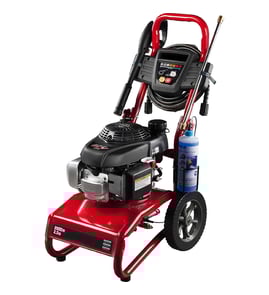




Can you put 87 gas in a pressure washer?
Yes. For the Craftsman 580752352 gas pressure washer, regular unleaded gasoline with a minimum rating of 87 octane (87 AKI) is the correct fuel; do not use unapproved fuels such as E85. For full fuel guidance and safety steps, follow the Craftsman 580752352 operator's manual.
For this model, we recommend:
- Clean, fresh, unleaded gasoline
- Minimum 87 octane (87 AKI)
- Gasoline with up to 10% ethanol (gasohol) or up to 15% MTBE
- Leaving room in the tank for fuel expansion (do not top it off)
Avoid these common mistakes:
- Using E85 or other unapproved alternate fuels
- Mixing oil into the gasoline (this is not a 2-cycle mix)
- Using old or stale fuel, especially after storage
| Fuel choice | OK for Craftsman 580752352? | Notes |
|---|---|---|
| 87 octane (regular unleaded) | Yes | Minimum required rating |
| Higher octane (89-93) | Usually OK | Not required; use only if it is fresh and ethanol limits are met |
| E85 | No | Not an approved fuel for this model |
| Gas with up to 10% ethanol | Yes | Acceptable per the manual |
If the engine bogs, surges, or will not start after refueling, the most common causes are stale fuel or a restricted spray tip.
- Drain old fuel and refill with fresh 87 octane
- Check the air filter and spark plug condition
- Make sure you are using the correct spray nozzle (a clogged nozzle can cause pressure issues)
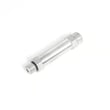
- If you need a replacement spray tip, match the color/pattern to your cleaning task; a compatible option is the nozzle 195983RGS
Using the correct octane and approved fuel blend helps prevent hard starting, carburetor varnish, and power loss. It also helps protect the fuel system during storage and keeps your pressure washer performing at its rated PSI and GPM.
Last updated: January 2026
What PSI should my pressure washer be?
For the Craftsman pressure washer model 580752352, the rated maximum outlet pressure is 2,500 PSI. Your “should be” PSI depends on the surface: use lower-pressure nozzles for delicate cleaning and reserve the highest-pressure nozzle for tough jobs to reduce damage risk (see the 580752352 operator’s manual).
This Craftsman 580752352 is a 2,500 PSI gas pressure washer. It also uses quick-connect ProjectPro nozzles that change both spray pattern and pressure.
- Yellow (delicate): lower pressure for vehicles and gentle surfaces
- Orange (general): medium pressure for most household cleaning
- Red (max): highest pressure for stubborn grime and hard surfaces
If your washer feels weak or inconsistent, a worn or clogged spray tip is a common cause; replacing the nozzle can restore performance (see nozzle 195983RGS).
Use these ranges as a safe starting point, then choose the least aggressive nozzle that gets the job done.
| Task | Typical PSI range | Best approach on 580752352 |
|---|---|---|
| Cars, patio furniture | 1,200 to 2,000 | Start with yellow; keep distance |
| Decks, siding | 2,000 to 2,500 | Orange first; test a small area |
| Concrete, heavy stains | 2,500+ (often) | Your unit tops out at 2,500; use red carefully |
Even at 2,500 PSI, technique matters as much as pressure.
- Start 8 to 24 inches from the surface and move closer only if needed
- Never use the highest-pressure tip on fragile materials (painted wood, soft stone, window trim)
- Avoid getting closer than 6 inches when cleaning tires
- Use a wider spray pattern (yellow/orange) before switching to red
- Always verify the nozzle is clear and seated correctly in the quick connect
Using the correct PSI and nozzle helps you clean faster while preventing etched concrete, damaged wood fibers, stripped paint, and premature wear on the pump and spray gun.
Last updated: January 2026
Is it worth repairing a pressure washer?
Yes, it’s often worth repairing a Craftsman 580752352 gas pressure washer when the engine runs normally and the problem matches common, fixable issues listed in its troubleshooting and maintenance guidance (such as restricted flow, nozzle blockage, or leaks). Use the checks in the 580752352 operator's manual to confirm the failure is isolated.
Start with the same items the manual has you inspect before each use and during troubleshooting.
- Repair is usually worth it when the issue is a clogged nozzle, dirty in-line filter, blocked inlet screen, or a kinked/leaking inlet hose.
- Repair is usually worth it when the unit has adequate water supply (cold water under 100°F) and the engine runs smoothly but pressure is weak or pulsing.
- Repair is usually worth it when detergent will not siphon because the detergent shut-off valve is off or the wrong nozzle/launcher is installed.
- Consider replacement when the manual’s troubleshooting steps don’t correct the issue and the pump is identified as faulty.
These are frequent causes of “no pressure” or “poor performance” on the 580752352.
| Symptom | Likely cause (manual-based) | What to do first |
|---|---|---|
| Weak or pulsing spray | Nozzle obstructed, in-line filter dirty, inadequate water supply | Clean nozzle and filter; verify supply and inlet screen |
| Low pressure or loss of pressure | High-pressure hose blocked/leaking, gun leaks | Inspect hose and gun for leaks or restrictions |
| Won’t draw detergent | Detergent valve off, high-pressure nozzle installed | Turn valve on; use the correct low-pressure setup |
If your diagnosis points to a worn spray tip or a damaged chemical line, replacing the specific part is often faster than trying to “make it work.”
- Nozzle 195983XGS (spray pattern and pressure issues tied to a worn or damaged tip)
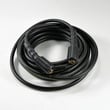
- Pressure washer chemical hose A1040NGS (detergent siphon problems caused by a cracked or leaking chemical line)
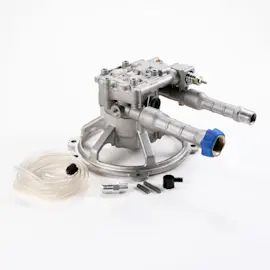
- Pressure washer outlet tube kit 201497GS (leaks or connection issues at the pump outlet fitting)
On the 580752352, many “needs a new pump” complaints are actually flow restrictions or setup issues. Fixing the root cause restores pressure and helps prevent overheating and premature wear.
We also use solving pressure washer problems when we want a step-by-step troubleshooting flow.
Last updated: January 2026