Owner’s manual
 Error Codes




How long does a Samsung WF306BHW washer last?
A Samsung WF306BHW washer typically lasts about 10 years with normal household use. With consistent care (proper loading, correct detergent, and routine cleaning), many front-load washers reach 12 to 15 years before major repairs become more likely. See the maintenance guidance in the owner's manual.
Typical lifespan and what to expect
Most washers follow a predictable pattern: early years are mostly maintenance, mid-life may need a few wear parts, and later years are when leaks, draining issues, or control problems show up.
- 0 to 5 years: routine cleaning and minor adjustments
- 5 to 10 years: higher chance of pump, valve, or hose issues
- 10+ years: seals, bearings, and electronic components become more common repair items
What shortens (or extends) washer life
These habits make the biggest difference for a front-load Samsung washer like WF306BHW:
- Avoid overloading; heavy loads strain the tub, suspension, and motor
- Use HE detergent and measure correctly to prevent residue buildup
- Leave the door slightly open between loads to reduce odor and mildew
- Run a monthly tub-clean cycle (or hot wash) and wipe the door boot
- Check fill and drain hoses periodically for soft spots, bulges, or seepage
Quick “repair vs. replace” guide
Use this as a practical rule of thumb when deciding whether to fix an older washer.
| Washer age | If it needs… | Practical approach |
|---|---|---|
| Under 8 years | a valve, hose, clamp, or pump | Repair is usually worthwhile |
| 8 to 12 years | repeated leaks or draining failures | Repair if the cost is modest |
| Over 12 years | multiple major issues at once | Compare repair cost to replacement |
Why it matters
Knowing the expected lifespan helps you plan: if your WF306BHW is near the 10-year mark, proactive maintenance and catching small leaks early can prevent bigger damage to the outer tub, wiring, and controls.
Last updated: February 2026
What is the most common problem with Samsung washing machines?
The most common issue we see with Samsung washers like model WF306BHW is a spin or drain problem that leaves clothes wet at the end of the cycle. In many cases, the root cause is a load that is out of balance, restricted draining, or a water fill problem that triggers an error and stops the cycle (see the WF306BHW owner's manual).
Most common symptoms (and what they usually mean)
- Washer will not spin out: load is unbalanced, suspension is struggling, or the unit is not level
- Washer won’t drain or drains slowly: drain path restriction or a failing drain pump
- Excessive vibration or banging: overload, uneven floor, or worn shock/suspension components
- Won’t fill or fills slowly: water supply issue or a sticking inlet valve
- Leaks: door boot area, hoses, clamps, or tub gaskets
Quick checks we recommend first
- Redistribute the load: bulky items (towels, blankets) can clump and prevent a full spin.
- Confirm the washer is level: a front-load washer that is even slightly off-level can shake and abort spin.
- Check water supply: verify both hot and cold valves are fully open and inlet screens are not clogged.
- Inspect for obvious leaks: look around the door opening, under the front, and at hose connections.
- Listen during drain: a loud hum with little water movement often points to a drain pump issue.
Parts that commonly relate to these problems (for WF306BHW)
If your troubleshooting points to a fill, drain, or leak source, these model-matched parts are common suspects:
| Problem area | What fails | Example part for WF306BHW |
|---|---|---|
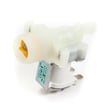
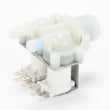
| Filling | Inlet valve sticks or screens clog | Washer water inlet valve DC62-30314K |
| Draining | Pump weakens or jams | Washer drain pump DC96-00774A |
| Leaks (tub/boot area) | Gaskets or clamps loosen/wear | Washer outer tub gasket DC69-00804A |
Why it matters
Spin, drain, and vibration problems are connected: if the washer cannot drain fast enough or senses an out-of-balance condition, it often reduces or cancels the final spin. Fixing the underlying cause helps prevent repeat wet-load issues and reduces wear on the tub, bearings, and suspension.
Last updated: February 2026
How much does it cost to repair a Samsung washing machine?
For a Samsung washer like model WF306BHW, most repairs typically land in the $200 to $265 range for parts and labor combined; simple fixes (like a fill problem) can be less, while major mechanical or tub-related repairs can run $300+. Use the owner's manual to confirm error codes and basic checks before replacing parts.
Typical repair cost ranges (what drives the price)
Repair pricing mainly depends on the failed part, how long diagnosis takes, and how much disassembly is required.
- Service/diagnostic visit: often a flat fee (may be applied toward the repair)
- Labor time: longer for tub, bearing, or leak repairs
- Part cost: varies widely by component
- Secondary damage: leaks can damage wiring, clamps, or hoses
- Access difficulty: front-load washers often require more teardown
Common repairs and example parts for WF306BHW
These are common failure areas on front-load Samsung washers; the parts below are examples available for this model.
| Symptom | Likely area | Example part on this model | Parts-only cost impact |
|---|---|---|---|
| Won’t fill, fills slowly, wrong temp | Water inlet valve | Washer water inlet valve DC62-30314K | Medium |
| Not draining, stops mid-cycle | Drain pump | Washer drain pump DC96-00774A | High |
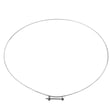
| Water leaking at door or front | Door boot clamp or gasket area | Washer door boot spring clamp DC97-04981D | Low to medium |
| Leak at tub seam | Tub gasket | Washer outer tub gasket DC69-00804A | Low to medium (labor can be high) |
Quick checks that can lower your repair bill
Do these first; they often solve “no fill” or “no drain” complaints without parts.
- Unplug the washer for 2 minutes, then retry the cycle
- Confirm both supply valves are fully open and hoses are not kinked
- Clean the inlet screen filters at the hose connections
- Check the drain hose height and routing (avoid airtight standpipes)
- Clean the pump filter/trap (if equipped) and remove coins, lint, or debris
Why it matters
Catching a small issue early (like a restricted inlet screen or a loose clamp) prevents repeat failures, reduces water damage risk, and keeps repair labor from escalating into a larger teardown.
Last updated: February 2026