Owner’s manual
 Error Codes

What's the average lifespan of a KitchenAid dishwasher?
Most KitchenAid dishwashers, including model KUDS01DLSS2, typically last 10 to 14 years with normal household use. Consistent cleaning, correct loading, and fixing small problems early help you reach the high end of that range and avoid premature pump, motor, or leak issues.
What affects lifespan the most
- Water quality and temperature: hard water and low water temperature increase buildup and reduce cleaning performance.
- Maintenance habits: regular cleaning reduces strain on the wash system.
- Loading and detergent use: overloading and excess detergent can cause poor washing and residue.
- Drain and circulation health: clogs and debris force the pump and motor to work harder.
- Door sealing and leaks: small leaks can lead to bigger failures if ignored.
Maintenance checklist (best return for the effort)
Use the care and troubleshooting guidance in the KUDS01DLSS2 owner's manual as your baseline.
- Clean the interior and key wash areas regularly (especially if you see film or odor).
- Load dishes so they do not strike each other; chipping and rattling often indicate unstable loading.
- Listen for grinding or crunching noises; a hard object in the wash module can damage components.
- Keep the drain path clear; slow draining increases wear on the drain system.
- Address leaks quickly; replace worn seals or gaskets before they cause secondary damage.
Common “end-of-life” symptoms and what they usually point to
| Symptom | Most common cause | Typical next step |
|---|---|---|
| Not draining or standing water | Drain restriction or failing drain components | Inspect drain path; consider replacing the dishwasher drain hose 8269144A if it is kinked, split, or clogged |
| Loud grinding during wash | Debris in wash module or worn wash components | Remove debris; if noise persists, inspect wash system parts |
| Leaks at the door | Worn door seal or gasket | Inspect and replace sealing parts as needed |
| Poor cleaning over time | Buildup, spray issues, or circulation weakness | Clean and maintain; inspect spray and circulation components |
Why it matters
A dishwasher that is maintained and loaded correctly runs with less strain on the pump, motor, seals, and electronic controls. That directly improves reliability and helps your KUDS01DLSS2 reach its expected service life.
Last updated: February 2026
How do I tell what model KitchenAid dishwasher I have?
Your KitchenAid dishwasher’s model number is printed on the rating label inside the door. On model KUDS01DLSS2, open the door and look along the inner edge of the tub opening (commonly the left side); the label lists both the model number and serial number.
Where to look (fast checklist)
- Open the dishwasher door fully.
- Check the inner door frame and tub opening edge first.
- Look for a paper or metallic “rating” label.
- Read the model number line (example format: KUDS01DLSS2).
- Write down the serial number too; it helps match parts and service information.
What the label tells you and why it matters
The model number identifies the exact KitchenAid design series, which determines the correct parts (like a drain hose, door seal, or pump and motor assembly) and the right troubleshooting steps.
Model vs. serial number
| Item on label | What it’s used for | Example (format) |
|---|---|---|
| Model number | Matching parts and diagrams | KUDS01DLSS2 |
| Serial number | Production details, service history | Letters and numbers |
Tips if the label is hard to read
- Wipe the label gently with a damp cloth and dry it.
- Use a flashlight and take a close-up photo to zoom in.
- If the label is missing, confirm the model using the documentation and control panel details in the KUDS01DLSS2 owner's manual.
Why it matters
Using the correct model number prevents ordering the wrong KitchenAid dishwasher parts and speeds up repairs, especially for model-specific items like the dishwasher drain hose 8269144A.
Last updated: February 2026
How to fix rubber seal on KitchenAid dishwasher?
On KitchenAid dishwasher model KUDS01DLSS2, fixing the rubber door seal usually means reseating it fully into the door channel so it sits flat and continuous. Press it in evenly by hand, then keep the door closed for several hours so the gasket relaxes into shape.
Before you start (safety and prep)
- Turn off power at the breaker before working around the door area.
- Let the dishwasher cool; avoid touching internal hot surfaces right after a cycle.
- Remove sharp items from the racks so they do not nick the seal (the manual specifically warns about sharp items damaging the door seal).
- Wipe the door channel clean and dry so the gasket can grip.
- Check the gasket for tears, hardening, or flattened sections.
How to reseat the door seal
- Open the door and locate the gasket channel around the tub opening.
- Starting at the top center, press the seal into the channel using your fingers.
- Work down both sides, pressing small sections in evenly so it does not twist.
- At corners, make sure the seal is fully seated and not bunched.
- Close and latch the door; keep it closed for several hours (overnight works well).
If it still leaks after reseating
Common causes on dishwashers like KUDS01DLSS2 include a misaligned seal, debris on the sealing surface, or a door that is not pulling in tight.
- Clean the tub lip and inner door where the gasket contacts.
- Confirm the door latches firmly; a weak latch can mimic a bad seal.
- Inspect the bottom edge for splash-out from over-sudsing or a blocked spray pattern.
- If the gasket is damaged, replace it rather than trying to glue it.
Quick checks: symptom to likely cause
| What you see | Most likely cause | What to do |
|---|---|---|
| Drips at top corners | Seal not fully seated at corners | Reseat corners; close door overnight |
| Leak at bottom center | Suds, loading, or door not closing tightly | Reduce soap, reload, check latch |
| Constant seep along one side | Twisted or flattened gasket | Reseat; replace if hardened |
Why it matters
A properly seated door gasket prevents leaks that can damage flooring and helps the dishwasher maintain correct wash pressure for better cleaning and drying.
For model-specific diagrams and door seal placement details, use the KUDS01DLSS2 owner’s manual.
Last updated: February 2026
What is the most common problem with a KitchenAid dishwasher?
The most common KitchenAid dishwasher issues on the KUDS01DLSS2 are poor cleaning (food left on dishes), draining problems (water left in the bottom), and leaks around the door. These usually trace back to loading, wash system obstructions, or worn seals; check the troubleshooting section in the KUDS01DLSS2 owner's manual.
Most common symptoms and what they usually mean
- Not cleaning well: spray arm holes or the wash module area is blocked; items are loaded so they block water flow.
- Grinding or buzzing noise: a hard object has entered the wash module; if it continues after a full cycle, service is needed.
- Standing water: drain path restriction (air gap, disposer inlet, drain hose, or pump area).
- Door leaks: door seal or vent gasket is worn, folded, or dirty.
- Dishes chipping: dishes are striking each other because they are not stable in the rack.
Quick checks we recommend first (fast, no parts)
- Load dishes so they are stable and do not strike together; slide racks in and out slowly.
- Run a full cycle and listen: if a grinding sound stops, it was likely debris being cleared; if it persists after the cycle, plan a repair.
- Inspect the tub bottom for standing water and check the sink drain connection for a clog.
- Clean the door sealing surfaces (tub lip and gasket contact area) and look for tears or flattening.
Parts that commonly solve these problems on KUDS01DLSS2
If the symptom matches, these model-compatible parts are common fixes:
| Symptom | Common fix | Example part for this model |
|---|---|---|
| Won’t drain or drains slowly | Replace a restricted drain hose | Dishwasher drain hose 8269144A |
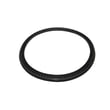
| Leaks at the door | Replace the door seal | Gasket W11196317 |
| Poor wash, weak circulation, loud motor | Replace the pump and motor assembly | Dishwasher pump and motor assembly W10782773 |
Why it matters
Poor cleaning and draining are often connected; when water flow is restricted, soil can redeposit and debris can cause grinding noises. Catching a worn gasket early also helps prevent cabinet and floor damage.
For error displays or blinking patterns, use our KitchenAid he dishwasher error codes guide to narrow the failure to a specific circuit or function.
Last updated: February 2026