Owner’s manual
 Error Codes


What is the life expectancy of a Kenmore dryer?
Most Kenmore dryers, including model 11066752501, typically last about 13 years with normal household use. Regular airflow maintenance (lint screen and vent cleaning) is the biggest factor in reaching or beating that lifespan; it reduces overheating and wear on key parts.
Typical lifespan and what changes it
A dryer’s service life is mostly driven by heat stress, airflow restriction, and mechanical wear.
- Normal use: about 13 years
- Heavy use (multiple loads daily): often shorter
- Light use + good venting: often longer
- Poor venting or skipped lint cleaning: commonly leads to early failures (heat and motor strain)
Maintenance that extends dryer life
Your manual calls out lint removal inside the cabinet and exhaust vent about every 2 years (more often with heavy use). Use the care schedule in the owner's manual as your baseline.
- Clean the lint screen after every load
- Check airflow: strong, steady exhaust outside while running
- Clean the exhaust vent regularly; remove lint buildup
- Have lint removed inside the dryer cabinet periodically (especially if you see lint leaks)
- Avoid overloading; it strains the drum support and drive system
Parts that commonly wear as the dryer ages
If the dryer still heats but gets noisy, squeals, or stops tumbling, these wear items are common on this platform:
| Symptom | Common wear area | Example part on this model page |
|---|---|---|
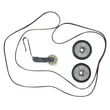
| Drum not turning, burning rubber smell | Belt/drive | Dryer drum belt 341241 |
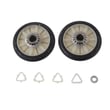
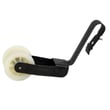
| Squealing, thumping, rumbling | Drum support components | Dryer repair kit 4392065 |
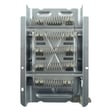
| Runs but no heat (electric models) | Heating circuit | Dryer element 279838 |
Why it matters
A dryer can “seem fine” while restricted airflow slowly overheats the heating system and stresses the drive motor. Keeping lint and venting under control helps protect high-cost components and keeps dry times consistent.
Last updated: February 2026
Is it worth replacing the heating element in a dryer?
Yes, it’s usually worth replacing the heating element in your Kenmore dryer model 11066752501 when the dryer tumbles but has no heat; the repair typically restores normal drying performance for far less than replacing the entire dryer. Confirm the no-heat checks in the owner's manual before ordering parts.
When replacing the heating element makes sense
Replacing the heating element is a strong choice when the dryer runs but clothes stay damp, especially if the rest of the machine is in good condition.
- The drum turns normally, but there’s no heat
- Drying times suddenly get much longer
- You’ve already cleaned the lint screen and checked airflow
- The dryer is otherwise quiet and operating normally
- You want to extend the life of the current dryer
Check these first (fast no-heat causes)
The manual notes that electric dryers need a 240-volt supply and often use two household fuses or breakers; the drum can still turn even if one side of the power is out.
- Reset both dryer breakers (or replace both fuses if applicable)
- Verify the dryer door closes firmly and the cycle is actually started
- Clean the lint screen and make sure the vent path is not restricted
- If the home power issue repeats, have the circuit checked
Parts that commonly solve “no heat”
If power and airflow are good, the heating circuit parts are the usual suspects.
| Symptom | Common part to check/replace | Example part on this model page |
|---|---|---|
| Runs but no heat | Heating element | Dryer element 279838 |
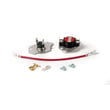
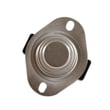
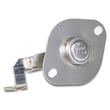
| Overheats then stops heating | Thermal cut-off or high-limit thermostat | Dryer thermal cut-off fuse kit 279816, dryer high-limit thermostat WP3977767 |
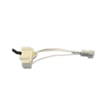
| Burned terminals at heater | Heater wiring | Dryer heating element wire kit 279457 |
Why it matters
A weak or failed heating circuit forces longer cycles, wastes energy, and can trigger repeated overheating shutdowns. Fixing the root cause (often heat plus airflow) gets drying performance back to normal and helps protect other components.
Last updated: February 2026
How do I tell if my dryer heating element is bad?
On your Kenmore 11066752501 electric dryer, a bad heating element usually shows up as “drum tumbles but no heat.” The most reliable check is a multimeter test: if the element has no continuity (open circuit), it’s failed and needs replacement.
Quick symptoms to look for
- Dryer runs and tumbles normally, but clothes stay cold and damp
- Cycle takes much longer than normal to dry
- Breaker or fuse issue repeats (heat circuit problems can trigger this)
- Burning smell at first use can be normal for a new element, but ongoing odor points to overheating or airflow issues
How to test the heating element (basic method)
- Unplug the dryer (electric shock risk).
- Access the heater terminals (location and panel removal steps are in the owner's manual).
- Remove at least one wire from the element terminal so you do not read through the circuit.
- Set your multimeter to ohms (Ω) and measure across the element terminals.
What the meter reading means
| Meter result | What it usually means | Next step |
|---|---|---|
| ~10 to 50 Ω | Element coil is typically intact | Check airflow, thermostats, and power supply |
| OL / no change / infinite Ω | Element is open (failed) | Replace the element |
| Very low Ω (near 0) | Possible shorted coil | Replace the element and inspect heater box wiring |
Parts that commonly get replaced with “no heat” issues
Even with a good element, a safety device can stop heat if the dryer overheats.
Why it matters
A dryer that is not heating is often a simple electrical or safety-cutoff issue, but overheating is frequently caused by restricted venting. Keeping the lint screen clean and the exhaust vent clear helps prevent repeat failures and reduces fire risk.
Last updated: February 2026
Are dryer thermal fuses universal?
Dryer thermal fuses are not universal. On Kenmore model 11066752501, the thermal fuse must match the dryer’s design and temperature rating; using the wrong fuse can cause no-heat, no-start, or repeat overheating. Use the part listed for your exact model in the 11066752501 owner's manual.
What “universal” really means for thermal fuses
Some thermal fuses look similar and may fit multiple brands, but dryers use different:
- Temperature cut-off ratings (the fuse opens at a specific temperature)
- Mounting styles and terminal types
- Wiring layouts (some fuses protect the motor circuit, others the heater circuit)
- Airflow and heater housing designs that affect operating temperatures
How to choose the right thermal fuse for 11066752501
We recommend matching by model number first, then confirming the symptom.
- Confirm the full model number: 11066752501
- Check the wiring diagram and troubleshooting steps in the 11066752501 owner's manual
- If the dryer overheated, fix the airflow problem before replacing any fuse
- Replace any related safety parts as a set when the model calls for it
Common related parts on this model
| Symptom | Often involved | Example part on this model |
|---|---|---|
| Dryer runs but no heat | Heater circuit safety parts | Dryer thermal cut-off fuse kit 279816 |
| Overheating or cycling issues | Temperature control | Dryer high-limit thermostat WP3977767 |
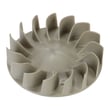
| Long dry times, hot cabinet | Airflow components | Dryer blower wheel WP694089 |
Why it matters
A thermal fuse is a one-time safety device. If you install the wrong rating or style, the dryer can shut down unexpectedly or fail to protect against overheating. Correct fit plus good venting keeps drying performance and safety where it should be.
Last updated: February 2026