Installation guide
 Owner’s manual
 Error Codes


How many cubic feet is a super capacity plus washer?
“Super capacity plus” is a size class, not one fixed number. For an Inglis top-load washer like model ITW4300SQ3, super capacity plus typically falls around 3.0 to 3.5 cu. ft.; use the model’s literature to confirm the exact published capacity.
This label was commonly used on larger, traditional top-load washers (non-HE and early HE models).
- Typical published range: 3.0 to 3.5 cu. ft.
- Common midpoint you will see on similar machines: about 3.2 cu. ft.
- Best for: towels, jeans, mixed loads
- Not the same as many newer HE top-loaders: often 4.5 cu. ft. and up
Check the model-specific documents for the exact spec wording used for your washer.
- Look in the ITW4300SQ3 owner's manual for “capacity,” “basket volume,” or “tub volume”
- Check the ITW4300SQ3 installation guide for any specification pages or model data sections
- If capacity is not listed, compare by practical load size: basket diameter/depth and recommended load level (load loosely, do not pack)
| Label you may see | Typical capacity (cu. ft.) | What it’s best for |
|---|---|---|
| Standard capacity | 2.5 to 3.0 | everyday loads |
| Super capacity plus | 3.0 to 3.5 | bulkier mixed loads |
| Extra-large (newer HE) | 4.5+ | comforters, very large loads |
Capacity affects cleaning and spin performance. Overfilling reduces agitation, increases out-of-balance loads, and can accelerate wear on drive components such as the clutch and motor coupling.
Last updated: February 2026
What is the warranty on an Inglis washer?
For the Inglis ITW4300SQ3 washer, the standard warranty coverage is typically 1 year limited from the date of purchase for defects in materials or workmanship when the washer is installed, operated, and maintained as instructed. For the exact terms and what is covered or excluded, use the warranty section in the ITW4300SQ3 owner's manual.
Most washer warranties (including Inglis-branded models like ITW4300SQ3) depend on a few basics:
- Proof of purchase or installation date
- Proper installation and electrical supply (grounded outlet, correct circuit)
- Normal household use and routine care
- Following operating and maintenance instructions
Warranty wording varies by model and region, so we recommend confirming these details in your documentation:
- Coverage length for parts and labor
- What counts as a covered defect vs. normal wear
- Exclusions (misuse, improper installation, commercial use)
- Any limits on incidental or consequential costs
Having this information ready helps you confirm coverage faster:
- Model and serial number (commonly found under the washer lid)
- Purchase date and retailer
- A short description of the problem (for example: no spin, no drain, leaking)
- Any recent changes (moved washer, new hoses, power outage)
Many issues are caused by wear, loading habits, or maintenance rather than a manufacturing defect.
| Symptom | Common non-warranty cause | Part often involved (if needed) |
|---|---|---|
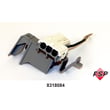
| Won’t spin | Lid switch not closing | Washer lid switch assembly WP8318084 |
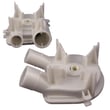
| Won’t drain | Pump jam or worn | Washer drain pump WP3363394 |
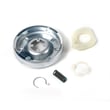
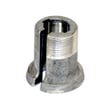
| Agitates poorly | Worn agitator dogs | Agitator dog 80040 |
Knowing the exact warranty terms helps you decide whether to pursue in-warranty service steps or go straight to troubleshooting and replacing common wear parts like a lid switch, drain pump, or agitator components.
Last updated: February 2026
Why won't my Inglis washer drain?
If your Inglis ITW4300SQ3 washer will not drain, the most common causes are a clogged or incorrectly installed drain hose, an open lid (lid switch not made), or a blocked or failed drain pump. Start with the drain hose height and air gap, then check the pump for obstructions.
- Make sure the lid is fully closed; this washer will not drain or spin with the lid open.
- Check for excessive suds; too much detergent can stall draining and spinning.
- Inspect the drain hose for kinks, clogs, or crushing behind the washer.
- Confirm the drain hose is not sealed to the standpipe; it needs an air gap.
- Verify the standpipe or laundry tub is not backing up (slow household drain).
The ITW4300SQ3 is sensitive to drain hose setup. A bad setup can look like a pump failure.
| What to check | What “right” looks like | What goes wrong |
|---|---|---|
| Standpipe height | Drain outlet no higher than 96 in. above the floor | Washer cannot push water up; it will not drain well |
| Air gap | Hose fits securely but is not taped or sealed | Siphoning or slow drain; cycle can seem stuck |
| Hose position | Top of hose higher than the washer water level | Continuous drain or poor wash performance |
For the exact routing and height limits, follow the installation guide.
If the hose setup is correct and the washer still will not drain, check the pump area. Small items (coins, socks, hair pins) can jam the impeller.
Common symptoms:
- Hums during drain but little or no water leaves
- Drains very slowly
- Leaves water in the tub and will not spin out
If you need a replacement, use the model-matched washer drain pump WP3363394.
A restricted drain path can prevent spinning, leave clothes soaking wet, and overwork the drive system. Fixing the hose setup or clearing a pump blockage often restores normal drain and spin performance.
Last updated: February 2026