Error Codes


What is the average life of a Kenmore dryer?
A Kenmore electric dryer like model 110C60222511 typically lasts 10 to 13 years with normal household use. With consistent vent cleaning and timely replacement of wear items, it’s common for many dryers to reach 15 years before major repairs become frequent.
- Airflow and venting: restricted venting overheats the heater circuit and shortens component life.
- Load size: chronic overloading strains the drum support system and motor.
- Heat settings: high heat on every load increases thermal stress.
- Lint control: lint buildup raises temperatures and wear.
- Wear parts replaced on time: belts, rollers, and idlers are designed to wear first.
| Component | Common symptom | Typical fix |
|---|---|---|
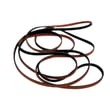
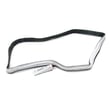
| Drum belt | Drum won’t turn, motor runs | Replace belt 341241 |
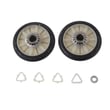
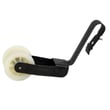
| Drum support parts | Thumping, squealing, slow start | Service rollers/idler (often a kit) |
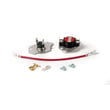
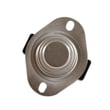
| Heating circuit safety parts | No heat, shuts off early | Check thermal cut-off/high-limit parts |
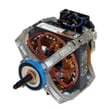
| Drive motor | Hums, won’t start, stops mid-cycle | Motor replacement if confirmed failed |
- Clean the lint screen every load and wash it periodically to remove residue.
- Inspect and clean the full vent run (dryer to outside hood) at least yearly.
- Dry similar fabrics together and avoid packing the drum tight.
- Stop using the dryer if you notice burning smells or repeated overheating.
- If the drum stops turning or squeals, address it early to prevent motor strain.
Most “short lifespan” complaints trace back to overheating from poor airflow or ignored wear parts. Keeping airflow strong and replacing simple mechanical parts early helps protect expensive items like the drive motor and heater housing.
Last updated: February 2026
How do I tell what model Kenmore dryer I have?
Your Kenmore dryer’s model number is printed on the appliance’s ID label; once you find it, you can match it exactly (letters and numbers) to get the right parts and diagrams. For example, this page is for Kenmore model 110C60222511.
We typically see the model and serial label in one of these spots on Kenmore electric dryers:
- Inside the door opening on the cabinet frame (most common)
- On the back panel of the dryer cabinet
- Along the door opening edge near the lint screen housing
- Under the top panel lip (less common)
Kenmore model numbers often start with a 3-digit prefix that helps identify the manufacturer family.
- 110 prefix: commonly associated with Whirlpool-built Kenmore dryers
- The rest of the characters narrow down the exact design and parts used
- Always copy the full model number exactly; one digit off can change the belt, heating element, or timer
| Label item | What it’s used for | Example |
|---|---|---|
| Model number | Parts lookup and diagrams | 110C60222511 |
| Serial number | Production run details | Varies |
| Type/voltage | Electrical matching | Varies |
The correct model number ensures you get compatible Kenmore dryer parts like the drum belt, heating system, and controls. If you are diagnosing a symptom (no heat, won’t start, squealing), model accuracy prevents ordering the wrong component.
If you need a fast starting point for this model, common wear items include the belt 341241 and heat-related parts like the dryer heating element 279838.
Last updated: February 2026
How to open Kenmore dryer front panel?
On Kenmore electric dryer model 110C60222511, opening the front panel typically means lifting the top, removing the front-panel mounting screws (often inside the door opening and along the top edge), then lifting the panel up and off the lower clips. Unplug power first.
- Unplug the dryer from the wall outlet (electric shock risk).
- If hard-wired, switch the breaker OFF and confirm the dryer is dead.
- Pull the dryer forward so you can reach the back and sides.
- Have a small container ready for screws.
- Take a quick photo of any wire connections before disconnecting them.
- Release the top panel: Insert a putty knife a few inches in from each front corner to release the spring clips, then lift the top.
- Remove screws in the door opening: Open the door and remove the screws that secure the front panel to the cabinet.
- Remove top-front screws: With the top lifted, remove screws along the top edge of the front panel.
- Disconnect door switch wiring: If the harness is short, unplug the door switch connector before fully removing the panel.
- Lift and pull off: Lift the front panel up to clear the bottom retaining tabs, then pull it forward.
| Symptom | Common area behind the front panel | Example part for this model |
|---|---|---|
| Drum not turning | Belt and idler system | Belt 341241 |
| Squealing or thumping | Drum support rollers and idler | Dryer repair kit 4392065 |
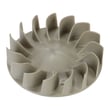
| Poor airflow, rumbling | Blower wheel and housing | Dryer blower wheel WP694089 |
Removing the front panel is the main way we access the drum, belt, idler pulley, blower wheel, and door switch on many Kenmore 110-series dryers. Doing it in the right order prevents bent panels, stripped screws, and broken plastic tabs.
Last updated: February 2026
How do I reset my Kenmore dryer?
To reset your Kenmore electric dryer model 110C60222511, we recommend a simple power reset first: unplug the dryer (or switch off the breaker) for 2 minutes, then restore power and try a timed dry cycle. This clears many control glitches and temporary error states.
- Turn the dryer OFF.
- Unplug the power cord (or turn both dryer breakers OFF if it is hardwired).
- Wait 2 minutes.
- Restore power.
- Open and close the door once, then start a Timed Dry cycle.
- If the control is still unresponsive, repeat the reset with a 5-minute unplug.
A reset will not fix a failed safety device or airflow problem. Check these common causes next:
- Lint screen and venting: clean the lint screen and confirm strong airflow at the outside vent.
- Overheat protection: a blown thermal cut-off can stop heat or stop operation after overheating.
- Door switch/door latch: the dryer will not start if the door is not sensed as closed.
- Drive system: a broken belt can make the motor run without turning the drum (or stop the cycle on some designs).
- Heating circuit: if it runs but does not heat, the heater or thermostats are common suspects.
| Symptom | What to check first | Example part for this model |
|---|---|---|
| Runs but drum does not turn | Belt, idler pulley | Belt 341241 |
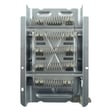
| Runs but no heat | Heating element, thermostats | Dryer heating element 279838 |
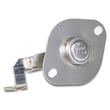
| Stops due to overheating | Venting, thermal cut-off kit | Dryer thermal cut-off fuse kit 279816 |
Resetting clears temporary control issues, but dryers also shut down to prevent overheating and damage. If airflow is restricted, the dryer can trip safety thermostats and fuses repeatedly until the vent system is cleaned and the failed part is replaced.
For electronic-control models that display codes, use our Kenmore 110 series electronic control model dryer error codes reference to match the code to the right checks.
Last updated: February 2026
How do I know if my Kenmore dryer thermal fuse is blown?
On Kenmore electric dryer model 110C60222511, a blown thermal fuse commonly shows up as a dryer that will not run at all (most common) or runs but has heat problems after an overheating event. The sure way to know is a continuity test with the dryer unplugged.
- Dryer won’t start; no drum tumble even though the control is set correctly
- You have power at the outlet, but the dryer appears “dead”
- Dryer stopped mid-cycle and won’t restart after cooling down
- Burning smell or very hot cabinet before the failure (overheating clue)
- Lint buildup or a crushed/blocked vent (common root cause)
- Unplug the dryer (or switch off the breaker).
- Access the fuse (typically on the blower housing or exhaust duct area).
- Remove at least one wire from the fuse terminal.
- Set a multimeter to continuity or ohms.
- Touch probes to the fuse terminals.
Results:
| Meter result | What it means | What to do next |
|---|---|---|
| Beep or near 0 Ω | Fuse is good | Keep troubleshooting (door switch, timer, motor, belt switch, etc.) |
| No beep or OL/infinite | Fuse is blown | Replace the fuse and fix the overheating cause |
A thermal fuse is a one-time safety device; it opens when the dryer overheats. If we replace the fuse without correcting airflow, the new fuse can blow again quickly.
- Clean the lint screen and confirm it seats correctly
- Inspect and clear the vent duct and outside hood flap
- Avoid long runs of flexible foil duct; use rigid or semi-rigid where possible
- Check the blower area for lint buildup; a damaged wheel can reduce airflow
- Confirm the drum turns freely and the load size is reasonable
If airflow is weak or the dryer overheated, these model-compatible parts are commonly involved:
- Dryer thermal cut-off fuse kit 279816 (safety cutoffs used in overheating conditions)
- Dryer blower wheel WP694089 (moves air through the drum and vent)
- Dryer operating thermostat WP3387134 (helps regulate temperature)
For electronic-control models, error displays can also help narrow the failure: Kenmore 110 series electronic control model dryer error codes.
Last updated: February 2026
How much does it cost to replace a heating element in a Kenmore dryer?
For Kenmore electric dryer model 110C60222511, replacing the heating element typically costs $50 to $120 for the part plus $0 to $50 in supplies, or $200 to $450 total if you hire a technician (parts plus labor). A common match for this model is the dryer heating element 279838.
- Heating element part: usually $50 to $120 (OEM-style element assemblies cost more than bare coils)
- Labor (service call + install): commonly $150 to $300
- Supplies: $0 to $50 (terminal kit, connectors, vent clamp, etc.)
- Optional related parts: $15 to $80 if heat failure was caused by overheating or poor airflow
| Scenario | What you pay for | Typical total |
|---|---|---|
| DIY replacement | Part + basic supplies | $50 to $170 |
| Pro repair | Part + labor | $200 to $450 |
| Heat issue plus airflow fix | Part + vent cleaning/repair | $250 to $550 |
- Airflow problems (clogged vent, crushed duct, blocked lint path) that caused the element to overheat.
- Blown safety devices that also need replacement, such as the dryer thermal cut-off fuse kit 279816 or the dryer high-limit thermostat WP3977767.
- Access time (stacked installs, tight closets, long vent runs) that increases labor.
A heating element often fails because the dryer runs too hot from restricted airflow. Fixing the element without correcting venting can shorten the life of the new part and keep dry times long.
- Confirm the dryer has 240V power (a dryer can run but not heat on 120V).
- Clean the lint screen and inspect the blower area.
- Check the vent for strong airflow outside.
- If the drum turns but airflow is weak, inspect the dryer blower wheel WP694089.
Last updated: February 2026
What is the capacity of the Kenmore dryer model 110C60222511?
Kenmore electric dryer model 110C60222511 is a full-size dryer; most full-size Kenmore 110-series dryers are about 6.5 to 7.4 cu. ft. Capacity is a drum-volume spec; the most reliable way to confirm it is by matching the model’s drum and cabinet configuration.
Use these practical identifiers to pin down the exact cubic-feet rating for 110C60222511:
- Compare the control panel layout and door opening size to the parts diagram for your model.
- Check whether your dryer uses a standard full-size drum assembly versus a compact drum.
- Match the drum and bulkhead style; those components correlate strongly with drum volume.
- If you are rebuilding the drum support system, keep the same drum and bulkhead style to avoid fit issues.
These model-matched parts are tied directly to the drum and front opening; they are useful reference points when confirming capacity:
| Dryer size class | Typical capacity | What it handles well |
|---|---|---|
| Full-size electric dryer | 6.5 to 7.4 cu. ft. | Towels, bedding, family loads |
| Compact dryer | 3.4 to 4.4 cu. ft. | Small loads, tight spaces |
Knowing capacity helps you load correctly. Overloading reduces tumbling and airflow, which increases dry time and heat stress on components such as thermostats and thermal cut-offs.
For a quick overview of how drum, airflow, and heating components work together, see: what are the main parts of a clothes dryer
Last updated: February 2026