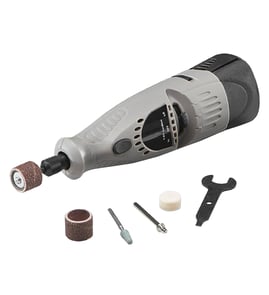

Are a Dremel and rotary tool the same?
A Dremel is a brand name, and a rotary tool is the type of tool. Your Dremel 395-3 is a rotary tool, but not every rotary tool is a Dremel; other brands make similar high-speed handheld tools that use rotating accessories.
Quick definitions
- Rotary tool: A handheld power tool that spins an accessory (bit, wheel, brush, drum) at high speed for cutting, grinding, sanding, polishing, or engraving.
- Dremel: A well-known brand that makes rotary tools and accessories; people often use “Dremel” the way they use “Kleenex” for tissues.
How to tell what you have (and why it matters)
When you’re shopping for accessories or troubleshooting performance on a Dremel 395-3 rotary tool, the key is matching the accessory connection and size, not the nickname.
- Check whether your accessory uses a collet or a chuck
- Match the shank size of the bit to the collet/chuck
- Confirm the tool’s speed range is appropriate for the accessory
- Use the right attachment (cutoff wheel mandrel, sanding drum mandrel, etc.)
- Avoid forcing the tool; light pressure prevents overheating and premature brush wear
Common “same tool” comparisons
| Term you see | What it usually means | What to check before buying |
|---|---|---|
| “Dremel tool” | Often any rotary tool | Shank size, collet/chuck type |
| “Rotary tool” | Generic category | Accessory compatibility |
| “Multi-tool” | Often an oscillating tool (different tool type) | Motion type (rotating vs oscillating) |
Why it matters
Using the correct rotary-tool accessories helps you get cleaner cuts, smoother sanding, and safer operation. It also reduces strain on the motor, bearings, and carbon brushes, which are common wear points on high-speed power tools.
Helpful related reading
Last updated: February 2026
Do Dremel accessories fit all dremels?
No. Dremel accessories are not all universal; fit depends on the specific tool model (including your Dremel 395-3), the attachment connection style, and the accessory shank size. Many bits fit most rotary tools, but some attachments require a specific nose cap, collet, or chuck.
What usually fits across most Dremel rotary tools
Most “bits” are interchangeable as long as the shank diameter matches your collet or chuck.
- 1/8-inch (3.2 mm) shank accessories are the most common for Dremel-style rotary tools
- Smaller shanks (for example 1/16-inch) need the correct collet or a multi-size chuck
- Cutting wheels, sanding drums, and polishing points typically fit when mounted on the correct mandrel
- Many accessories work best at the right speed range (high-speed cutting vs. low-speed polishing)
What often does NOT fit without the right adapter
Attachments (not simple bits) are where compatibility breaks down.
- Threaded-nose attachments may require a specific nose cap thread
- Some tools have different housing shapes that interfere with attachment seating
- Older tools may use different collet systems
- Specialty tools (compact, detail, or “pen-style”) may not accept larger attachments
Quick compatibility checklist (before you buy)
| What to check | What you’re looking for | Why it matters |
|---|---|---|
| Shank size | Usually 1/8-inch (3.2 mm) | Determines whether the bit can be clamped |
| Collet or chuck type | Collet set vs. keyless chuck | Controls what sizes you can hold |
| Nose/thread style | Threaded vs. non-threaded nose | Determines whether attachments can screw on |
| Clearance | Attachment body fits the tool | Prevents rubbing and misalignment |
Why it matters
Using an accessory that does not match the collet/chuck or attachment interface can cause wobble, poor cutting, overheating, or the bit slipping out under load. Matching the shank size and connection style keeps your Dremel 395-3 running smoother and safer.
Helpful DIY reference
If you’re troubleshooting fitment or electrical issues while diagnosing a tool problem, a meter test is often the fastest next step: how to use a multimeter to test electrical parts video.
Last updated: February 2026
How to change Dremel bit model 395-3?
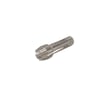
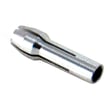
To change the bit on your Dremel 395-3 rotary tool, loosen the collet nut, remove the old accessory, insert the new bit fully, then tighten the collet nut securely. Always unplug the tool first so the shaft cannot spin while you work.
Steps to change the bit (collet system)
- Unplug the Dremel 395-3.
- Press and hold the shaft lock button (it stops the spindle from turning).
- Use the included wrench to loosen the collet nut (turn counterclockwise).
- Remove the old bit or accessory.
- Insert the new bit shank straight into the collet (push it in, then back it out slightly so it is not bottomed out).
- Tighten the collet nut firmly while holding the shaft lock.
Quick fit check before you start
A properly installed bit should sit straight and not wobble.
| What you see | What it usually means | What to do |
|---|---|---|
| Bit slips while running | Collet nut not tight, dusty collet | Re-seat bit, tighten firmly, clean collet and shank |
| Bit wobbles | Bit not centered, wrong collet size | Reinstall; use the correct collet for the shank size |
| Shaft lock will not engage | Spindle not aligned with lock | Rotate the collet nut by hand until the lock drops in |
Why it matters
A loose or off-center bit can chatter, burn the workpiece, and wear the collet and motor bearings faster. Correct tightening also improves cut quality and safety.
Helpful related DIY reading
- Use a meter safely when troubleshooting power issues: how to use a multimeter to test electrical parts video
- If the cord or internal leads look damaged: how to repair broken or damaged wires video
- General safety basics for DIY work: are diy appliance repairs safe
Last updated: February 2026