Owner’s manual
 Error Codes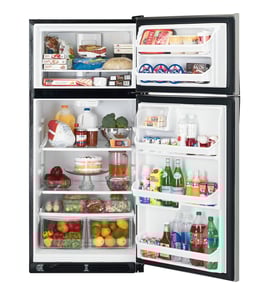





What is the most common problem with a Whirlpool refrigerator?
The most common Whirlpool refrigerator problem is a cooling issue (warm fridge, soft ice, or frost buildup) caused by restricted airflow or heat not being removed efficiently. On the Whirlpool WRT111SFAW00 top-mount, start with basic maintenance and then check the defrost and fan system using the WRT111SFAW00 owner's manual.
- Refrigerator section too warm but freezer seems OK
- Freezer has heavy frost on the back wall
- Fan noise changes, or you do not hear the evaporator fan running
- Water pooling inside the fridge or under the unit
- Temperature swings after door openings
- Clean condenser coils (dust buildup makes the compressor run longer and cool worse).
- Confirm airflow: do not block vents with food packages.
- Check door sealing: a poor seal causes warm air leaks and frost.
- Verify control settings: set to the recommended mid-range and allow 24 hours to stabilize.
- Look for frost pattern: heavy frost often points to a defrost problem.
If the quick checks do not help, these are frequent culprits on many top-mount refrigerators:
| Symptom | Likely area | Example part for this model |
|---|---|---|
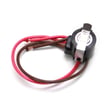
| Heavy frost, weak airflow | Defrost system | Refrigerator defrost bi-metal WPW10225581 |
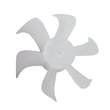
| Warm fridge, freezer OK | Evaporator airflow | Fan blade WP2163777 |
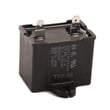
| Compressor struggles to start | Start components | Refrigerator run capacitor WPW10662129 |
Cooling problems usually get worse over time. Addressing airflow, sealing, and defrost issues early helps protect food, reduces energy use, and prevents ice buildup that can block vents and stop proper circulation.
Last updated: February 2026
What are signs of a failing refrigerator?
Common signs your Whirlpool WRT111SFAW00 refrigerator is failing include warm temperatures, heavy frost, water leaks, loud or new noises, and doors that will not seal. Catching these symptoms early helps prevent food spoilage and can reduce the chance of a major sealed-system repair; see the WRT111SFAW00 owner's manual for model-specific checks.
- Food spoils faster than normal or drinks never get cold
- Freezer frost or ice buildup that keeps returning
- Puddles under the unit or water collecting inside the fresh-food section
- Compressor area feels unusually hot or runs almost nonstop
- Clicking, buzzing, grinding, or rattling noises that are new
- Condensation on shelves or around door openings
- Confirm temperatures: Set refrigerator to about 37°F and freezer to about 0°F; allow 24 hours to stabilize.
- Inspect door sealing: Close a dollar bill in the gasket; if it slides out easily, the seal or door alignment needs attention.
- Look for airflow issues: Blocked vents, overpacked shelves, or a failed evaporator fan can cause warm temps.
- Check for defrost problems: Repeated frost on the back freezer panel often points to a defrost failure; the refrigerator defrost bi-metal WPW10225581 is one common defrost component.
- Clean condenser area: Dust buildup reduces cooling efficiency and can make the unit run hot and long.
| Symptom | Most common cause | What we recommend |
|---|---|---|
| Fridge warm, freezer OK | Airflow/evaporator fan issue | Check vents and fan operation; review how to fix your evaporator cooling fan |
| Heavy frost in freezer | Defrost system issue | Inspect for ice on rear panel; test defrost components |
| Water on floor | Defrost drain or door sealing issue | Clear drain path; verify gasket seal |
| Clicking, won’t start cooling | Start device/capacitor issue | Have starting components checked; consider refrigerator run capacitor WPW10662129 |
A refrigerator that cannot hold temperature safely can spoil food quickly and force the compressor to run harder than designed. Addressing door seal, airflow, and defrost symptoms early is usually the most cost-effective path.
Last updated: February 2026
What's the average lifespan of a Whirlpool refrigerator?
Most Whirlpool refrigerators last 10 to 18 years on average. For your Whirlpool WRT111SFAW00 top-mount refrigerator, lifespan depends most on airflow, clean condenser coils, stable temperatures, and keeping door seals tight; routine care often adds years of reliable cooling.
- Average: 10 to 18 years
- Common “replacement window”: 12 to 15 years
- Often shorter when: coils are clogged with dust, doors do not seal, or the unit runs in a hot, tight space
- Often longer when: coils are cleaned regularly and temperatures stay consistent
| What you’re measuring | Typical expectation | What shortens it fastest |
|---|---|---|
| Cooling system (compressor, sealed system) | 10 to 18 years | dirty coils, poor ventilation, overheating |
| Fans and defrost components | 8 to 15 years | heavy frost, blocked vents, frequent door openings |
| Door sealing and alignment | 5 to 12 years | torn gasket, sagging door, slamming |
Use these as your “lifespan checklist” for a top-mount Whirlpool like the WRT111SFAW00:
- Vacuum and brush condenser coils and the front grille area regularly.
- Keep 2 to 3 inches of clearance around the cabinet for ventilation (more is better if the space is tight).
- Set temperatures to typical targets: 0°F freezer and 37°F to 40°F fresh food.
- Avoid overpacking; keep air vents inside the compartments clear.
- Check door closing and sealing; warm air leaks force longer run times.
- Defrost and airflow issues: address heavy frost early (defrost problems can overwork the compressor).
If you notice heavy frost, warming temps, or long run times, fixing the root cause early can prevent strain on the sealed system. Common examples include a failed defrost thermostat such as the refrigerator defrost bi-metal WPW10225581.
A refrigerator that runs hot or runs constantly wears out key components faster and uses more electricity. Basic airflow, coil cleaning, and door-seal checks are the most cost-effective ways to protect the compressor and keep food temperatures stable.
For model-specific operating and care details, follow the WRT111SFAW00 owner's manual.
Last updated: February 2026