Owner’s manual
 View engine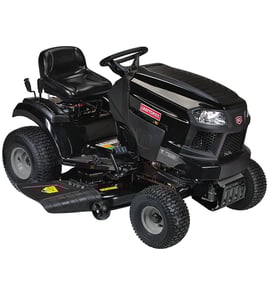


Where to find Craftsman riding lawn mower model number?
On the Craftsman riding lawn tractor model 917276360, the model number is typically printed on a product identification label located under the seat, on the frame near the seat, or under the hood near the engine area. Use the exact model number to match diagrams and parts.
Where to check on model 917276360
Look for a sticker or metal tag in these common spots:
- Under the seat pan (lift the seat and look on the frame rails)
- On the rear frame near the hitch/drawbar area
- Under the hood, on the chassis near the engine
- Near the footrest area on the frame (left or right side)
What the label usually includes
The ID label often lists more than just the model number. You may see:
- Model number (for this tractor: 917276360)
- Serial number
- Product name (garden tractor / riding mower)
- Engine information (sometimes listed separately)
Why it matters
Craftsman tractors can look similar across multiple model series, but parts like belts, blades, pulleys, and switches can vary by model. Using the correct model number helps us match the right diagrams and compatible replacement parts.
Quick reference
| What you need | What it’s used for | Example for this tractor |
|---|---|---|
| Model number | Finding correct parts diagrams and assemblies | 917276360 |
| Serial number | Identifying production run details | Varies |
| Engine model/type | Engine-specific parts (filters, carb parts, ignition) | Varies |
For model-specific operating and identification details, use the 917276360 owner’s manual.
Last updated: January 2026
What would cause a Craftsman lawn mower not to start?
On Craftsman model 917276360, a no-start is most often caused by a safety interlock not satisfied (brake pedal not fully depressed or PTO engaged), a weak battery or corroded terminals, a blown fuse, or a fuel/ignition issue (stale fuel, clogged fuel filter, dirty air filter, bad spark plug). For the exact starting steps and troubleshooting chart, use the 917276360 owner’s manual.
Quick checks (fastest to rule out)
- Sit fully in the seat; press the brake/clutch pedal all the way down.
- Make sure the PTO/attachment clutch is disengaged (blades off).
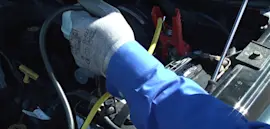
- Check battery cables for tightness and corrosion.
- Verify there is fresh fuel in the tank (old fuel can cause hard starting).
- Inspect the 30-amp plug-in fuse behind the dash.
What the symptoms usually mean
| Symptom | Most likely causes | What to do first |
|---|---|---|
| No crank, no click | Blown fuse, bad battery connection, failed ignition switch/interlock | Check fuse and battery terminals |
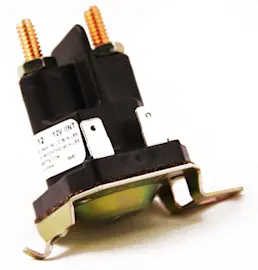
| Clicks but won’t crank | Weak battery, corroded terminals, bad solenoid/starter | Charge battery; clean terminals |
| Cranks but won’t start | No fuel, choke not used correctly, bad spark plug, clogged air/fuel filter | Confirm fuel and choke; check spark plug |
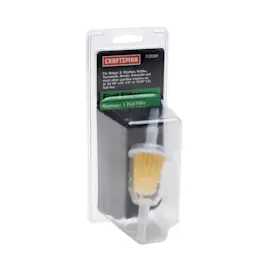
| Starts then dies | Stale fuel, water in fuel, clogged fuel filter, carburetor issue | Drain/refill with fresh fuel; replace filter |
Parts that commonly affect starting on this model
If your tractor cranks only when you wiggle controls, or it dies when you leave the seat, an interlock circuit issue is likely.
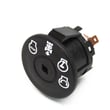
- Switch.pto 582107601 (PTO switch): can prevent starting if it fails or stays “engaged” electrically.
- Husqvarna lawn tractor interlock switch 532176138 (interlock switch): part of the safety circuit that must be satisfied to start.
Why it matters
The starting circuit on model 917276360 is designed to prevent accidental blade engagement and unintended movement. A single misadjusted or failed safety switch can stop cranking even when the engine itself is fine.
Last updated: January 2026
Is it worth replacing a lawn mower engine?
For the Craftsman 917276360 garden tractor, replacing the engine can be worth it when the tractor’s deck, transmission, and steering are in good shape and the total swap cost is clearly less than replacing the tractor. Use the 917276360 owner’s manual to confirm model-specific service steps and safety precautions.
Quick decision checklist
- The mower deck is solid (no cracks, no rust-through)
- The transmission drives smoothly forward and reverse after warming up
- Steering and brakes feel tight and predictable
- Safety interlocks work (seat switch, PTO switch, brake start interlock)
- You can handle the labor, tools, and time, or the labor quote still makes sense
What to compare before you commit
| Compare | What to include | What it tells you |
|---|---|---|
| Engine swap total | Engine, fluids, hardware, labor, linkage and wiring adjustments | Your true out-of-pocket cost |
| Near-term repairs | Belts, blades, battery, fuel system cleanup | Likelihood of more spending soon |
| Replacement tractor | A comparable 48-in deck riding tractor | Your “walk-away” price |
Parts we often inspect during an engine swap
Even if you do not replace these automatically, checking them while the tractor is apart can prevent repeat downtime:
- Deck belt wear, cracking, glazing: lawn tractor blade drive belt, 5/8 x 88-15/16-in 532180808
- Primary blade drive belt condition and routing: husqvarna lawn tractor primary blade drive belt, 5/8 x 90-3/32-in 532174368
- Blade damage that can cause vibration and poor cut: lawn tractor 48-in deck high-lift blade 532180054
Why it matters
An engine replacement is a major investment; it pays off best when it restores reliable mowing without uncovering another big issue soon after, such as a slipping transmission or worn deck drive components.
Last updated: January 2026