 Installation guide
 Owner’s manual



How to identify a Kenmore washer model?
For Kenmore washer model 41741122410, the model number and serial number are printed on the washer serial plate located inside the door opening. Use that exact model number when ordering replacement parts or looking up troubleshooting and cycle details in the 41741122410 owner's manual.
Where to look on model 41741122410
On this front-load Kenmore washer, open the door and check the inside door area for the serial plate.
- Look along the door opening frame (cabinet front) first
- Check the inside edge near the door hinge
- Check the inside edge near the door latch/strike
- Wipe the area with a damp cloth; detergent residue can hide the print
- Write down both the model number and serial number for future reference
What the model number looks like
Kenmore model numbers are typically a series of digits and may include punctuation on some labels. For this washer family, the Use and Care Guide lists models as 417.4112*, and your full model is 41741122410.
| What you see | What it means | Why you need it |
|---|---|---|
| Model number (example: 41741122410) | Identifies the exact washer design | Ensures parts and diagrams match |
| Serial number | Identifies your specific unit | Helps confirm production details for service |
| Purchase date (your record) | When you bought it | Useful for maintenance and warranty timing |
Why it matters
We use the model number to match the correct Kenmore washer parts, wiring/tech information, and service procedures. Even small model variations can change items like the door lock, control board, or dispenser components.
Last updated: February 2026
Is it worth repairing a Kenmore washing machine?
Yes, repairing a Kenmore washer is worth it when the fix restores reliable operation for less than replacing the machine, especially for common, repairable failures like a door lock, drain restriction, or water fill issue on model 41741122410. Use the 41741122410 owner's manual to match symptoms to the right repair.
A practical way to decide (repair vs. replace)
We recommend comparing the total repair cost (parts + labor) to the cost of a comparable new washer.
- Repair when the issue is a single, common failure (lock, valve, pump filter, control) and the tub and motor are in good shape.
- Repair when the washer is otherwise stable (no severe vibration, no repeated leaks, no burning smell).
- Replace when multiple major systems are failing at once (for example, repeated control failures plus major leak damage).
- Repair first when the problem may be a simple restriction or setup issue (drain, leveling, installation).
Common repairs that are often “worth it” on this model
These are frequent front-load washer fixes that typically restore normal operation:
| Symptom | Likely area | Example part for 41741122410 |
|---|---|---|
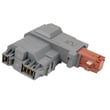
| Door won’t lock, won’t start | Door lock system | Washer door lock assembly 131763256 |
| Won’t drain well, long drain | Drain path restriction | Washer drain pump filter 134640200 |
| Won’t fill, fill errors | Water inlet system | Washer water inlet valve 134959340 |
| Excess shaking or banging | Suspension/damping | Shock absorber 5304491701 |
Why it matters
A targeted repair prevents repeat breakdowns and protects the washer from secondary damage. For example, the manual emphasizes safe servicing practices (disconnect power before maintenance) and avoiding chemical mixing; following those basics reduces risk and helps the repair last.
Tips to make the repair last longer
- Keep the washer on a solid, level floor; recheck stability after moving it.
- Leave the door and dispenser open for a few hours after use to reduce odor and moisture.
- Avoid overfilling detergent and softener compartments.
- If you suspect a drain issue, check for coins or debris that can cause rattling and pump problems.
Last updated: February 2026
What is the average lifespan of a Kenmore washer?
A Kenmore washer typically lasts 10 to 15 years. For the Kenmore 41741122410 front-load washer, regular care (using HE detergent, cleaning the tub, and preventing overloads) helps you reach the longer end of that range; neglected maintenance shortens it.
What affects lifespan the most
- Load size and balance: frequent overloading or unbalanced loads increase wear on shocks, bearings, and the drive system.
- Detergent choice: front-load models need HE (high-efficiency) detergent to reduce oversudsing and residue.
- Moisture control: leaving the door closed all the time promotes odor and mildew.
- Water quality and pressure: poor supply conditions can stress fill components.
- Drain performance: slow draining makes the pump work harder and can cause repeated cycle issues.
Maintenance that adds years (best practices)
We recommend these habits for the 41741122410:
- Run the washer’s monthly cleaning routine described in the 41741122410 owner’s manual.
- Leave the door ajar for a few hours after use to reduce odor and moisture buildup.
- Use the correct amount of HE detergent and avoid extra soap.
- Check pockets and remove coins, screws, and debris before washing.
- Keep the drain path clear; if your model uses a serviceable filter, inspect it when you notice slow draining.
Common wear items and what they usually look like
| Symptom | Often related to | What you’ll notice |
|---|---|---|
| Door won’t lock or cycle won’t start | Door lock system | Clicking, “door” errors, intermittent starts |
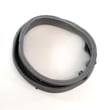
| Leaks at the door | Door boot/bellows | Water at the front, damp gasket, visible tears |
| Excess vibration or banging | Suspension/shocks | Walking, loud thumping on spin |
If you’re troubleshooting door-locking problems, the washer door lock assembly 131763256 is a common replacement part for this model.
Why it matters
Knowing the typical 10 to 15 year lifespan helps you decide whether to repair (for a single failed part like a door lock or valve) or plan for replacement when multiple major components start failing close together.
Last updated: February 2026
Why is my Kenmore washer not spinning clothes dry?
If your Kenmore washer model 41741122410 finishes with clothes still wet, the most common causes are an out-of-balance or overloaded load, a spin speed setting that is too low (or set to No Spin), or a drain restriction that prevents proper high-speed spinning. Confirm the cycle and spin settings in the 41741122410 owner's manual.
Quick checks that fix most “won’t spin dry” complaints
- Make sure Spin speed is not set to Low or No Spin; higher spin extracts more water.
- Reduce the load size; overloading leaves the load too wet after spin.
- If the load is small, add 1 or 2 similar items to help balance.
- Rearrange items so the load is evenly distributed.
- Check the drain hose for kinks and straighten it.
- If draining seems slow, inspect and clean the washer drain pump filter 134640200.
Settings and cycle behavior to know (model-specific)
Your 41741122410 offers multiple spin speeds (Extra High, High, Medium, Low) depending on the cycle; increasing spin speed extracts more water and reduces drying time. If you select No Spin, the load will be very wet at the end of the cycle.
| What you see | Likely cause | What to do |
|---|---|---|
| Clothes wetter than normal | Spin speed too low or No Spin selected | Choose a higher spin speed; rerun Rinse & Spin |
| Washer stops or won’t reach full spin | Load too small or out of balance | Add similar items; redistribute load |
| Water left in drum, heavy wet load | Drain restriction or kinked hose | Straighten hose; clean pump filter |
Why it matters
A front-load washer needs to drain efficiently and keep the load balanced to safely ramp up to high-speed spin. When it cannot, it protects the washer by limiting spin, which leaves clothes wetter and increases dryer time.
Last updated: February 2026


