Owner’s manual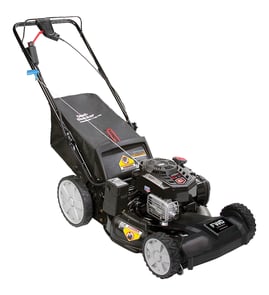




Can you mow 1 acre with a push mower?
Yes, you can mow 1 acre with a push mower, but it is a long job. With a typical 19–22 inch walk-behind like the Weed Eater 96112011700, plan on roughly 2 to 3 hours in light conditions; thick grass, hills, and obstacles can push it longer. See the 96112011700 owner’s manual for operating and mowing tips.
What affects how long it takes
- Deck width (wider cut = fewer passes)
- Grass height and moisture (tall or wet grass slows you down)
- Terrain (slopes and rough ground reduce pace)
- Obstacles (trees, beds, fences add trimming time)
- Bagging vs. mulching (bagging adds stops to empty)
Quick time comparison (typical conditions)
| Mower type | Typical deck width | Typical time for 1 acre |
|---|---|---|
| Push mower (walk-behind) | 19–22 in | 2–3 hours |
| Riding mower | ~42 in | ~35–60 minutes |
| Zero-turn | ~60 in | ~20–45 minutes |
Tips to make a 1-acre push-mow more manageable
- Mow more often so you are only cutting the top third of the grass.
- Set the mower a bit higher on the first pass if the lawn is overgrown.
- Keep the underside of the deck clean and the blade sharp; a dull blade tears grass and slows cutting.
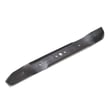
- If you mulch, use a proper mulching blade such as the husqvarna lawn mower deck mulching blade, 22-in 532406713 when it matches your setup.
- Take breaks; pushing for hours is demanding, especially in heat.
Why it matters
On a 1-acre lawn, the mower’s cut width and your walking pace drive the total time. If you routinely mow 1 acre, a self-propelled or riding mower can reduce fatigue and help you maintain a consistent cut.
Last updated: January 2026
How do I find my lawn mower model number?
For your Weed Eater walk-behind mower model 96112011700, the model number is typically printed on a product ID label attached to the mower deck (the metal housing above the blade) or on the rear of the deck near the discharge area. Use that exact number to match parts correctly. See the 96112011700 owner's manual for label and component location guidance.
Where to look on a walk-behind mower
Check these common spots first (wipe dirt and grass off the deck so the label is readable):
- Top of the mower deck, near the engine mounting area
- Rear of the deck, near the rear door or rear discharge opening
- Side of the deck near the discharge guard (side-discharge models)
- Near the handle mounting brackets on the deck
- Under the rear flap area (rear-bagging models)
What numbers matter (and which ones do not)
For ordering parts, the mower model number is the key identifier. The engine will also have its own model/type code, which is mainly used for engine-specific parts.
| You see this on the mower | What it’s used for | Example use |
|---|---|---|
| Mower model number | Mower deck, handle, wheels, controls, guards | Find correct blade adapter, rear skirt, cables |
| Engine model/type code | Engine parts only | Spark plug, carburetor parts, ignition parts |
| Serial number | Identification and production tracking | Helpful for service records |
Why it matters
Using the exact model number 96112011700 helps us match the correct diagrams and compatible parts so you avoid ordering a blade, bolt, or control cable that looks similar but will not fit.
Last updated: January 2026
Is there a difference between a weed eater and a weed wacker?
For the Weed Eater walk-behind mower model 96112011700, “Weed Eater” is a brand name, while “Weed wacker” is a common nickname people use for a string trimmer. In everyday use, many people mean the same thing, but the tools can be different.
What the terms usually mean
- Weed Eater: often a brand name (and sometimes used generically for trimmers)
- Weed wacker: slang for a string trimmer (also called a Weed trimmer)
- Walk-behind mower: a mower with a rotating blade under the deck (like model 96112011700)
- String trimmer: a handheld tool that cuts with nylon line
How this applies to model 96112011700
Model 96112011700 is a gas walk-behind lawn mower, not a string trimmer. If you are looking for operating, maintenance, or safety details for this mower, use the 96112011700 owner’s manual.
Quick comparison
| Tool type | Cutting method | Best for |
|---|---|---|
| Walk-behind mower (96112011700) | Metal blade under deck | Lawns and larger flat areas |
| String trimmer (“Weed wacker”) | Spinning nylon line | Edges, fences, tight spots |
Why it matters
Using the right term helps you get the correct parts and instructions. For example, mower parts like a blade or blade adapter are completely different from trimmer parts like a spool, line, or trimmer head.
Last updated: January 2026
What are all the parts on a lawn mower?
On the Weed Eater walk-behind mower model 96112011700, the mower is made up of a cutting system (deck and blade), operator controls (handle and safety control bar), wheels/height adjusters, and an engine system (fuel, ignition, and starting). For the most complete model-specific breakdown, use the diagrams in the 96112011700 owner’s manual.
Main part groups you will typically find
Most walk-behind gas mowers, including model 96112011700, are organized into these major assemblies:
- Cutting deck and discharge system: deck housing, discharge guard/door, rear deflector, mulcher plate/plug (if equipped)
- Blade and blade mounting: blade, blade bolt, blade adapter/key
- Handle and safety controls: upper/lower handle, operator presence control bar, control cables
- Wheels and height adjustment: wheels, wheel adjusters/levers/brackets, spacers, washers, nuts/bolts
- Engine systems: fuel tank/cap, carburetor/primer (if equipped), air cleaner, muffler, ignition coil, spark plug, flywheel, recoil starter
Examples of model-specific parts you may see listed
These are examples of parts that appear for model 96112011700 and match common mower assemblies:
- Husqvarna lawn mower deck mulching blade, 22-in 532406713 (cutting and mulching)
- Husqvarna lawn mower blade adapter with key, 25mm 532418373 (connects blade to crankshaft)
- Starter.assy.recoil 532437562 (pull-start assembly)
- Lawn mower ignition coil 532437580 (spark generation)
- Fuel.tank assy.w/hardware 532437576 (fuel storage and mounting)
Quick “what does it do?” reference
| Part group | What it does | Common symptoms when worn/damaged |
|---|---|---|
| Blade and adapter | Cuts grass; transfers engine power to blade | Poor cut, vibration, blade won’t stay tight |
| Deck/discharge parts | Contains airflow and directs clippings | Clumping, blowout, unsafe discharge |
| Controls/cables | Keeps engine running only when held; controls speed (if equipped) | Won’t start, won’t stay running |
| Wheels/height adjusters | Sets cutting height and supports mower | Uneven cut, hard to push, height won’t hold |
| Fuel/ignition/starting | Starts and runs the engine | No-start, surging, loss of power |
Why it matters
Knowing the part groups helps you troubleshoot faster and order the right replacement. For example, vibration often points to the blade or blade adapter, while no-start often points to fuel delivery, ignition, or the recoil starter.
Last updated: January 2026
What are the most common lawn mower repairs?
For Weed Eater model 96112011700, the most common repairs are usually basic maintenance and wear items: fixing no-start conditions (fuel, spark, air), restoring cutting performance (blade and deck cleaning), and correcting vibration or hard-to-push issues. Our 96112011700 operator’s manual walks through troubleshooting and routine service.
Most common repairs (and what to check first)
- Won’t start: fresh fuel, spark plug connection, air filter condition, and operator presence control bar operation.
- Runs but lacks power: dirty air filter, grass buildup under the deck, cutting too low in heavy grass.
- Poor cut or uneven cut: dull/bent blade, wheels set to different heights, deck packed with clippings.
- Excessive vibration: loose blade bolt, damaged blade, or a worn blade adapter.
- Starter rope hard to pull: blade dragging in grass, brake engaged when the control bar is released, or a damaged blade adapter.
Quick symptom-to-fix guide
| Symptom | Most likely cause | First action |
|---|---|---|
| No start | Stale fuel, dirty air filter, bad spark plug | Drain/refill fuel; inspect spark plug and filter |
| Uneven cut | Wheel height mismatch, dull blade | Set all wheels equal; inspect blade edge |
| Vibration | Loose/damaged blade, worn adapter | Tighten hardware; inspect blade/adapter |
| Hard to push | Cutting too low, heavy grass buildup | Raise height; clean underside of deck |
Parts that commonly solve cutting and vibration problems
If you’re seeing poor cut quality or vibration on model 96112011700, these model-matched parts are often involved:
- Husqvarna lawn mower deck mulching blade, 22-in 532406713 (dull/bent blade, poor mulching, uneven cut)
- Husqvarna lawn mower blade adapter with key, 25mm 532418373 (vibration, blade not seating correctly)
Why it matters
Catching these issues early helps the engine run cooler, improves cut quality, and reduces stress on the crankshaft, blade mount, and controls. Simple steps like using fresh gasoline and keeping the deck clean prevent many “major” mower problems.
Last updated: January 2026
What octane gas should I use in my lawn mower?
For the Weed Eater gas walk-behind mower model 96112011700, we recommend using fresh, clean, unleaded regular gasoline (87 octane); the manual also says do not use premium gasoline. For best starting and to prevent fuel-system issues, avoid old fuel and store gasoline properly. See the 96112011700 owner’s manual.
Fuel guidelines we recommend
- Use unleaded gasoline, 87 octane (regular).
- Use fresh fuel; don’t keep gas in the mower longer than 30 days without stabilizer.
- Avoid premium fuel; it does not improve performance on this mower.
- Avoid alcohol-blended fuel storage problems; ethanol blends can attract moisture during storage.
- Fill carefully; don’t overfill the tank, and tighten the fuel cap securely.
If you’re storing the mower
The 96112011700 manual calls out fuel separation and acid formation during storage. If the mower will sit 30 days or longer, we recommend one of these approaches:
| Storage plan | What to do | Best for |
|---|---|---|
| Run it dry | Drain tank, then run engine until carburetor is empty | Seasonal storage, winterizing |
| Stabilize fuel | Add stabilizer to fresh gas and run engine about 10 minutes | Short off-season breaks |
Why it matters
Using the correct fuel helps prevent hard starting, surging, and carburetor varnish. Fresh regular unleaded also reduces the chance of fuel-system corrosion and clogged passages, which are common causes of “won’t start” complaints.
Last updated: January 2026
What time of year do weed eaters go on sale?
We typically see the best sales on outdoor power equipment like the Weed Eater 96112011700 gas walk-behind mower at the end of the mowing season, usually late summer through early fall. That is when retailers clear out lawn-and-garden inventory before fall and winter seasonal resets.
Best sale windows (and why)
Seasonal pricing usually follows demand; when fewer people are buying mowers and trimmers, discounts become more common.
- Late summer to early fall: end-of-season clearance on mowers, trimmers, and parts bundles
- Early spring: occasional promos as retailers compete for new-season shoppers
- Holiday weekends: short-term promotions (selection can be limited)
- After major storms or heat waves: sometimes followed by brief restocks and markdowns on remaining inventory
How to time your purchase
If you want the lowest price, prioritize clearance timing; if you want the best selection, shop earlier.
| Goal | Best time to shop | Tradeoff |
|---|---|---|
| Lowest price | Late summer to early fall | Fewer models and accessories left |
| Best selection | Early to mid spring | Higher average pricing |
| Replacement parts now | Any time | Price varies by part and demand |
Model-specific tip for 96112011700 owners
Even if you are not buying a new mower, end-of-season is a smart time to stock common wear items for the 96112011700, especially cutting components and hardware. For example, a worn blade can affect cut quality and vibration; our husqvarna lawn mower deck mulching blade, 22-in 532406713 is one compatible option when your mower needs a fresh mulching blade.
Why it matters
Buying at the right time can save money, but it also helps you avoid downtime. Having key maintenance items on hand makes it easier to keep your mower running safely and cutting cleanly all season.
For maintenance intervals, safe handling, and storage steps, follow the 96112011700 manual.
Last updated: January 2026