Installation guide
 Owner’s manual
 Error Codes




What are common cabrio dryer problems?
Common problems on the Whirlpool WED8500DC3 (Cabrio-style) electric dryer are no heat or weak heat, long dry times from restricted airflow, the drum not turning, and noisy operation. Many symptoms trace back to power supply issues, lint and vent restrictions, or worn drive components; use the WED8500DC3 owner’s manual to match symptoms to checks.
Most common symptoms and what usually causes them
- Not heating or heat is weak: low or missing 240V supply (often one breaker tripped), restricted airflow, or a failed safety device
- Drying takes too long: lint screen housing clogged, vent/hood clogged, crushed or kinked vent, too many turns
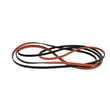
- Drum not spinning: worn belt, idler pulley issue, or drum support roller wear
- Noisy (squeal, thump, grind, rattle): small item caught at drum edge, dryer not level, worn rollers or pulley
- Stops mid-cycle or shows codes: power interruption (“PF”), low line voltage (“L2”), or restricted airflow (“AF”)
Quick checks we recommend first (fast, no parts)
- Confirm power: electric dryers need a full 240-volt supply; check that both breakers/fuses are on and tight.
- Check airflow: clean the lint screen and inspect the lint screen housing; verify the outside hood opens freely.
- Inspect the vent run: straighten kinks, remove crush points, and reduce excessive elbows.
- Level the dryer: vibration and thumping often come from an unlevel cabinet.
- Door and controls: close the door fully and press START/PAUSE with your fingertip (not a fingernail).
Parts that commonly fix Cabrio-style issues on this model
| Symptom | Common wear item | Example part for WED8500DC3 |
|---|---|---|
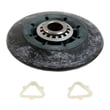
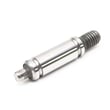
| Squealing, rumbling, thumping | Drum support rollers | Dryer drum support roller WPW10314173 |
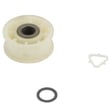
| Squeal near motor area, belt slack | Idler pulley | Dryer idler pulley W10837240 |
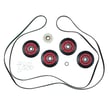
| Drum won’t turn | Belt or multiple drive parts | Dryer repair kit 4392067 |
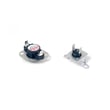
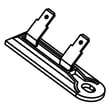
| “AF” restricted airflow, overheating shutdown | Safety devices may open after overheating | Thermal fuse W10909685 or dryer thermal cut-off fuse kit 279973 |
Why it matters
Airflow problems do more than slow drying; they can overheat the heater housing and open a thermal fuse or thermal cut-off. Fixing venting and lint buildup first helps prevent repeat failures and protects the dryer’s heating system.
Last updated: February 2026
What is the life expectancy of a Whirlpool Cabrio dryer?
A Whirlpool Cabrio electric dryer like model WED8500DC3 typically lasts 10 years. With consistent vent cleaning, correct cycle use, and quick replacement of wear parts (belt, rollers, idler), many units reach 12 to 15 years of service.
Typical lifespan and what changes it
A dryer’s life is mostly determined by heat stress, airflow restriction, and drum-drive wear.
- Vent restriction (long runs, crushed duct, lint buildup) shortens life fastest
- Overloading strains the belt, idler pulley, and drum rollers
- High heat on every load increases thermal cycling on thermostats and fuses
- Skipping lint screen cleaning reduces airflow and raises operating temperature
- Early repair of squeaks/thumps prevents secondary damage to the drum and motor
Quick maintenance checklist (best ROI)
Use these habits to extend the life of your WED8500DC3:
- Clean the lint screen every load
- Inspect and clean the vent path at least yearly
- Keep the dryer level to reduce drum and roller wear
- Use Automatic cycles when possible for controlled heat and shutoff
- Avoid consistently drying heavy, soaking-wet items in one load
Wear parts that commonly determine “end of life”
Many “old dryer” symptoms are just normal wear parts. Here’s what we typically see:
| Symptom | Most common wear area | Example part for WED8500DC3 |
|---|---|---|
| Squealing, rumbling, thumping | Drum support system | Dryer drum support roller WPW10314173 |
| Dryer runs but drum won’t turn | Belt or idler | Dryer idler pulley W10837240 |
| No heat or overheating shutdown | Thermal protection or sensing | Thermal fuse W10909685 |
Why it matters
A dryer that is forced to run hot (usually from poor airflow) can blow thermal protection parts and also age the motor, wiring, and controls faster. Keeping airflow strong is the simplest way to protect the whole machine.
Where to confirm cycle and care guidance
For cycle selection and operating tips specific to this Cabrio interface, follow the WED8500DC3 owner's manual.
Last updated: February 2026
Why is my Whirlpool dryer making a squeaking noise?
A squeaking noise in your Whirlpool WED8500DC3 electric dryer is usually caused by a worn drum support roller, a dry roller shaft, or a failing idler pulley that is squealing as it tensions the belt. We recommend inspecting the drum support system and belt path using the WED8500DC3 owner’s manual.
Most common squeak sources on WED8500DC3
- Drum support rollers: worn bearings or flat spots can squeak once per drum revolution.
- Idler pulley: a dry or worn pulley bearing can squeal continuously while the drum turns.
- Belt contact points: a glazed belt can chirp as it rides the pulley.
- Foreign object: a small item near the drum edge can create intermittent squeaks.
- Leveling and vibration: an unlevel dryer can load the rollers unevenly and make noise.
Quick checks we recommend (safe, no disassembly)
- Stop the cycle and unplug the dryer before any inspection.
- Rotate the drum by hand; note whether the squeak is rhythmic (often rollers) or constant (often idler pulley).
- Check the drum edges for small objects; the manual notes small items can get caught at the drum edges.
- Confirm the dryer is stable; all feet should be firmly on the floor (see the WED8500DC3 installation guide).
Parts that commonly fix squeaking
| Symptom pattern | Most likely part | When to replace |
|---|---|---|
| Squeak once per revolution | Dryer drum support roller WPW10314173 | Roller feels rough, wobbly, or has flat spots |
| Constant squeal while running | Dryer idler pulley W10837240 | Pulley does not spin smoothly or has play |
| Multiple wear items, older unit | Dryer repair kit 4392067 | You want rollers, pulley, and belt wear items handled together |
Why it matters
A squeak is often the first sign of a bearing or pulley wearing out. Replacing the worn roller or idler pulley early helps prevent belt damage, overheating from drag, and a no-tumble failure.
Last updated: February 2026